Struggling with high electricity bills or unreliable water access in off-grid areas?
Your water pump could be the energy-guzzling culprit, silently draining your resources.
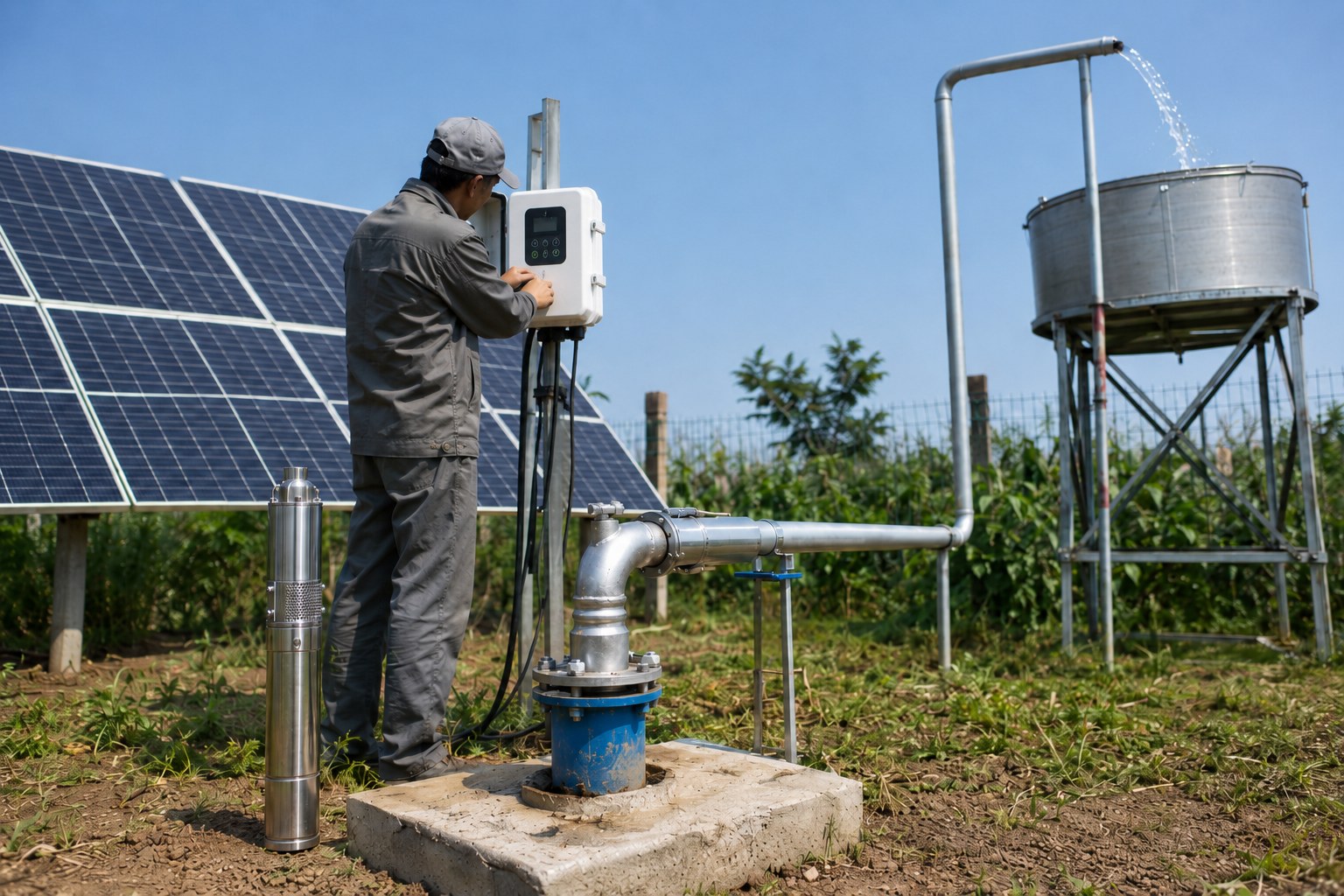
The most energy-efficient water pump is not a single model but a complete system. It combines a high-efficiency Brushless DC (BLDC) permanent magnet motor with the correct pump design for a specific application and an intelligent controller that optimizes power usage from sources like solar panels.
Finding the right pump feels overwhelming with so many types and brands.
How do you choose between submersible, centrifugal, or screw pumps?
What really makes one pump more efficient than another?
This guide breaks down the core components of energy efficiency.
We will explore how motor technology, pump design, and smart controls work together.
You'll learn to select the perfect, cost-effective water pump system for any need.
Understanding Water Pump Wattage
Worried that your water pump is driving up your energy costs unexpectedly?
Many users focus on purchase price but overlook the long-term cost of electricity consumption.
Understanding water pump wattage is the first step to managing energy use. A pump's wattage tells you how much power it draws, but you must consider both the continuous 'running' wattage and the much higher 'starting surge' wattage, which can be 3 to 5 times greater.
To truly grasp energy efficiency, you must look beyond the simple horsepower (HP) rating.
A pump's electrical consumption is a dynamic figure, not a static number.
It is influenced by the pump's design, the work it has to do, and its overall health.
By understanding these factors, you can make smarter purchasing decisions and optimize your pump's performance to save significant money over its lifespan.
Running Wattage vs. Starting Wattage
The difference between running and starting wattage is critical, especially for systems with limited power, like solar installations or generators.
Running wattage is the power a pump consumes during continuous, stable operation.
For example, a 1.0 HP pump might run at approximately 750-900 watts.
Starting wattage, or surge power, is the momentary spike in power required to overcome inertia and get the motor spinning.
That same 1.0 HP pump could demand a surge of 2,000 to 3,000 watts for a few seconds.
Ignoring this surge can lead to tripped circuits, overloaded generators, or the need for a much larger, more expensive solar power system than necessary.
An inefficient system may require two extra solar panels just to handle the startup kick.
This is why modern, energy-efficient pumps with soft-start mechanisms are becoming the industry standard, as they gradually ramp up speed, minimizing the initial power draw and reducing overall system cost.
Typical Wattage by Pump Type
Different pump designs have inherently different power needs.
The table below provides a general reference for common pump types, showing how both running and starting wattage can vary based on the pump's intended application.
| Pump Type | Common Horsepower (HP) | Running Wattage (Avg.) | Starting Surge Wattage (Est.) |
|---|---|---|---|
| Small Booster Pump | 0.25 HP | ~200 W | ~400 W |
| Shallow Well Jet Pump | 0.5 HP | ~450 W | ~1,200 W |
| Centrifugal Pump | 1.0 HP | ~800 W | ~2,500 W |
| Submersible Deep Well Pump | 1.5 HP | ~1,100 W | ~3,500 W |
As you can see, a submersible pump designed to lift water from a deep well requires significantly more power than a small booster pump used to increase shower pressure.
This is because it has to work against greater pressure (head) to move the water.
Choosing a pump that is oversized for your application—for example, using a 1.5 HP submersible pump where a 0.5 HP jet pump would suffice—results in wasted energy with every use.
Properly sizing a pump to the specific flow rate and pressure requirements is a fundamental principle of efficient water management.
The Core of Efficiency: The Brushless DC (BLDC) Motor
Are you tired of conventional motors that are inefficient, noisy, and require constant maintenance?
These older technologies waste energy and increase your long-term operating costs significantly.
The heart of a truly modern and energy-efficient water pump is the Brushless DC (BLDC) permanent magnet motor. These motors achieve efficiencies exceeding 90%, a dramatic improvement over the 60-75% efficiency of traditional AC induction motors, directly translating to lower energy consumption.
The leap in performance offered by BLDC motors is not just an incremental improvement; it's a technological game-changer for the pump industry.
By eliminating the brushes found in conventional DC motors, BLDC designs reduce friction, wear, and energy loss.
This innovation results in a motor that runs cooler, quieter, and lasts substantially longer.
For distributors and end-users, this means a more reliable product with a lower total cost of ownership.
Let's explore the specific advantages that make BLDC motors the superior choice for modern water pump applications.
How BLDC Motors Achieve Superior Efficiency
The magic of a BLDC motor lies in its design.
Instead of mechanical brushes, it uses an electronic controller to switch the direction of the current in the motor windings.
This precise digital control minimizes energy waste.
The rotor in these high-efficiency motors is typically made from powerful permanent magnets, such as 40SH neodymium iron boron.
These magnets create a strong magnetic field without needing to draw electrical power to do so, unlike the electromagnets in an AC induction motor's rotor.
This fundamental difference means less energy is converted into useless heat, and more is converted into useful mechanical work—pumping water.
As a result, a pump with a BLDC motor can deliver the same water flow and pressure as a traditional pump but with up to 30% less electricity.
Tangible Benefits for Users and Distributors
The high efficiency of BLDC motors provides concrete advantages that directly impact profitability and user satisfaction.
- Reduced System Costs: Because the motor is more efficient, it requires fewer solar panels to achieve the same performance. A system that might have needed ten panels with an AC motor may only need seven with a BLDC motor, representing a significant upfront cost saving.
- Compact and Lightweight Design: BLDC motors are fundamentally more power-dense. This allows for a design that is up to 47% smaller and 39% lighter than a conventional motor of the same power output. This makes transportation cheaper for distributors and installation far easier for technicians in the field.
- Enhanced Reliability and Lifespan: With no brushes to wear out, BLDC motors are virtually maintenance-free. The reduced heat generation also means less stress on motor components, leading to a much longer operational life. This translates to fewer warranty claims and a stronger brand reputation for reliability.
- High Torque Performance: BLDC motors provide high starting torque, which is essential for positive displacement pumps like screw pumps that need to overcome high initial pressure. This ensures reliable startups even in challenging deep-well applications.
For a distributor, offering pumps with BLDC motors means providing a technologically superior product that is cheaper to operate, easier to install, and more reliable in the long run.
Matching Pump Type to Application: The Key to System Efficiency
Have you ever installed a powerful pump only to get a trickle of water, or a high-flow pump that can't lift water high enough?
This common problem arises from a mismatch between the pump's design and the job's demands, leading to wasted energy and poor performance.
True system efficiency is achieved when the pump's hydraulic characteristics perfectly match the application's needs. The three main solar pump types—screw, plastic impeller, and stainless steel impeller—are each engineered for a specific combination of flow, head, and water conditions.
Selecting the right pump type is as crucial as selecting an efficient motor.
A pump is a specialized tool, and using the wrong one is like trying to use a hammer to turn a screw.
Even the most efficient motor in the world cannot compensate for a pump that is hydraulically unsuited for its task.
Understanding the unique strengths and weaknesses of each pump design allows you to create a versatile product portfolio that can solve any customer's water challenge, from providing drinking water for a small home to irrigating a large farm.
Solar Screw Pump: High Head, Low Flow Efficiency
The solar screw pump is a type of positive displacement pump.
It uses a single helical rotor (the screw) rotating inside a flexible rubber stator.
This action creates sealed cavities of water that are pushed upwards through the pump.
This mechanism is exceptionally effective at creating high pressure, making it ideal for deep wells.
- Performance: These pumps excel at providing high head (lifting capability), often exceeding 150 meters. However, their design limits them to a relatively low flow rate, typically in the range of 1 to 5 cubic meters per hour (m³/h).
- Applications: Their profile makes them perfect for domestic water supply from deep wells, livestock watering where high pressure is needed to push water over long distances, and small-scale, high-pressure irrigation systems like drip irrigation. They are widely adopted in regions like Africa and Latin America with deep water tables.
- Key Advantage: Sand Resistance: The screw design can handle water with a higher concentration of sand and silt compared to centrifugal pumps. The flexible stator can pass small solids without damage, giving these pumps high durability in harsh well conditions.
Solar Plastic Impeller Pump: High Flow, Wear-Resistant Efficiency
This is a multi-stage centrifugal pump.
It uses a series of rotating impellers to accelerate water, converting velocity into pressure.
Using durable, engineered plastic for the impellers provides an excellent balance of performance and cost.
- Performance: Plastic impeller pumps are designed for high flow rates, often delivering 10 to 20 m³/h or more. They operate best at a medium head, typically up to 80 meters.
- Applications: They are the workhorses for agricultural irrigation, filling large livestock troughs, general water transfer, and residential water supply from shallower wells or surface water sources. Their high output makes them a popular choice in the agricultural sectors of Africa and the Americas.
- Key Advantage: Value and Wear-Resistance: Plastic impellers offer excellent resistance to abrasion from fine sand. They are also lightweight and more economical to produce than their stainless steel counterparts, making the pump more affordable and easier to handle during installation.
Solar Stainless Steel Impeller Pump: Premium Durability and Corrosion Resistance
This pump is functionally similar to the plastic impeller model but is constructed with premium materials.
The impellers, diffusers, and pump housing are all made from SS304 or SS316 stainless steel.
This construction is specifically for environments where the pump will be exposed to aggressive water.
- Performance: These pumps offer high flow rates and can be designed for medium-to-high head applications. Their primary advantage is not a unique performance curve but extreme longevity in corrosive conditions.
- Applications: They are essential for applications with acidic or alkaline water (low or high pH). They are the go-to choice for regions with alkaline soil and water, such as parts of Australia and the Americas. They are also used for high-end residential and commercial projects where maximum reliability and water purity are paramount.
- Key Advantage: Corrosion Resistance: Stainless steel provides superior resistance to rust and chemical corrosion, ensuring a very long service life and preventing contamination of the water supply. While the upfront cost is higher, the total cost of ownership is lower in environments that would destroy a lesser pump in a few years.
Comparative Overview
| Feature | Solar Screw Pump | Solar Plastic Impeller Pump | Solar Stainless Steel Impeller Pump |
|---|---|---|---|
| Primary Strength | High Head | High Flow | Corrosion Resistance |
| Flow Rate | Low (1-5 m³/h) | High (10-20+ m³/h) | High (10-20+ m³/h) |
| Max Head | Very High (150+ m) | Medium (up to 80 m) | Medium to High (up to 100+ m) |
| Sand Resistance | Excellent | Good (for fine sand) | Good (for fine sand) |
| Cost | Medium | Low | High |
| Ideal Application | Deep well domestic supply | Farm irrigation, water transfer | Corrosive water, premium homes |
Maximizing Energy Use with Smart Controllers
Is your solar pump underperforming on cloudy days or completely useless at night?
A pump and motor are only part of the equation; without an intelligent brain, the system can't adapt to changing conditions, wasting precious solar energy.
A smart controller is the brain of a solar pump system, and it is essential for maximizing energy efficiency. An MPPT (Maximum Power Point Tracking) controller ensures the pump gets the most power possible from solar panels, while an AC/DC hybrid controller provides 24/7 reliability.
In the past, solar pump systems were simple direct connections.
If the sun was weak, the pump ran slowly or not at all.
Modern smart controllers have transformed these systems from simple devices into sophisticated, resilient water supply solutions.
They continuously monitor both the power source and the pump's load, making real-time adjustments to optimize performance.
This intelligence not only boosts daily water output by up to 30% but also protects the pump motor from damaging power fluctuations, significantly extending its lifespan.
The Role of the MPPT Controller
A solar panel's power output (voltage and current) changes constantly with the intensity of sunlight.
An MPPT controller acts as a highly efficient DC-to-DC converter that continuously adjusts the electrical load to find the "maximum power point" of the solar array.
Think of it like the automatic transmission in a car, which keeps the engine in its most efficient RPM range.
- How it Works: The MPPT controller measures the solar panel's voltage and current and then calculates the optimal combination to extract the maximum possible wattage. It then converts this to the ideal voltage and current required by the BLDC motor.
- The Efficiency Gain: This process is dramatically more efficient than directly connecting the pump to the panels. On a partially cloudy day, an MPPT controller can boost the total water pumped by 30% or more compared to a system without one. It allows the pump to start earlier in the day, run later in the evening, and continue operating during periods of low light.
The Ultimate Solution: The AC/DC Hybrid Controller
While solar power is excellent, it is inherently intermittent.
What happens when you need water at night, during a week of storms, or for a critical application that cannot tolerate downtime?
The AC/DC hybrid controller solves this problem elegantly.
This advanced controller is designed with inputs for both DC power (from solar panels) and AC power (from the grid or a generator).
- Smart Power Blending: The controller's primary logic is to use solar power whenever it is available. It will automatically prioritize and run the pump using 100% free energy from the sun.
- Hybrid Functionality: If solar power is insufficient to meet the pump's demands—for example, on an overcast day—the controller can blend AC power with the available DC power. It will use as much solar energy as it can and supplement only what is needed from the AC source, maximizing the use of free energy.
- Automatic Switchover: When there is no solar input at all (e.g., at night), the controller seamlessly and automatically switches over to the AC power source. This ensures a continuous, uninterrupted water supply 24 hours a day, without any manual intervention.
For a distributor, offering an AC/DC hybrid solution provides a massive competitive advantage.
It addresses the single biggest drawback of solar power—intermittency—and delivers a truly worry-free, all-weather water solution that appeals to a much broader market, from residential users to critical agricultural operations.
Conclusion
The most energy-efficient water pump is a synergistic system.
It combines a high-efficiency BLDC motor, the right pump type for the job, and an intelligent controller to guarantee optimal, reliable, and cost-effective performance.
FAQs
What is the most efficient type of pump?
Centrifugal pumps are highly efficient for moving large volumes of water at low pressure, while positive displacement pumps (like screw pumps) are more efficient for high-pressure, low-flow applications.
How can I reduce my water pump power consumption?
Ensure the pump is correctly sized for the job, perform regular maintenance to keep it clean, and use a smart controller like a VFD or MPPT to match output to demand.
Are smart water pumps worth it in 2026?
Yes, smart pumps with VFDs or solar controllers can reduce energy consumption by 30-50% and extend motor life, offering significant long-term savings that justify the initial cost.
Do bigger water pumps use more electricity?
Generally, yes. A pump with a higher horsepower (HP) rating will consume more watts. However, an oversized pump running inefficiently can waste more energy than a correctly sized, larger pump.
Is a VFD pump more efficient?
Yes, a Variable Frequency Drive (VFD) pump is highly efficient because it adjusts the motor's speed to match the real-time water demand, preventing wasted energy from running at full power unnecessarily.
How many watts is a 2hp water pump?
A 2-horsepower (HP) water pump typically consumes between 1500 and 2200 watts during operation. However, its starting surge wattage can be much higher, often reaching 4000-6000 watts.
Will a 5000-watt generator run a well pump?
A 5000-watt generator can likely run a well pump up to 1.5 HP, but you must check the pump's starting surge wattage. If the surge exceeds 5000 watts, the generator may fail to start it.