Your well pump fails, leaving you with no water and a massive repair bill.
This cycle of cost and frustration feels endless.
What if there was a smarter way?
The "best" submersible pump isn't just about brand names like Franklin or Grundfos.
It's about matching advanced pump technology, like solar-powered systems with high-efficiency motors, to your specific needs.
This approach delivers a lower total cost of ownership and superior long-term reliability.
Traditional well pumps have dominated the market for decades.
But the landscape is changing.
To truly understand what "best" means today, we need to look beyond the old standards.
We must explore the innovations driving the future of water delivery.
This means comparing not just brands, but entire systems and power sources.
Doing so allows us to find the most reliable and cost-effective solution for the next 20 years.
The Hidden Cost of "Budget" Pumps
A cheap pump seems like a great deal today.
But what about five years from now?
You could be paying thousands in labor to replace it again.
A $400 pump that lasts 5 years costs far more than a $1,200 pump lasting 20 years.
Once you factor in $1,500-$2,500 in labor for each replacement, the "budget" option becomes the most expensive choice over the system's lifetime.
Choosing a submersible pump based on upfront cost is a common but costly mistake.
The real price of a pump is not what you pay at the store.
It is the total cost of ownership (TCO) over its entire service life.
This includes the initial purchase price, energy consumption, and all future maintenance and replacement labor costs.
The Math That Matters
Let's break down the real cost for a typical deep well (300+ feet).
The labor to pull and reinstall a pump can easily cost $1,500 to $2,500.
A "budget" pump might fail every 5 to 8 years.
A premium pump is engineered to last 15 to 25 years.
The table below shows a 20-year cost comparison that reveals the true savings of investing in quality.
| Cost Factor | Budget Pump ($400) | Premium Pump ($1,200) |
|---|---|---|
| Expected Lifespan | 5 Years | 20 Years |
| Replacements in 20 Yrs | 3 (at years 5, 10, 15) | 0 |
| Pump Costs over 20 Yrs | $400 x 4 = $1,600 | $1,200 x 1 = $1,200 |
| Labor Costs over 20 Yrs | $2,000 x 3 = $6,000 | $0 |
| Total 20-Year Cost | $7,600 | $1,200 |
Note: This calculation excludes the initial installation labor, as that is a constant for both options.
Beyond the Numbers
The financial cost is only part of the story.
Each failure means days without water.
It means emergency calls to contractors.
It means unexpected disruption to your home, farm, or business.
A reliable pump doesn't just save you money.
It provides peace of mind.
The initial investment in a higher-quality pump is an investment in 15-25 years of uninterrupted service.
Franklin vs Grundfos: A Battle of Titans?
You're told to choose between Franklin and Grundfos.
These are the giants of the traditional pump world.
But is this even the right question to be asking in today's market?
Franklin Electric is the reliable industry standard with excellent parts availability in North America.
Grundfos is the premium, high-efficiency innovator from Denmark.
For most, Franklin offers better value, but both represent the peak of traditional, grid-powered pump technology.
The real question is if traditional tech is still the best choice.
For decades, the debate in the well industry has centered on these two brands.
They have earned their reputations through years of solid performance.
Understanding their strengths helps establish a baseline for what a quality pump should be.
However, it also highlights the limitations of relying solely on the electrical grid.
A Head-to-Head Breakdown
Professionals respect both brands, but for different reasons.
Franklin Electric has built a dominant presence through its robust motors and an unparalleled distribution network.
If a Franklin motor fails, a replacement is almost always available locally and quickly.
Grundfos, on the other hand, engineers complete systems focused on peak performance and energy efficiency.
Their integrated motor and pump ends can reduce electricity costs by 10-30%.
| Factor | Franklin Electric | Grundfos |
|---|---|---|
| Best For | Overall value, serviceability | Maximum energy efficiency |
| Price | $600 - $1,500 | $800 - $2,500 |
| Energy Efficiency | Good (65-70%) | Excellent (70-80%) |
| Parts Availability | Excellent | Good |
| Contractor Familiarity | Excellent | Good |
| Expected Lifespan | 15-25 years | 15-25 years |
The Grid-Tied Limitation
Both Franklin and Grundfos make exceptional products for a grid-powered world.
But that is their fundamental limitation.
Their performance is tied to the stability and cost of the electrical grid.
For rural homeowners, off-grid properties, and developing regions, this presents a major challenge.
What happens during a power outage?
What about the steadily rising cost of electricity?
What if a grid connection isn't even available?
This is where the conversation must evolve beyond traditional brands.
The truly "best" pump system today must also address the source of its power.
The Rise of Solar: A New Kind of "Best" Pump
Grid electricity is expensive and unreliable in many areas.
What if you could power your well with a free, abundant resource?
This would cut costs and give you true water independence.
Solar water pumps are the answer.
They operate independently from the power grid, are eco-friendly, and prove more cost-effective long-term.
With growing global demand for sustainable solutions, they have become essential in Africa, the Americas, Australia, and Asia.
The definition of the "best" pump is shifting from a mechanical object to a complete, self-sufficient system.
A solar water pump system untethers your water supply from the electrical grid.
This transformation provides not just water, but also energy independence and financial predictability.
The sun provides the power for free, eliminating monthly electricity bills for pumping water.
This is a game-changer for agriculture, livestock, and residential water supply, especially in remote or off-grid locations.
The Components of a Modern Water System
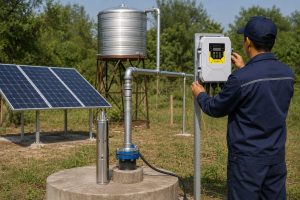
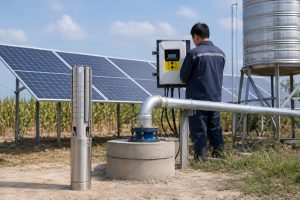
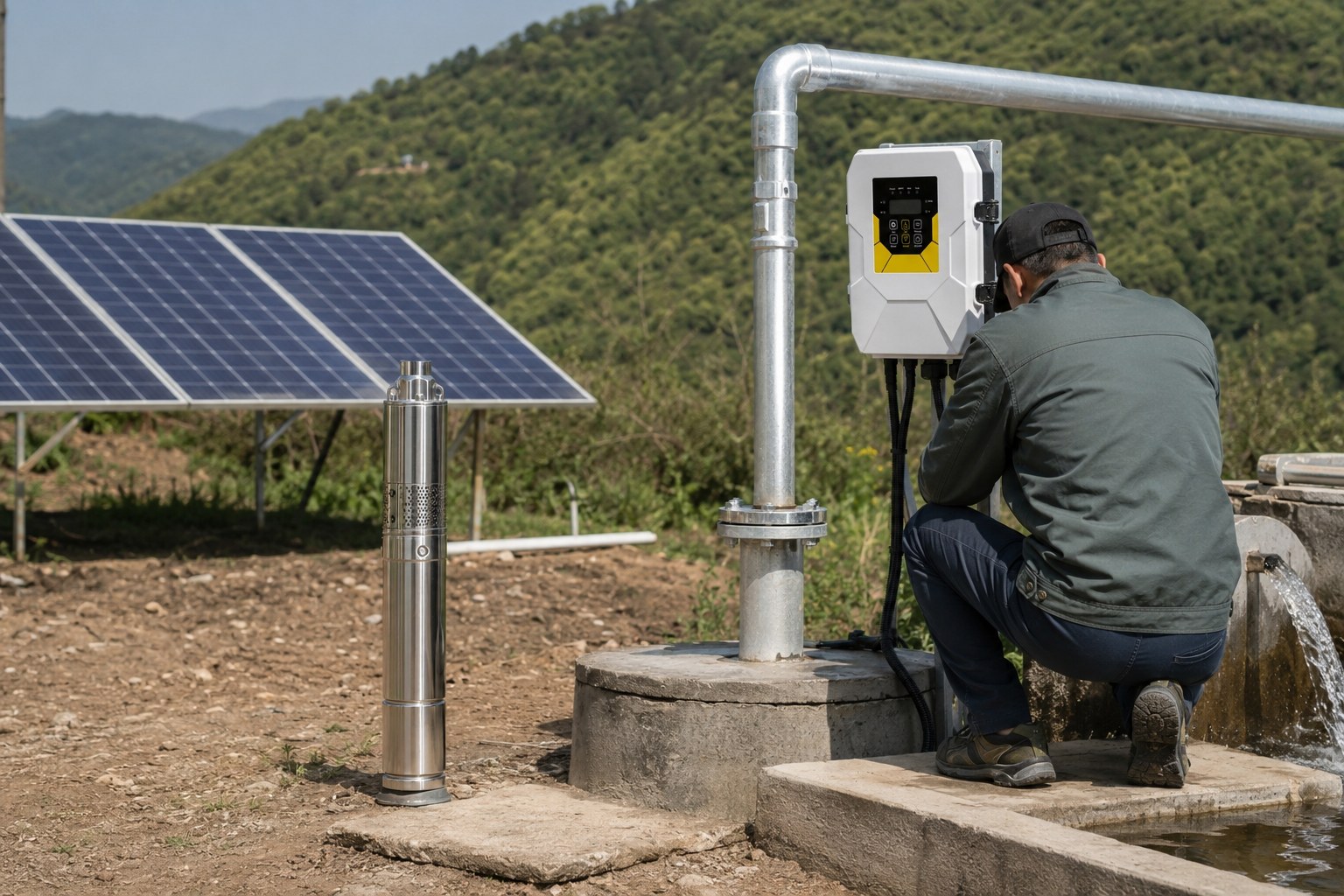
A solar pump system consists of three core components working in harmony.
- Solar Panels: These capture sunlight and convert it into DC electricity. The number of panels needed depends on the pump's power requirements and local sunlight conditions.
- Pump Controller: This is the "brain" of the system. It manages the power from the panels, optimizes the pump's performance, and provides protections against issues like dry running.
- Submersible Pump & Motor: This is the heart of the system. A high-efficiency motor and a well-matched pump end are crucial for maximizing water output while minimizing energy use.
Why Solar is Winning
The global adoption of solar pumping is accelerating for clear reasons.
- Economic: Zero energy costs after installation lead to a rapid return on investment. Payback periods are often just 2-4 years.
- Reliability: With fewer moving parts and no reliance on a fragile grid, solar systems are incredibly durable and require minimal maintenance.
- Accessibility: Solar pumps bring reliable water to areas where electricity is unavailable, unstable, or prohibitively expensive.
- Environmental: They operate with zero emissions, providing a clean and sustainable water solution.
The following sections will explore the specific types of solar pumps that make this revolution possible.
Solar Screw Pump: The Deep Well Specialist
Your well is hundreds of feet deep.
You need a pump that can handle extreme head pressure without failing.
This is especially true where sand is an issue.
The solar screw pump is the solution for deep wells.
It uses a stainless steel screw to push water, providing low flow but very high head.
It is exceptionally resistant to sand and ideal for domestic water supply in areas with deep water tables.
When water tables are low and wells are deep, traditional centrifugal pumps struggle.
They lose efficiency and can be damaged by the high pressure required.
The solar screw pump, also known as a progressing cavity pump, is engineered specifically for these challenging conditions.
Its unique design allows it to generate immense pressure efficiently, making it the top choice for deep well applications.
How It Pushes Water Uphill
Unlike centrifugal pumps that "throw" water, a screw pump "pushes" it.
It works using a single helical rotor (the screw) turning inside a double helical stator (a rubber sleeve).
- As the stainless steel screw turns, it forms a series of sealed cavities with the rubber stator.
- These cavities "progress" from the inlet to the outlet of the pump.
- Water is trapped in these cavities and pushed steadily upwards with consistent pressure.
This mechanism is less affected by high head pressure, allowing it to pump from depths exceeding 200 meters (650+ feet) with a relatively small motor.
Performance in Harsh Conditions
The screw pump's design gives it two major advantages in real-world wells.
- High Sand Resistance: The rubber stator and steel screw can handle water with a higher concentration of sand and silt. The design helps to pass particles without causing the abrasive wear that quickly destroys centrifugal impellers. This makes it ideal for newly drilled wells or areas with sandy aquifers.
- Consistent Flow Rate: The flow rate of a screw pump is less dependent on the total head. It delivers a more consistent volume of water whether the well is 100 feet deep or 500 feet deep, simplifying system design.
| Pump Type | Max Head (Typical) | Sand Tolerance | Best For |
|---|---|---|---|
| Solar Screw Pump | 200m+ | Excellent | Low Flow, High Head, Deep Wells |
| Solar Centrifugal | 150m | Fair to Good | High Flow, Medium Head |
Its primary limitation is flow rate.
It is designed for low-flow, high-pressure tasks, making it perfect for filling a storage tank for a home or livestock, but less suitable for large-scale, direct irrigation.
Solar Plastic Impeller Pump: The High-Flow Workhorse
You need to move a lot of water for your farm or garden.
You need high flow, but don't want to break the bank.
A premium all-metal pump might be overkill for your needs.
The solar plastic impeller pump is a multi-stage centrifugal pump designed for high flow and medium head.
Its durable plastic impellers offer excellent resistance to fine sand, making it a lightweight and economical choice for farm irrigation and pasture water supply.
When the goal is moving the maximum amount of water for applications like irrigation, livestock watering troughs, or filling ponds, a centrifugal pump is the right tool.
The solar plastic impeller pump delivers the high flow rates of a centrifugal design at an accessible price point.
It has become a go-to solution for agricultural and residential use in Africa and the Americas.
Engineering for Flow and Value
This pump uses a series of stacked impellers and diffusers.
Each stage adds pressure to the water, pushing it higher.
The key innovation here is the use of advanced polymer plastics for the impellers.
- Wear Resistance: Modern engineering plastics, like polyoxymethylene (POM), are incredibly durable. They have a natural lubricity and flexibility that allows them to handle fine sand and silt better than a hard metal impeller, which can be eroded by abrasion.
- Lightweight: Plastic impellers significantly reduce the pump's weight. This makes installation easier and less costly, as less heavy equipment is needed.
- Cost-Effective: Manufacturing plastic components is more economical than casting and machining stainless steel. This saving is passed on to the end user, making high-flow solar pumping more accessible.
Finding the Sweet Spot: Cost vs. Performance
The plastic impeller pump offers an outstanding balance of performance and cost for a wide range of applications.
It is the workhorse for many farms and ranches.
However, it is important to understand its limitations.
In highly corrosive water (very high or low pH) or extremely deep wells where casing friction and heat can be a factor, the long-term durability may be reduced compared to a stainless steel model.
| Feature | Plastic Impeller Pump | Stainless Steel Impeller Pump |
|---|---|---|
| Primary Use | High-flow irrigation, general use | Corrosive water, premium applications |
| Upfront Cost | $ | $$$ |
| Fine Sand Tolerance | Excellent | Good |
| Corrosion Resistance | Good | Excellent |
| Weight | Low | High |
For the majority of wells with moderate depth and neutral pH water, the plastic impeller pump provides the best overall value for high-volume water transfer.
Solar Stainless Steel Impeller Pump: The Premium Choice for Harsh Water
Your water is corrosive, acidic, or alkaline.
A standard pump won't last.
You need a solution built for extreme durability and reliability.
The solar stainless steel impeller pump is the premium solution.
Its SS304 stainless steel construction provides superior corrosion resistance for high flow and medium-to-high head applications.
It is the best choice for challenging water conditions and high-end installations.
For some applications, there is no substitute for the strength and resilience of stainless steel.
When water quality is poor or system failure is not an option, the solar stainless steel impeller pump is the definitive choice.
This pump combines the high-flow design of a multi-stage centrifugal pump with the superior material quality needed to withstand the most demanding environments.
The Science of Corrosion Resistance
The key to this pump's durability is its material composition.
The pump body, shaft, and impellers are all constructed from SS304 grade stainless steel.
This material contains a high percentage of chromium and nickel.
When exposed to oxygen, the chromium forms a thin, invisible, and passive layer of chromium oxide on the surface.
This passive layer is incredibly resilient.
It protects the underlying steel from reacting with corrosive elements in the water, such as acids, alkalis, and chlorides.
If the surface is scratched, the passive layer instantly reforms, "healing" itself and maintaining protection.
When to Specify Stainless Steel
Investing in a stainless steel impeller pump is a strategic decision for ensuring long-term reliability.
It is the recommended choice in several specific scenarios.
- Alkaline or Acidic Water: Common in certain geological regions, like the alkaline soils of Australia or areas with acid rain.
- High Salinity: Coastal areas or regions with brackish groundwater.
- Geothermal Water: Water with high mineral and dissolved gas content.
- High-Value Applications: Water supply for high-end homes, critical livestock operations, or commercial properties where the cost of failure is extremely high.
| Water Condition | Plastic Impeller | SS304 Stainless Steel |
|---|---|---|
| pH 6.5 - 8.5 | Good | Excellent |
| pH < 6.5 (Acidic) | Poor - Risk of degradation | Recommended |
| pH > 8.5 (Alkaline) | Fair - Risk of brittleness | Recommended |
| High Mineral Content | Good | Excellent |
While the upfront cost is higher, the extended service life in these harsh conditions results in a significantly lower total cost of ownership compared to replacing cheaper pumps multiple times.
The Heart of the System: Why the Motor Matters Most
You're focused on the pump, but the motor is where the real magic happens.
An inefficient motor wastes energy and money.
This is true no matter how good the pump is.
A high-efficiency BLDC permanent magnet motor is the core of a competitive solar pump.
With efficiencies exceeding 90%, it delivers more power with less energy.
This reduces the number of solar panels needed and cuts overall system cost significantly.
The pump end—whether it's a screw, plastic impeller, or stainless steel impeller—determines the type of application.
But the motor determines the efficiency and competitiveness of the entire system.
The most significant advancement in solar pumping is the widespread adoption of the Brushless DC (BLDC) permanent magnet motor.
This technology is the driving force behind the performance of modern solar pumps.
What is a BLDC Motor?
A BLDC motor is fundamentally different from a traditional AC motor or a brushed DC motor.
Instead of using carbon brushes to transfer power to the rotor, it uses an intelligent electronic controller.
The rotor itself is made of powerful permanent magnets.
In high-performance motors, this is often 40SH grade neodymium iron boron, one of the strongest magnetic materials available.
The controller precisely energizes coils in the stator, creating a rotating magnetic field that pulls the permanent magnet rotor around with it.
This design eliminates physical contact, friction, and wear.
Quantifiable Performance Gains
The switch to BLDC technology provides massive, measurable benefits.
- Ultra-High Efficiency: With no energy lost to friction from brushes, BLDC motors can achieve efficiencies of over 90%. A typical AC submersible motor may only be 60-70% efficient. This means more of the sun's energy is converted into pumping water.
- Compact and Lightweight: The high power density of neodymium magnets allows for a much smaller and lighter motor design. A BLDC motor can be up to 47% smaller and 39% lighter than a traditional motor with the same power output.
- High Torque: BLDC motors deliver high torque even at low speeds, which is excellent for starting the pump under load, especially in deep wells.
- Maintenance-Free: The absence of brushes means there are no parts to wear out and replace. The motor is sealed and designed for a service life of over a decade.
| Motor Technology | BLDC Permanent Magnet | Standard AC Induction |
|---|---|---|
| Peak Efficiency | >90% | 60-70% |
| Power-to-Weight | High | Low |
| Maintenance | None | Potential bearing/seal wear |
| Controller | Required (Intelligent) | Simple Starter Box |
| Solar Panel Needs | Lower (by ~30%) | Higher |
The higher efficiency of the motor directly translates into lower system costs.
A more efficient motor requires less power, meaning fewer solar panels are needed to achieve the same water flow.
This reduces the single largest cost component of the entire installation.
Beyond the Pump: Smart Control and Hybrid Power
What happens when the sun isn't shining?
A solar pump is useless without consistent power.
This is true unless it has the right brain to manage its energy.
Modern systems use an intelligent MPPT controller to maximize solar energy utilization by over 30%.
Advanced hybrid AC/DC controllers ensure 24/7 water access by automatically switching to grid or generator power when solar is unavailable, offering complete peace of mind.
The best pump and motor are only as good as the controller that runs them.
The controller is the critical link that maximizes the investment in solar panels and ensures the pump operates safely and efficiently.
Two key technologies have revolutionized pump control: Maximum Power Point Tracking (MPPT) and AC/DC hybrid functionality.
How MPPT Controllers Squeeze More from the Sun
Solar panels have a specific voltage and current where they produce the most power.
This "maximum power point" changes throughout the day with the angle of the sun and cloud cover.
An MPPT controller constantly monitors the output of the solar panels.
It adjusts the electrical load of the pump motor to ensure the panels are always operating at their peak efficiency point.
Compared to a simple controller, an MPPT controller can boost the water output by up to 30% from the same set of solar panels.
This means more water per day and better performance in low-light conditions like early morning, late afternoon, and on overcast days.
The AC/DC Hybrid Advantage: Worry-Free Water 24/7
A pure solar system works only when the sun shines.
For applications requiring round-the-clock water, this is a major limitation.
The solution is an AC/DC hybrid controller.
This advanced controller is designed with two power inputs: one for DC power from the solar panels and one for AC power from the grid or a generator.
The controller's logic prioritizes free solar power.
- Full Sun: The system runs 100% on solar power.
- Low Light: If solar power is not enough to meet demand, the controller intelligently blends in AC power to make up the difference, maximizing the use of free solar energy.
- No Sun (Night/Clouds): The controller automatically switches to 100% AC power, ensuring the pump continues to run without interruption.
This hybrid functionality offers the best of both worlds: the cost savings and independence of solar, combined with the 24/7 reliability of the grid.
It eliminates the need for expensive battery banks in many applications, providing a seamless and worry-free water supply.
Conclusion
The best pump integrates an efficient motor and intelligent controls.
This creates a durable, cost-effective system.
For distributors, a flexible product portfolio is key to meeting diverse market needs.
FAQ
What is the most reliable submersible well pump brand?
Reliability now extends beyond traditional brands like Franklin or Grundfos.
The most reliable systems often feature solar power with high-efficiency BLDC motors and robust stainless steel or sand-resistant components.
Is Franklin Electric better than Grundfos?
Both are top-tier traditional pump makers.
Franklin excels in parts availability, while Grundfos leads in efficiency.
However, solar pump systems often offer better long-term value and independence from the grid.
How long do submersible well pumps last by brand?
Premium pumps like Franklin and Grundfos last 15-25 years.
Mid-range brands last 10-15 years, while budget pumps may fail in 5-8 years.
Solar pumps with BLDC motors are designed for 10+ years of maintenance-free operation.
Should I buy a cheap submersible pump to save money?
No.
A cheap pump rarely saves money.
High labor costs for frequent replacements make budget pumps the most expensive option over the long term.
Investing in quality upfront saves thousands.
Are solar well pumps worth it?
Yes, absolutely.
With zero energy costs after installation and high reliability, solar pumps often have a payback period of 2-4 years.
They provide water security and independence from rising electricity prices.
What GPM do I need for my house?
Most homes require 5 to 12 gallons per minute (GPM).
Calculate your needs by adding up the fixtures: a bathroom uses about 5 GPM, and a kitchen/laundry another 5 GPM.
Can a well pump be too powerful?
Yes.
An oversized pump can short-cycle, turning on and off rapidly.
This causes premature wear on the motor and pressure tank, leading to early failure.
Proper sizing is crucial.
How much does it cost to replace a submersible well pump?
The total cost ranges from $1,500 to $4,500.
The pump itself can be $400-$2,500, while labor for a deep well often adds another $1,500-$2,500 per replacement.