Struggling with high electricity bills from your pool pump?
You're looking for an energy-efficient solution but are unsure about the reliability and operational needs of solar pumps, especially in winter.
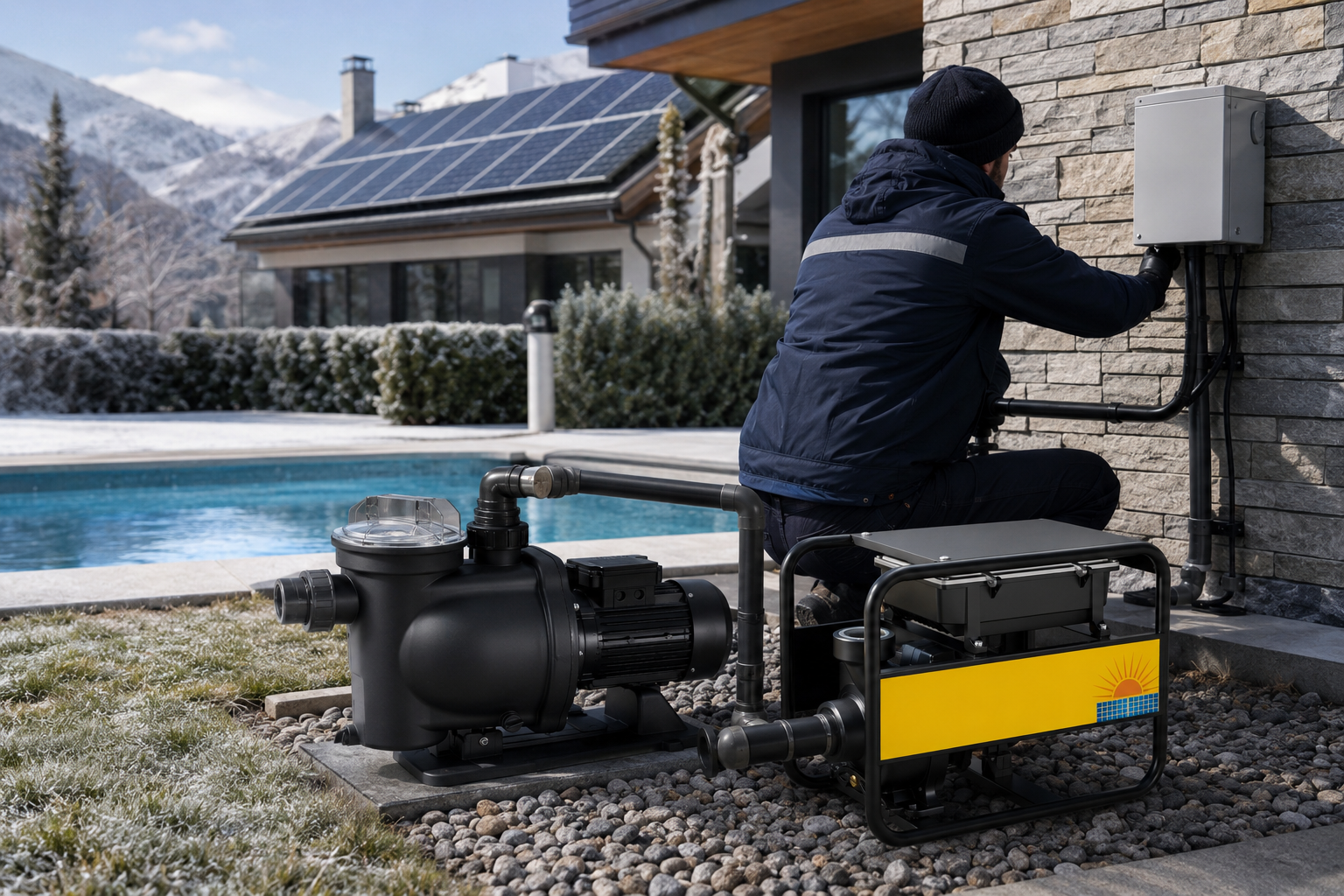
A quality solar pool system can last over 25 years, with the pump motor lasting 8-10 years. In winter, a pump should run 4-6 hours in mild weather and 24/7 during freezes. Advanced systems with AC/DC hybrid controllers ensure your pump runs anytime, sunlight or not.
Investing in your pool's circulation system is a major decision.
It involves balancing upfront costs with long-term savings and ensuring performance throughout the year.
The real questions go beyond simple operation.
You need to understand the technology that drives these systems to make a truly informed choice.
Let's explore the components that define a system's lifespan and the strategies for efficient winter operation.
This will give you a clear picture of what to expect from modern pool pump solutions.
How Do Solar Pool Pumps Work?
Your pool pump is a huge energy consumer.
A solar pump seems like a perfect, free solution, but cheap systems often fail to deliver consistent performance.
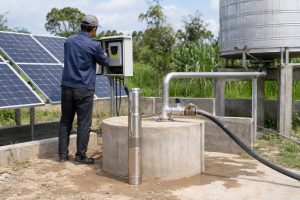
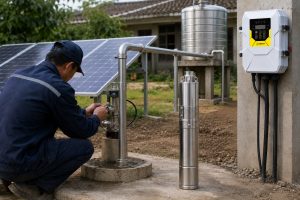
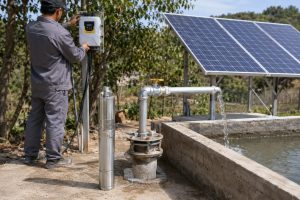
A solar pool pump kit includes solar panels, a controller, and a DC-powered pump. Solar-direct systems vary speed with sunlight, while advanced systems use intelligent controllers to maximize performance and can even integrate AC power for 24/7 operation, ensuring reliability regardless of the weather.
Understanding the core components of a solar pumping system is essential to grasp its capabilities and limitations.
The technology has evolved significantly from simple direct-drive models.
The Core Components
At its heart, a solar pump system is straightforward.
Solar Panels: These capture sunlight and convert it into DC (Direct Current) electricity. The number and wattage of panels directly influence the pump's power.
Controller: This is the brain of the system. Basic controllers simply route power. Advanced ones, however, use Maximum Power Point Tracking (MPPT) to optimize the voltage and current from the panels, boosting pump efficiency by up to 30%. This controller also provides critical safety features like dry-run protection and overheating sensors.
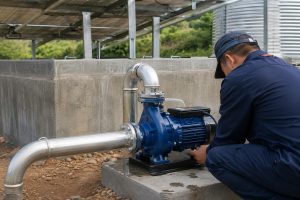
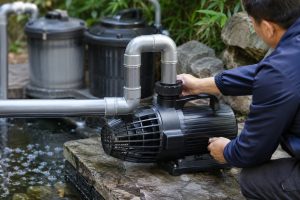
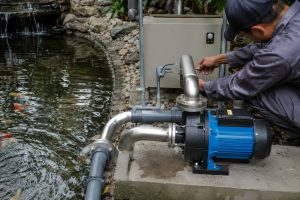
Pump/Motor: This is where the magic happens. Traditional pumps use inefficient AC induction motors. Modern solar pumps utilize Brushless DC (BLDC) permanent magnet motors, which are the cornerstone of efficiency and longevity.
The Power of BLDC Motors
The motor is the single most important factor in a solar pump's performance and lifespan.
A high-quality BLDC motor represents a monumental leap in technology compared to older designs.
Efficiency levels often exceed 90%.
This is a stark contrast to the 40-60% efficiency of many standard single-speed AC pumps.
This high efficiency means the motor converts more solar energy into water movement, requiring fewer solar panels.
A system with a BLDC motor might need 25-30% fewer panels than one with a standard brushed DC motor to achieve the same flow rate.
This directly reduces the initial investment and the roof space required for installation.
The design of a BLDC motor, which uses a permanent magnet rotor made of materials like neodymium iron boron, eliminates the need for brushes.
Brushes are a common point of failure and maintenance in traditional DC motors.
By removing them, the motor's lifespan is dramatically extended, and it becomes virtually maintenance-free.
| Motor Type | Efficiency | Lifespan | Maintenance | Key Feature |
|---|---|---|---|---|
| Single-Speed AC | 40-60% | 3-5 years | Regular | Inefficient, high energy use |
| Brushed DC | 60-75% | 5-7 years | Brush replacement | Better than AC, but requires upkeep |
| Brushless DC (BLDC) | >90% | 8-10+ years | Minimal | Highest efficiency, long life |
The Hybrid AC/DC Advantage
The most significant limitation of early solar pumps was their dependence on the sun.
They couldn't run at night or on cloudy days.
Modern systems solve this with hybrid AC/DC controllers.
These smart controllers can accept two power inputs simultaneously: DC from solar panels and AC from the grid or a generator.
The controller prioritizes solar power.
When sunlight is strong, the pump runs entirely on solar.
If clouds reduce the solar input, the controller automatically supplements with AC power to maintain the desired speed, maximizing the use of free solar energy.
When there's no solar input at all, like at night, it seamlessly switches to 100% AC power.
This ensures you have reliable, 24/7 water circulation for filtration or heating, overcoming one of the biggest drawbacks of older solar-only systems.
What are The Benefits of a Solar Pool Pump?
High utility bills feel unavoidable for pool owners.
Every month, the cost of running that pump adds up, eating into your budget and making you question the joy of ownership.
The primary benefit is eliminating or drastically reducing your pool's electricity costs, saving an average of $550 per year. You also gain energy independence from grid outages, hedge against rising utility rates, and may qualify for significant tax credits and exemptions, improving your ROI.
Beyond the immediate financial relief, a solar pool pump offers a suite of advantages that enhance your home's value and resilience.
These benefits make it a strategic investment rather than just an appliance replacement.
Calculating the Financial Return
The savings are tangible and significant.
Let's break down the numbers for a typical pool home.
A standard 1 HP single-speed pump running 8 hours a day consumes about 12 kWh daily.
At an average electricity rate of $0.13/kWh, the calculation is straightforward:
- Daily Cost: 12 kWh * $0.13/kWh = $1.56
- Monthly Cost: $1.56 * 30 days = $46.80
- Annual Cost: $46.80 * 12 months = $561.60
A solar pump system eliminates this cost.
While the initial investment for a complete kit can be around $5,000, tax incentives can reduce this burden.
A 30% Federal Tax Credit brings the net cost down to $3,500.
- Simple Payback Period: $3,500 / $561.60 per year = 6.2 years
With an ROI of over 15%, this investment often outperforms traditional market investments, especially considering it's a guaranteed return against a known expense.
Energy Independence and Rate Hedging
The financial benefits extend beyond simple payback.
Utility Rate Protection: Electricity rates historically increase over time. By generating your own power for the pool, you lock in your energy costs for the 25+ year lifespan of the solar panels. Every future rate hike from your utility company effectively increases your annual savings.
Grid Resilience: In areas prone to storms and power outages, a solar pump provides a critical advantage. After a hurricane or storm, your pool can become a breeding ground for algae and bacteria without circulation. A solar pump continues to run as long as there is daylight, keeping your water filtered and sanitized even when the rest of the neighborhood is dark. This saves you from a costly and time-consuming green-pool cleanup.
Environmental and Property Value Impact
Installing solar equipment not only benefits your wallet but also adds value in other ways.
Tax Exemptions: Many regions, like Florida, offer exemptions that are crucial for homeowners. Solar energy equipment is often exempt from state sales tax, providing an immediate 6-7% saving on the purchase. Furthermore, solar installations are typically exempt from property tax assessments, meaning your property taxes won't increase despite the home's value rising.
Increased Home Value: Studies have consistently shown that homes with solar installations sell for a premium. Buyers value the prospect of lower energy bills, making your home more attractive on the market. A solar pool pump is a visible and easily understood feature that demonstrates a commitment to sustainability and cost-saving.
Why Should You Avoid a Solar Pool Pump?
The promise of "free" pool circulation is appealing.
But what if that free power isn't strong enough for your spa jets or fails completely during a week of cloudy weather?
You should avoid basic solar-only pumps if you have pool features like spas or waterfalls, require nighttime operation, or use a heater. These simple systems lack the consistent flow and power needed, and their payback period may exceed their warranty, making them a risky investment.
While the concept is powerful, the execution with older or entry-level solar pump technology presents significant drawbacks.
It's crucial to understand these limitations, as they are the primary reasons many homeowners are steered toward better alternatives.
The Problem of Variable Flow
The performance of a solar-direct pump is entirely dictated by the intensity of the sun.
This creates several functional issues.
Inadequate Turnover: Proper pool sanitation depends on "turnover"—the time it takes for all the water in your pool to pass through the filter. On cloudy or rainy days, a basic solar pump may run so slowly that it fails to achieve even one full turnover. This lack of circulation allows algae to bloom and leaves chemicals poorly distributed, leading to a green and unhealthy pool.
Useless Pool Features: Many pools include features that require a specific flow rate to function correctly.
- Spas: A solar pump typically cannot generate the high pressure needed for invigorating spa jets.
- Waterfalls & Fountains: These features will have a variable and often unsatisfying flow, trickling when it's cloudy and flowing stronger in bright sun.
- In-Floor Cleaning Systems: These require consistent high pressure to operate, which a solar-direct pump cannot provide.
Heater Incompatibility: Both solar and traditional gas/electric heat pumps require a minimum flow rate to operate safely and efficiently. The variable and often low flow from a solar pump can cause the heater's safety sensors to trip, shutting it down. This makes heating your pool practically impossible with a basic solar setup.
The Real Cost of an Undersized System
The initial investment for a solar pump kit looks attractive.
However, the long-term reality can be disappointing if the system isn't robust.
Warranty vs. Payback: A typical payback period is 6-7 years. If the pump or controller, which often have shorter warranties (1-3 years), fails in year 4, you're faced with a significant repair bill before you've even broken even. This unforeseen expense completely undermines the financial argument for the system.
A Better Solution: Variable Speed Pumps + Solar PV
For these reasons, the industry has shifted its recommendation.
Instead of a dedicated, isolated solar pool pump, the superior approach is pairing a high-efficiency AC variable speed pump (VSP) with a traditional grid-tied solar photovoltaic (PV) system.
This setup offers the best of both worlds.
| Feature | Dedicated Solar Pump | VSP + Solar PV System |
|---|---|---|
| Energy Savings | Powers pump only | Powers pump + entire home |
| Performance | Variable, weather-dependent | Consistent, programmable speed |
| Night Operation | No (without batteries) | Yes, using grid power |
| Heater/Feature Use | Poor/Incompatible | Excellent, high flow available |
| Initial Cost | Medium ($3-5k) | Higher ($10-20k+) |
| Expandability | No | Yes, can add more panels later |
A variable speed pump itself can reduce pumping electricity costs by up to 90% compared to a single-speed pump by running at very low speeds for long periods.
When powered by a whole-home solar PV system, the energy it uses is offset by the solar production, effectively making it run for free.
Plus, any excess solar power generated when the pump is off goes toward powering your A/C, appliances, or is sold back to the grid.
This creates a far more comprehensive and valuable energy solution for your entire home, not just the pool.
How long should you run your pool pump in winter?
You've cut your pump's runtime to save money in winter.
Now, you're worried that a sudden cold snap could freeze and crack your pipes, leading to thousands in repairs.
In mild winter weather (above 40°F or 4°C), run your pump for 4-6 hours daily. However, when temperatures drop below this threshold, especially near freezing (32°F or 0°C), you must run your pump 24/7 to prevent catastrophic freeze damage to your equipment.
Winter pump scheduling is a balancing act between energy conservation and equipment protection.
The rules change dramatically based on your local climate, and getting it wrong can be one of the costliest mistakes a pool owner can make.
The "1 Hour per 10°F" Rule
For regions with mild winters where the pool remains open, a simple rule of thumb provides a good starting point.
Run your pump for one hour for every 10 degrees Fahrenheit of the ambient air temperature.
- If the daytime high is 60°F (16°C), run the pump for 6 hours.
- If the daytime high is 50°F (10°C), run the pump for 5 hours.
This schedule is usually sufficient because colder water (below 60°F or 16°C) naturally inhibits algae growth, reducing the need for aggressive filtration and chemical circulation compared to the summer months.
However, this rule has one critical exception: the threat of freezing temperatures.
The Non-Negotiable Freeze Protection Rule
Water expands by about 9% when it freezes.
This expansion exerts immense pressure, easily capable of cracking PVC pipes, pump housings, filter tanks, and heaters.
Moving water, however, does not freeze easily.
This is why running your pump continuously is the single most effective way to protect your pool plumbing from freeze damage.
When temperatures are forecast to drop below 40°F (4°C), and especially near 32°F (0°C), your pump must run 24/7.
The cost of the electricity to run the pump continuously for a few days is negligible compared to the thousands of dollars required to repair a freeze-damaged system.
| Temperature Range | Recommended Pump Run Time | Primary Goal |
|---|---|---|
| Above 60°F (16°C) | 8+ hours/day | Sanitation & Filtration |
| 40°F - 60°F (4°C - 16°C) | 4-6 hours/day | Circulation & Chemical Mixing |
| Below 40°F (4°C) | 24/7 (Continuous) | Freeze Protection |
Automating Freeze Protection
Manually monitoring the weather and adjusting your pump schedule is unreliable.
Fortunately, modern technology offers automated solutions.
Freeze Sensors: These are inexpensive devices that wire into your pool's automation system or timer. They monitor the air temperature and will automatically turn on the pump and other equipment when it drops to a preset level (typically 38°F or 3°C), overriding the normal schedule.
Variable Speed Pumps with Built-in Protection: Many modern variable speed pumps have freeze protection built directly into their software. Once enabled, the pump's internal sensor will activate it at a low, energy-efficient speed when cold temperatures are detected, providing protection automatically.
If you live in an area that experiences even one or two freezes per year while your pool is open, investing in automated freeze protection is essential insurance against catastrophic failure.
Conclusion
A modern solar pump system with a BLDC motor offers a durable, 25+ year lifespan.
Proper winter operation—running 4-6 hours in mild weather and 24/7 during freezes—is key to protecting your investment.
Frequently Asked Questions (FAQs)
How long do solar pumps last?
Solar panels last 25-30 years. A high-quality brushless DC pump motor can last 8-10 years or more, far outliving standard AC pumps which may fail in 3-5 years.
Do solar pool pumps work on cloudy days?
Yes, but at a reduced speed. They produce about 50-70% of their peak power on lightly overcast days. Modern hybrid systems can supplement with AC power to maintain performance.
Can a solar pump run a pool cleaner?
It depends. A solar pump may not provide enough consistent pressure for pressure-side cleaners. It can generally operate suction-side or robotic cleaners, which have their own motors.
How many solar panels do I need for a pool pump?
An average residential pool needs 3 to 6 panels (around 1 to 1.5 kW). The exact number depends on your pump size, pool volume, and local sun exposure.
Do solar pool pumps increase home value?
Yes. Systems that reduce or eliminate a significant household expense like pool electricity are attractive to buyers and can increase a home's resale value and appeal.
Is it better to run a pool pump at night or day in winter?
Run it at night. Freezing temperatures are most likely to occur overnight, so running the pump during these hours provides the best protection against pipe damage.
Can you oversize a solar pump system?
Yes, and it's often a good idea. Oversizing the solar array ensures you have adequate turnover even on less sunny days and extends the daily run time.
What maintenance do solar pool pumps require?
They are very low-maintenance. You should clean the solar panels occasionally and check the pump basket for debris, just like a standard pump. Brushless motors require no servicing.