Your water pump fails, your water stops, and your entire operation grinds to a halt.
This unexpected downtime is incredibly frustrating.
The real problem is often a mismatch between the pump, its motor, and the job it's asked to do.
This mismatch leads to common failures, but choosing the right integrated system ensures long-term reliability and prevents costly interruptions.
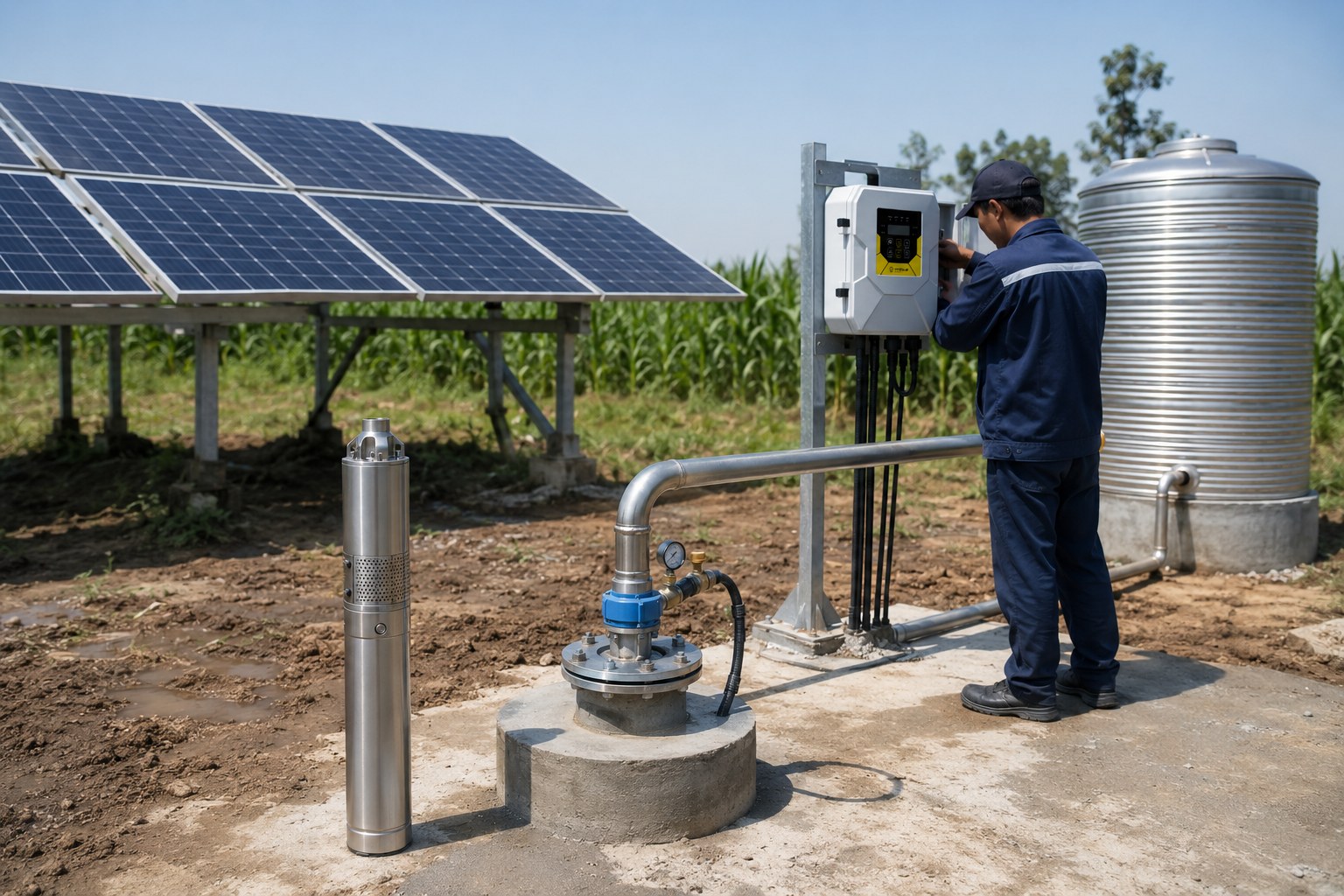
A water pump is the heart of any water distribution system, whether for a home, farm, or industrial site.
When it works, it's invisible.
When it fails, it becomes the only thing you can think about.
The symptoms of failure—like a sudden drop in pressure or a strange new noise—are just the surface.
The root causes are often interconnected, stemming from mechanical stress, material degradation, and inefficient operation.
Understanding these core issues is the first step toward building a truly resilient water system.
Instead of just fixing symptoms, we can design a solution that prevents them from ever happening.
Let's explore the most frequent problems and see how modern pump technology offers a permanent fix.
What Causes Overheating and Low Pressure in Water Pumps?
Your pump is hot to the touch and the water flow is just a trickle.
Your work stops.
This frustrating combination is often caused by a system working against itself.
Snippet Paragraph: Overheating and low pressure are typically caused by flow restrictions, air in the system, or a motor that is too weak or inefficient for the task.
An appropriately sized pump with a high-efficiency motor maintains correct pressure and temperature, preventing burnout and ensuring consistent flow.
When a pump overheats or fails to deliver adequate pressure, it’s signaling a fundamental conflict between the pump's design and its operating conditions.
These two problems are often two sides of the same coin.
A restriction in the water flow forces the motor to work harder to move the same amount of fluid, generating excess heat.
Simultaneously, that same restriction, whether a clog or a damaged component, prevents the system from building up the pressure you need.
It’s a vicious cycle that leads to reduced performance, increased energy consumption, and eventual pump failure.
The Critical Role of Pump Type and Application
A common mistake is using a one-size-fits-all approach to water pumping.
The demands of a deep well are vastly different from those of surface-level farm irrigation.
Forcing a pump designed for high flow into a high-pressure (high head) application will inevitably lead to problems.
- Clogged Pipes: Debris and sediment can accumulate in pipes, creating a bottleneck. This forces the pump to work harder, generating heat while pressure downstream plummets.
- Damaged Impellers: The impeller is the component that spins to create water flow. If its blades are worn, damaged, or clogged, it cannot move water effectively, resulting in low pressure.
- Air Pockets: Air trapped in the system is highly compressible. The pump wastes energy compressing this air instead of moving water, causing a significant drop in pressure and potential for overheating.
A properly engineered product portfolio addresses this by providing specialized pumps for distinct applications.
This ensures the pump is always operating within its optimal efficiency range.
| Pump Type | Typical Flow Rate | Typical Head (Pressure) | Key Advantage | Ideal Application |
|---|---|---|---|---|
| Solar Screw Pump | Low (1-5 m³/h) | Very High (Up to 200m+) | Handles sand and solids well | Deep wells, domestic water, livestock watering |
| Solar Plastic Impeller Pump | High (5-20 m³/h) | Medium (Up to 100m) | High efficiency, wear-resistant, economical | Farm irrigation, high-volume transfer |
| Solar SS Impeller Pump | High (5-20 m³/h) | Medium-High (Up to 150m) | Superior corrosion resistance | Corrosive water, high-end homes, ranches |
By selecting a screw pump for a 150-meter deep well, you get the required pressure without over-stressing the motor.
For irrigating a large field, a plastic impeller pump provides the necessary high volume efficiently.
This matching of pump to task is the first and most important step in preventing overheating and low-pressure issues.
Why Do Water Pumps Leak or Operate Noisily?
That dripping sound or new grinding noise from your pump is more than an annoyance.
It's a clear warning of impending failure.
Ignoring it almost always leads to more extensive and expensive damage.
Snippet Paragraph: Leaks are most often caused by worn-out seals and gaskets, while unusual noise points to problems like worn bearings, cavitation, or loose components.
These are symptoms of mechanical wear and material fatigue, which can be minimized by using high-quality materials and precision-engineered components.
A new noise or a visible leak is your pump’s way of crying for help.
These symptoms indicate that internal components are failing, and the structural integrity of the pump is compromised.
Leaks mean that seals designed to keep water contained are no longer doing their job.
Noise means that moving parts are creating friction, vibrating excessively, or striking other components.
Both issues create a feedback loop of damage.
A small leak can reduce lubrication for bearings, causing them to wear out and become noisy.
A vibrating, noisy component can cause seals to fail prematurely, leading to a leak.
Addressing these symptoms requires understanding the materials and mechanical forces at play.
Material Durability and Component Integrity
The lifespan of a water pump is directly tied to the quality of its materials and the precision of its construction.
Cheaper materials may save money upfront but will quickly degrade under the constant stress of operation.
- Worn-Out Seals: Seals are often made of rubber or composite materials that can become brittle and crack over time due to heat and chemical exposure. This is a leading cause of leaks.
- Corrosion: Using the wrong materials for the water conditions is a recipe for disaster. Standard cast iron can rust and corrode quickly in acidic or alkaline water, weakening the pump housing and impeller, leading to leaks and component failure. Corrosion is a silent killer, often going unnoticed until it's too late.
- Worn Bearings: Bearings allow the pump's shaft to spin smoothly. When they wear out, they create friction and heat, producing a grinding or squealing noise. This can be caused by poor lubrication, contamination, or excessive belt tension.
- Loose Components: Vibrations can cause bolts and fasteners to loosen over time, leading to rattling noises and misaligned parts that increase wear and tear.
The Engineering Solution: Better Materials and Design
Choosing a pump built with superior materials is essential for longevity, especially in harsh environments.
A solar stainless steel impeller pump, for example, is constructed with SS304 stainless steel.
This material offers exceptional resistance to corrosion, making it ideal for the alkaline soil regions of Australia or areas with acidic water.
It prevents the slow degradation that causes leaks and impeller damage in lesser pumps.
For less aggressive water but high-volume needs, a solar plastic impeller pump uses advanced, wear-resistant polymers.
These materials are engineered to withstand the abrasive effects of fine sand and sediment, which would quickly destroy a low-quality impeller.
Furthermore, noise and vibration issues are often linked to the motor and drive system.
A well-balanced, high-quality drive pulley and properly tensioned belt are crucial.
Modern systems often integrate the motor and pump more closely, reducing the number of potential failure points and ensuring parts are perfectly aligned from the factory.
This design philosophy minimizes the mechanical stress that leads to noisy operation and premature leaks.
What is Cavitation and Why is it so Destructive?
You hear a rattling or grinding noise, like the pump is chewing on gravel.
This isn't debris.
This is cavitation, and it is actively destroying your pump from the inside out.
Snippet Paragraph: Cavitation is the formation and violent collapse of air bubbles in the water due to low pressure within the pump.
These implosions create powerful micro-jets and shockwaves that erode the impeller and housing, leading to noise, vibration, and rapid, catastrophic failure.
Cavitation is one of the most destructive forces a pump can face.
It occurs when the pressure of the liquid inside the pump drops below its vapor pressure, causing the liquid to boil at a low temperature and form small vapor bubbles.
As these bubbles are carried into a higher-pressure zone within the pump (usually as they move along the impeller vane), they collapse violently.
This implosion is not a gentle pop.
It creates a powerful shockwave and a micro-jet of liquid that can strike the impeller and pump housing with immense force.
Over time, this repeated bombardment pits and erodes the metal surfaces, literally eating the components away.
The damage looks like sponge-like erosion and can lead to a complete loss of performance, seal failure, and a destroyed impeller in a surprisingly short amount of time.
Understanding the Causes of Cavitation
Cavitation is not a random event; it's a direct result of improper operating conditions.
The primary cause is insufficient pressure at the pump's inlet, known as Net Positive Suction Head (NPSH).
Several factors can contribute to this:
- Low Water Levels: If the water source is too far below the pump, the pump has to "suck" harder, lowering the inlet pressure.
- Running Too Fast: Speeding up a pump to get more flow can drastically lower the pressure at the inlet, triggering cavitation.
- High Water Temperature: Warmer water boils at a lower pressure, making it more susceptible to cavitation.
- Clogged Intake Line: Any blockage, from a dirty filter to a pipe that is too narrow, restricts flow and creates a vacuum effect.
- Air Leaks: Air leaking into the suction line can also contribute to bubble formation and damage.
The Engineering Solution: Smart Control and Efficient Design
Preventing cavitation is about maintaining adequate pressure and stable flow.
This is where a modern, integrated system shines.
A high-efficiency Brushless DC (BLDC) permanent magnet motor paired with an intelligent MPPT (Maximum Power Point Tracking) controller provides a powerful defense against cavitation.
The MPPT controller constantly analyzes the power available from the solar panels and adjusts the pump's speed accordingly.
On a cloudy day, instead of trying to run at full speed with insufficient power (which would drop pressure and risk cavitation), the controller slows the pump down to a sustainable, stable speed.
This ensures the pump always operates within its safe, designed parameters.
The BLDC motor itself offers high torque even at lower speeds.
This means it can continue to move water effectively without the need for high RPMs that might otherwise induce cavitation.
By managing the pump's speed intelligently, the system automatically avoids the low-pressure conditions where cavitation thrives, protecting the pump from this incredibly destructive phenomenon.
How Does a High-Efficiency Motor Solve These Problems?
You keep repairing or replacing pumps, wasting time and money.
The pump itself might not be the problem.
The real issue could be the inefficient, outdated motor that is driving it.
Snippet Paragraph: A high-efficiency motor, such as a Brushless DC (BLDC) permanent magnet motor, solves many pump problems by providing stable, optimized power.
This reduces mechanical stress, prevents overheating, and significantly lowers operational costs by using up to 20% less energy for the same work.
The motor is the engine of your water pump.
Its performance dictates the pump's reliability, efficiency, and lifespan.
A low-quality or inefficient motor struggles to deliver consistent power, leading to a cascade of problems.
It may run too hot, vibrate excessively, and fail to provide the necessary torque to handle changes in water demand.
This puts immense stress on the entire system, from the bearings and seals to the impeller itself.
Focusing only on the "wet end" of the pump while ignoring the motor is like putting a weak engine in a performance car—you will never get the results you expect.
Upgrading to a high-efficiency motor isn't just a minor improvement; it's a fundamental change that resolves many common pump failures at their source.
The Power of Permanent Magnet Brushless Technology
Traditional motors, like standard AC induction or brushed DC motors, have inherent limitations in efficiency and durability.
A high-efficiency BLDC permanent magnet motor represents a significant technological leap forward.
- Unmatched Efficiency: BLDC motors can achieve efficiencies exceeding 90%, compared to 70-80% for many conventional motors. This means more of the input energy (from solar panels or the grid) is converted into useful work, and less is wasted as heat. This directly combats overheating.
- Maintenance-Free Design: As the name implies, brushless motors have no brushes to wear out and replace. This eliminates a common failure point and reduces lifetime maintenance costs to virtually zero.
- Compact and Lightweight: By using powerful neodymium iron boron permanent magnets, BLDC motors are significantly smaller and lighter. A typical design can be up to 47% smaller and 39% lighter than a traditional motor of equivalent power. This reduces vibration and makes installation far easier.
- High Torque: These motors provide strong, consistent torque across their entire speed range, allowing the pump to start easily under load and maintain stable pressure even as conditions change.
The Financial and Operational Impact of Motor Efficiency
The benefits of a better motor are not just technical; they are financial.
The superior efficiency directly translates to lower operating costs.
In a solar-powered system, this is especially dramatic.
A more efficient motor requires less power to achieve the same water output, meaning you can use a smaller, less expensive solar panel array.
This can reduce the initial system investment by 15-20% or more.
| Feature | Standard AC Motor | High-Efficiency BLDC Motor | Financial & Operational Advantage |
|---|---|---|---|
| Energy Efficiency | ~75% | >90% | ~17% fewer solar panels needed; lower electricity bills |
| Maintenance | Requires brush replacement | Maintenance-free | Zero lifetime maintenance costs for the motor |
| Lifespan | Shorter due to wear & heat | Longer due to cooler operation & no brushes | Fewer replacements, less downtime, lower total cost of ownership |
| Installation | Heavier & bulkier | ~39% lighter, ~47% smaller | Faster, easier, and cheaper installation |
By adopting a high-efficiency BLDC motor, you are not just fixing one problem.
You are upgrading the core of your system to prevent a wide range of failures, reduce costs, and ensure reliable performance for years to come.
What is an AC/DC Hybrid System and When Do You Need It?
Solar pumps are fantastic, but the sun doesn't always shine.
What happens on cloudy days, or when you need water at night?
Your critical water supply can't simply shut down.
Snippet Paragraph: An AC/DC hybrid system guarantees a 24/7 water supply by automatically switching between solar (DC) and grid/generator (AC) power.
It intelligently prioritizes free solar energy but provides the peace of mind that water will always be available, regardless of weather or time of day.
The primary limitation of a purely solar-powered system is its dependence on sunlight.
For many applications, this is perfectly acceptable.
But for critical operations, any interruption in the water supply is a major problem.
Households need consistent water pressure for daily life.
Livestock requires constant access to drinking water.
High-value crops may need irrigation at specific times, even overnight.
This is where an AC/DC hybrid system becomes an essential piece of technology.
It bridges the gap between the eco-friendly, cost-free energy of the sun and the on-demand reliability of conventional power.
It offers the best of both worlds without compromise.
The Technology Behind an Uninterrupted Water Supply
The brain of the hybrid system is the advanced controller.
This device is designed with two simultaneous power inputs: one for the DC power from your solar panels and another for AC power from the electrical grid or a backup generator.
The controller's operation is seamless and fully automatic.
- Solar Priority: When there is sufficient sunlight, the controller exclusively uses the DC solar power to run the pump. This maximizes your use of free energy and minimizes your operational costs.
- Hybrid Blending: On partly cloudy days when solar power is reduced but still available, the controller has a hybrid function. It will draw as much power as possible from the solar panels and supplement it with just enough AC power to meet the demand. This ensures you are always using solar energy to its fullest potential.
- Automatic Switchover: When the sun goes down or during extended periods of heavy cloud cover, the photovoltaic input will drop. The controller detects this instantly and automatically switches over to the AC power source to keep the pump running without interruption.
Who Benefits Most from Hybrid Technology?
While any user can appreciate the convenience of a 24/7 water supply, hybrid systems are particularly valuable for certain customers.
Distributors and importers can offer this as a premium solution to clients who prioritize reliability above all else.
It allows them to serve a higher-end segment of the market.
For the end-user, the benefits are tangible:
- Farmers and Ranchers: They can irrigate crops or water livestock on a schedule that is optimal for their operations, not just when the sun is out. This can directly increase yields and animal health.
- Off-Grid Homes: Families living in remote areas can enjoy the same reliable water pressure as someone in the city, with solar as their primary power source and a small generator as a backup for true energy independence.
- Commercial Operations: Businesses that rely on water can eliminate the risk of costly downtime due to weather, ensuring operational continuity.
An AC/DC hybrid system transforms a solar water pump from a daytime-only device into a comprehensive, all-weather water solution.
Conclusion
The main problem with a water pump is rarely a single faulty part.
It's a system-wide mismatch.
A well-matched pump, high-efficiency motor, and intelligent controller work together to ensure a reliable, durable, and cost-effective water supply for any application.
FAQs
How do I know if my water pump is failing?
Look for warning signs like unusual noises (grinding, rattling), visible leaks, a sudden drop in water pressure, or the motor feeling excessively hot to the touch.
What is the most common cause of water pump failure?
Corrosion from improper water chemistry and contamination from sediment or debris are two of the most frequent and destructive causes of premature pump failure.
Can a water pump be repaired?
Yes, minor issues like replacing seals or bearings can often be repaired. However, if major components like the impeller or motor are severely damaged, replacement is usually more cost-effective.
How long should a water pump last?
A high-quality water pump, when properly matched to its application and maintained, can have a service life of 5 to 10 years or even longer.
What happens if you run a water pump without water?
Running a pump dry is extremely damaging. Without water for cooling and lubrication, the pump will overheat within minutes, destroying its seals and potentially seizing the motor.
Why is my water pump losing pressure?
Pressure loss can be caused by several issues, including leaks in the system, air pockets in the pump or lines, a clogged intake filter, or a worn-out impeller.
Is it worth fixing a noisy water pump?
Absolutely. Noise is a symptom of a mechanical problem, such as worn bearings. Ignoring it will lead to more severe damage and eventual catastrophic failure of the pump.
What type of water pump is best for a deep well?
For deep wells, a solar screw pump is often the best choice. It is specifically designed to produce the high pressure (head) needed to lift water from great depths efficiently.