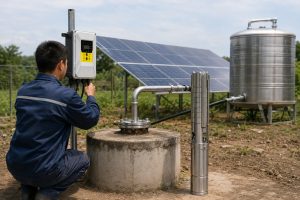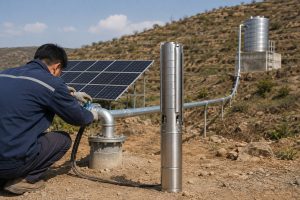
Struggling with water access in a remote location without a reliable power grid?
The cost and hassle of fuel-powered generators for your water needs can be overwhelming.
But what if there was a way to pump water efficiently and sustainably, completely off-grid?
Yes, you can absolutely create a water pump that operates without electricity.
Solutions range from purely mechanical devices like hydraulic ram pumps, which use the power of flowing water, to modern solar-powered systems that provide reliable, eco-friendly water pumping for any application.
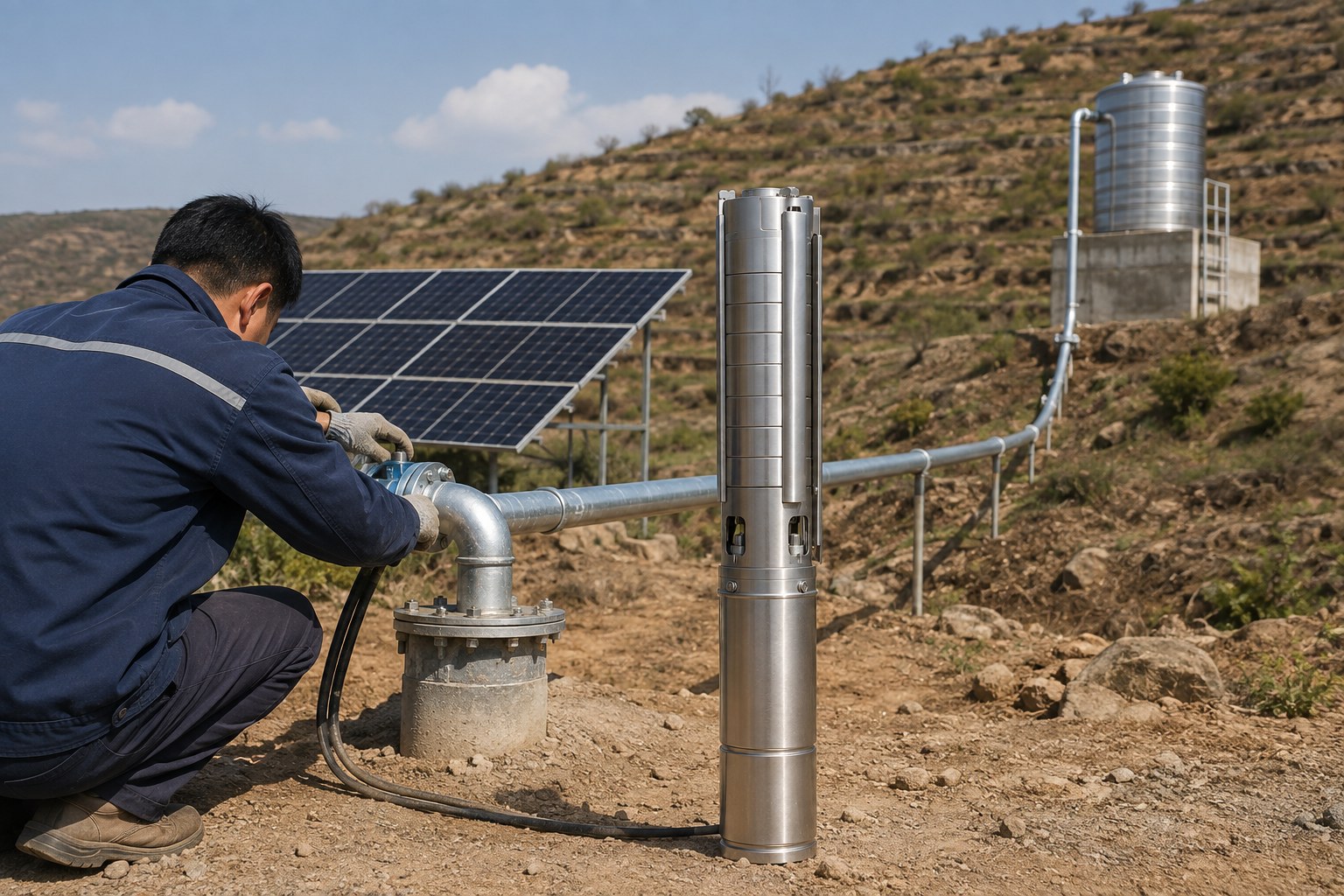
Pumping water without traditional power is not just a novelty.
It is a critical necessity for agriculture, livestock, and homes in countless off-grid locations worldwide.
From simple, ingenious mechanical designs to advanced solar technology, the options are more accessible than ever.
Understanding these methods is the first step toward achieving water independence.
Let's explore these solutions to help you decide which path is right for your needs, whether it's a simple DIY project or a professional-grade system.
How Hydraulic Ram Pumps Push Water Uphill With No External Power Input
Need to move water uphill without power?
A flowing stream on your property holds untapped potential.
Imagine harnessing that natural energy for free to irrigate your land or supply a water tank.
A hydraulic ram pump is a brilliant mechanical device that uses the energy of flowing water itself.
It cleverly converts the kinetic force from a large volume of water falling a short distance into the pressure needed to lift a smaller volume of water to a much greater height.
The hydraulic ram pump is a masterpiece of simple, effective engineering.
It operates continuously with no external power source, making it an excellent choice for specific off-grid scenarios.
The Science of Water Hammer
At its core, the pump works by harnessing a phenomenon called "water hammer."
When a moving column of water is suddenly stopped, its momentum creates a massive pressure spike.
While this can cause damage in household plumbing, a ram pump captures this pressure spike to do useful work.
- Water flows from a source (like a stream) down a "drive pipe."
- It exits through a "waste valve" at the bottom.
- As the water flow speeds up, it forces the waste valve to slam shut.
- The sudden stop creates a pressure surge that forces open a second "delivery valve."
- This pushes a small amount of water up a "delivery pipe" to a higher elevation.
- The pressure drops, the delivery valve closes, the waste valve re-opens, and the cycle repeats, often once every second.
Performance and Efficiency
The efficiency of a ram pump is directly tied to the ratio of the "fall" (the vertical distance the water drops to the pump) and the "lift" (the vertical distance the water is pumped).
A common rule of thumb is that for every 1 foot of fall, you can lift water 10 feet.
However, the volume of water delivered decreases as the lift height increases.
| Fall-to-Lift Ratio | Approximate Water Delivered (%) | Example Application |
|---|---|---|
| 1:5 | ~20% | Lifting water from a creek to a garden on a low hill. |
| 1:10 | ~10% | Pumping water to a livestock trough further up a pasture. |
| 1:20 | ~5% | Supplying a holding tank at a significant elevation above the source. |
While the flow rate is low compared to electric pumps, it runs 24/7 at no cost, delivering a substantial amount of water over time.
Is a Ram Pump Right for You?
This pump is not a universal solution.
It is ideal for properties with a year-round stream, creek, or spring that has a measurable drop in elevation.
Pros:
- No Fuel or Electricity: It runs entirely on the kinetic energy of the water.
- Extremely Low Maintenance: With only two moving parts, it can operate for years with minimal attention.
- Durable: Often built from cast iron or steel, these pumps are incredibly robust.
Cons:
- Site-Specific: Requires a water source with a consistent flow and a vertical drop.
- Low Flow Rate: Not suitable for applications requiring high volumes of water quickly.
- Wastes Water: A significant portion of the water (often over 90%) flows out of the waste valve and back into the source.
- Noisy: The constant "clank-clank" of the valve can be loud.
For deep wells or areas without flowing surface water, a ram pump is not an option, which is where other technologies truly shine.
Using an AC Water Pump with an Electric Generator
Power outages or remote job sites can instantly shut down your water supply.
A generator seems like a quick and powerful fix.
But is it the most practical or sustainable long-term solution for your water needs?
Pairing a standard AC pump with a gasoline or diesel generator provides very high power output for large-scale pumping.
It's a reliable method for temporary or emergency use but comes with a heavy dependence on fuel, constant noise, and significant ongoing operational costs.
This combination is a common go-to for situations where high-powered pumping is needed immediately and grid power is not an option.
It allows you to use readily available AC submersible or surface pumps that you might already own.
Common Applications
This setup is most useful in specific, often temporary, scenarios.
- Emergency Backup: It can keep water flowing during power grid failures.
- Remote Agriculture: Provides the high flow rates needed for irrigating large fields far from power lines.
- Construction Sites: Used for dewatering or supplying water before permanent utilities are installed.
The primary advantage is its sheer power.
A generator can run large pumps capable of moving hundreds of gallons per minute, a task that is difficult for many other off-grid methods.
The True Cost of a Generator Setup
The initial purchase of the pump and generator is only the beginning of the expenses.
The total cost of ownership is significantly higher than other alternatives when you factor in ongoing operational needs.
- Fuel Consumption: A moderately sized 5,000-watt generator can burn through 10-15 gallons of gasoline per day under a heavy pumping load.
At today's fuel prices, this can equate to thousands of dollars per year. - Maintenance: Generators require regular oil changes, filter replacements, and engine servicing to remain reliable.
This adds both cost and labor. - Noise and Emissions: The constant noise can be a major disturbance, and the exhaust fumes contribute to air pollution.
This makes it unsuitable for residential areas or eco-sensitive environments.
Performance vs. Sustainability
When comparing off-grid water solutions, the generator-powered AC pump sits at one extreme of the spectrum.
It offers maximum performance with minimal sustainability.
| Feature | AC Pump + Generator | Solar Pump System |
|---|---|---|
| Power Source | Gasoline / Diesel | Sunlight |
| Operating Cost | High (Fuel, Maintenance) | Virtually Zero |
| Flow Rate | Very High | Moderate to High |
| Environmental Impact | High (Noise, Emissions) | Zero |
| Reliability | Depends on fuel & maintenance | Depends on sunlight (can be mitigated) |
While undeniably powerful, a generator-based system is a reactive, short-term solution.
For anyone seeking a cost-effective, reliable, and environmentally friendly long-term water supply, it's crucial to look towards more sustainable technologies.
Harnessing the Sun: The Rise of Solar Water Pumps
Relying on the grid or fuel is expensive, unreliable, and damaging to the environment.
What if you could get free, clean energy directly from the sun to power all your water needs?
This is no longer a future dream but a present-day reality.
Solar water pumps offer a powerful, eco-friendly, and highly cost-effective solution for off-grid water supply.
They convert sunlight directly into electrical energy to run a pump, completely eliminating fuel costs and reducing environmental impact, making them the superior choice for remote regions.
The global demand for clean water and sustainable energy has made solar water pumps essential equipment across Africa, the Americas, Australia, and Asia.
They operate independently of the power grid, providing a reliable water source for homes, farms, and livestock with unmatched long-term value.
The Engine of the System: The BLDC Motor
The heart of any modern solar water pump is its motor.
The most advanced systems utilize a high-efficiency Brushless DC (BLDC) permanent magnet motor.
This is not just a minor improvement; it's a revolutionary leap in technology.
These motors achieve efficiencies exceeding 90%, compared to 60-70% for older brushed motors.
What does this mean for you?
- Higher Efficiency: A BLDC motor converts more sunlight into pumping power.
This means it requires a smaller, less expensive solar panel array to do the same amount of work—often reducing panel costs by up to 30%. - Lighter & More Compact: Advanced designs can make the motor up to 39% lighter and 47% smaller than traditional motors.
This simplifies transportation and installation, a critical factor in remote areas. - Increased Durability: With no brushes to wear out, these motors are virtually maintenance-free and have a significantly longer service life, often exceeding 10 years.
Matching the Pump to the Well: A Portfolio Approach
There is no "one-size-fits-all" solar pump.
The best choice depends on your well's depth, the water's quality, and the volume of water you need.
The three most popular types of solar deep well pumps form a complete and competitive portfolio.
1. Solar Screw Pump: For Low Flow and High Head
This pump uses a rugged stainless steel screw rotating inside a rubber stator.
This mechanism "pushes" water upwards through compression, making it perfect for very deep wells.
It's ideal for wells up to 300 meters deep, providing a steady, reliable flow perfect for domestic water or livestock.
A key advantage is its incredible resistance to sand and silt, as it can handle water with a sand content of up to 2%.
2. Solar Plastic Impeller Pump: For High Flow and Wear Resistance
This is a multi-stage centrifugal pump equipped with durable, engineered plastic impellers.
It is designed to deliver high volumes of water at medium head, capable of achieving flow rates over 20 m³/h.
It is lightweight, economical, and offers excellent resistance to fine sand, making it a workhorse for farm irrigation and pasture water supply across Africa and the Americas.
3. Solar Stainless Steel Impeller Pump: For Premium Quality and Corrosion Resistance
For harsh water conditions, this is the ultimate solution.
The entire pump body and all impellers are constructed from SS304 stainless steel.
This provides unmatched resistance to corrosion in acidic or alkaline water (pH range of 4-9).
While it has a higher initial cost, its extreme durability ensures a long service life in environments where other pumps would quickly fail, making it a wise investment for high-end homes or regions with aggressive water.
| Pump Type | Best For | Flow Rate | Head (Lift) | Key Advantage | Limitation |
|---|---|---|---|---|---|
| Solar Screw Pump | Deep wells, domestic use | Low (1-5 m³/h) | High (up to 300m) | High sand resistance | Limited flow rate |
| Plastic Impeller Pump | Farm irrigation, high volume | High (up to 20 m³/h) | Medium (50-80m) | Economical, wear-resistant | Less durable in corrosive water |
| SS Impeller Pump | Corrosive water, high-end | High (up to 20 m³/h) | Medium-High (up to 150m) | Extreme durability & corrosion resistance | Higher initial cost |
Beyond Simple Solar: Intelligent Controllers and Hybrid Power
Solar power is a brilliant solution, but what happens on cloudy days or when you need water at night?
This potential for downtime is a major concern for anyone who relies on a consistent water supply for their home, crops, or livestock.
Modern solar pump systems solve this problem with intelligent controllers featuring MPPT (Maximum Power Point Tracking) to maximize every bit of sunlight.
Furthermore, advanced AC/DC hybrid controllers allow the system to automatically switch to grid or generator power when sunlight is unavailable, ensuring 24/7 water security.
The controller is the brain of the solar pumping system.
It does much more than just turn the pump on and off.
It optimizes performance, protects the equipment, and provides the flexibility needed for a truly reliable water source.
What is MPPT and Why Does It Matter?
Maximum Power Point Tracking (MPPT) is a sophisticated electronic technology that constantly adjusts the electrical load to extract the maximum possible power from the solar panels.
Compared to simpler controllers, an MPPT controller can boost the energy harvested from your solar array by up to 30%.
This translates directly to more water.
- Longer Pumping Hours: The pump can start earlier in the morning and run later into the evening.
- Better Cloudy Day Performance: It can efficiently use the limited sunlight available during overcast weather to continue pumping, albeit at a reduced rate.
- Smaller System Size: Because it's more efficient, you may be able to use a smaller, less expensive solar panel array to meet your daily water needs.
The 24/7 Solution: AC/DC Hybrid Controllers
The ultimate evolution in solar pumping is the AC/DC hybrid controller.
This technology offers complete peace of mind by providing a seamless, automatic backup power solution.
Here’s how it works:
- The controller is connected to both the solar panels (DC power) and an AC power source (grid or a generator).
- It constantly prioritizes solar power.
As long as there is sufficient sunlight, the pump runs 100% on free solar energy. - If solar input drops due to heavy clouds or at night, the controller automatically blends in or switches completely to the AC power source.
- When the sun returns, it automatically switches back to solar power.
This hybrid functionality ensures you have a worry-free, uninterrupted water supply 24 hours a day, 7 days a week, while still maximizing your use of free solar energy.
It eliminates the need for expensive battery banks for most applications and provides a level of reliability that solar-only systems cannot match.
This is the new standard for mission-critical water applications in agriculture and residential off-grid living.
Conclusion
DIY water pumping is possible, but modern solar systems with efficient motors and smart controllers offer the most reliable, cost-effective, and sustainable long-term solution for any off-grid water need.
FAQ
How much does a DIY water pump cost?
A simple DIY hydraulic ram pump can cost a few hundred dollars in parts.
A complete solar pump system starts around $500 and goes up depending on depth and volume needs.
Can a solar pump work on cloudy days?
Yes, but at a reduced flow rate.
Systems with MPPT controllers are much more effective on overcast days, and hybrid AC/DC controllers can switch to grid power for uninterrupted operation.
How deep can a solar pump pull water from?
It depends on the pump type.
Solar screw pumps are designed for very deep wells and can lift water from over 300 meters (nearly 1,000 feet).
How long do solar water pumps last?
A quality system can last over 10 years.
The solar panels are often warrantied for 25 years, and brushless motors are virtually maintenance-free, ensuring a long and reliable service life.
Do I need batteries for a solar water pump?
Not usually.
Most systems pump water into a storage tank during the day, which then provides water by gravity.
This is far more cost-effective than using batteries.
How do you size a solar water pump?
Sizing depends on your daily water needs, well depth (total dynamic head), and the amount of peak sun hours your location receives.
It's best to consult with a specialist.
What is the difference between a DC and AC solar water pump?
DC pumps run directly from solar panels, making them highly efficient.
AC pumps require an inverter to convert DC to AC, which adds cost and a point of potential failure.