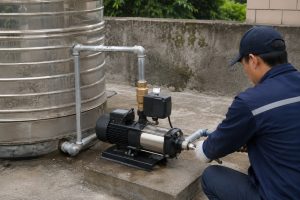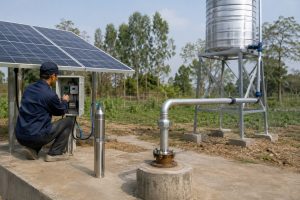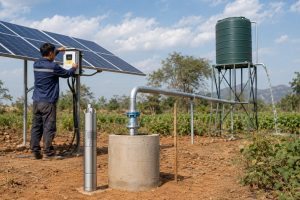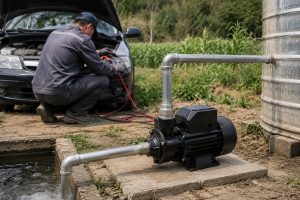
Struggling with weak water flow from your tank?
Low pressure makes daily tasks frustrating.
The right pump transforms your water supply, ensuring powerful, consistent pressure.
The best pump for your water tank depends on your specific needs.
For household use, a submersible or multistage pump offers quiet, high-pressure flow.
For irrigation, a jet pump is cost-effective.
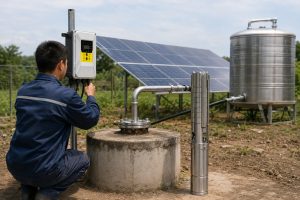
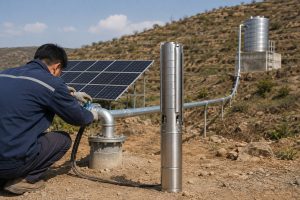
Solar pumps are ideal for off-grid applications, providing an energy-efficient and sustainable water solution.
Choosing a pump can feel complicated.
With so many types and specifications, how do you know which one is right for you?
This guide breaks down everything you need to know.
We will help you navigate the options.
Let's find the perfect pump for your water tank system.
Understanding Your Water Needs First
Don't just guess your pump needs.
An oversized pump wastes over 30% more energy, while an undersized one fails to deliver adequate pressure.
Accurately assessing your requirements is the first step to an efficient system.
Before buying a pump, identify your water's purpose (household, garden, livestock), required flow rate (LPM), and pressure.
Also, consider the distance and elevation the water must travel.
This determines the necessary "head height" and ensures adequate performance without costly mistakes.
To select the right pump, you must first become an expert on your own water system.
This means moving beyond a vague idea of "needing more pressure" and into the specifics of your property's demands.
A detailed assessment prevents the common mistake of buying a pump that is either too weak, leading to disappointing performance, or too powerful, leading to wasted energy and potential damage to your pipes.
Calculating Flow Rate (LPM)
Your required flow rate is the total amount of water you need if multiple outlets are running at the same time.
A single person showering won't need the same flow as a family doing laundry, running sprinklers, and washing dishes simultaneously.
Start by listing all the water outlets the pump will service.
Then, add up the flow rates for the fixtures you expect to use at the same time.
This gives you your peak demand flow rate.
A good rule of thumb is to size the pump to handle about 70-80% of the absolute maximum theoretical demand to balance performance and cost.
| Fixture | Average Flow Rate (Litres Per Minute) |
|---|---|
| Kitchen Tap | 10 - 15 LPM |
| Bathroom Tap | 8 - 12 LPM |
| Shower Head | 9 - 20 LPM |
| Toilet Cistern | 6 - 10 LPM |
| Dishwasher | 10 - 15 LPM (per cycle) |
| Washing Machine | 15 - 20 LPM (per cycle) |
| Garden Hose | 15 - 25 LPM |
Demystifying Head Height and Pressure
"Head" is the most critical factor after flow rate.
It represents the vertical height and horizontal distance the pump must push water against gravity and friction.
It's measured in meters.
The total head, or Total Dynamic Head (TDH), is calculated by adding the static head and friction loss.
- Static Head: The vertical distance from the water level in the tank to the highest outlet point.
- Friction Loss: The pressure lost due to friction as water moves through pipes, bends, and fittings. Narrower or longer pipes create significantly more friction. A 25mm pipe can have up to 400% more friction loss than a 50mm pipe over the same distance.
A simplified formula is: Total Head (m) = Vertical Lift (m) + (Pipe Length (m) / 10) + Pressure Requirement (m). (Note: 10m head ≈ 1 bar ≈ 100kPa pressure).
This calculation ensures the pump you choose has enough power to deliver water with adequate pressure at the final destination, not just at the pump outlet.
Defining the Purpose of Your Water System
The final piece of the puzzle is identifying the primary use of the water.
This influences not just the pump size but also its type and features.
- Household Use: Requires consistent pressure and quiet operation. Submersible or multistage pumps are often preferred. A pressure of 300-400 kPa is ideal for modern homes.
- Garden Irrigation: Often requires higher flow rates but can tolerate more noise and less precise pressure control. Cost-effective jet or centrifugal pumps are common choices.
- Livestock: Reliability is key. The system needs to deliver water consistently to troughs, which may be far from the tank. This demands a pump that can handle long pipe runs.
- Water Transfer: The goal is to move a large volume of water quickly, for example, between two tanks. Pressure is less important than a high flow rate. Simple centrifugal pumps excel here.
Exploring the Types of Water Tank Pumps
Feeling overwhelmed by pump types?
Jet, submersible, multistage—the names can be confusing.
Understanding the core function of each type simplifies your choice and prevents buyer's remorse, which affects up to 25% of first-time pump buyers.
The main pump types include submersible pumps (quiet, for inside tanks), jet pumps (cost-effective, for surface use), and multistage pumps (high-pressure, for large homes).
Each has a distinct advantage depending on your tank location, noise preference, and pressure requirements.
The pump you choose is the heart of your water system, so its design must match its job.
Placing a pump in the wrong application, like using a simple transfer pump for a multi-story house, will lead to frustration and failure.
Let's dissect the most common types to understand where each one shines.
This knowledge will empower you to look past marketing claims and focus on the mechanics that matter for your specific setup.
Submersible Pumps: The Silent Performer
A submersible pump is installed directly inside your water tank, fully submerged in the water it's pumping.
Because it's underwater, its operation is nearly silent, making it the number one choice for residential areas where noise is a concern.
These pumps push water upwards rather than pulling it, which is a more energy-efficient process, often resulting in up to 15-20% lower electricity consumption compared to surface pumps of similar output.
The main downside is accessibility.
If maintenance is required, you must pull the pump out of the tank.
However, their sealed design and water-cooled motor mean they often have a longer, more reliable service life.
They are ideal for underground tanks or any application where space is limited and noise reduction is a priority.
| Feature | Submersible Pump | External (Surface) Pump |
|---|---|---|
| Noise Level | Very Quiet (< 45 dB) | Audible to Loud (55 - 85 dB) |
| Location | Inside the water tank | Outside the tank, above ground |
| Efficiency | High (pushes water) | Moderate (pulls water via suction) |
| Priming | Not required (self-priming) | Often required |
| Maintenance | Less accessible | Easy to access |
| Best For | Residential homes, underground tanks | Irrigation, water transfer, easy access |
External (Surface) Pumps: Accessible and Versatile
External pumps are installed outside the tank on a dry, level surface.
Their main advantage is ease of access for maintenance and repairs.
This category includes several common types:
- Jet Pumps: These are the workhorses for small homes and gardens. They use a venturi mechanism to create suction, allowing them to draw water from a shallow well or tank. They are cost-effective and relatively simple to maintain, making them a popular DIY choice.
- Centrifugal Pumps: These pumps are best for water transfer applications. They use a spinning impeller to throw water outwards, creating flow. They are robust and simple but typically provide low to moderate pressure, making them unsuitable for most household pressure systems on their own.
- Multistage Pumps: For high-pressure needs, multistage pumps are the solution. They contain multiple impellers and diffusers stacked in a series. Each stage boosts the pressure, resulting in a pump that can deliver high pressure efficiently. They are perfect for multi-story homes, large irrigation systems, or long pipe runs where pressure loss is significant.
Advanced Solutions: Solar and Hybrid Systems
Worried about rising electricity bills or living off-grid?
Conventional pumps tie you to an unpredictable grid.
Solar technology offers a path to energy independence and sustainable water management, cutting operational costs by up to 100%.
Solar pumps are a game-changer, especially for remote areas in Africa, Australia, and the Americas.
They use a high-efficiency BLDC motor powered by solar panels.
Key types include screw pumps for deep wells, plastic impeller pumps for high flow, and stainless steel impeller pumps for corrosive water.
The shift towards sustainable energy has revolutionized water pumping.
Solar water pump systems are no longer a niche product but a mainstream solution for agriculture, livestock, and domestic water supply in off-grid locations.
Their power lies in a combination of highly efficient motors, durable pump designs tailored to specific water conditions, and intelligent controllers that maximize every ray of sunshine.
Let's explore this powerful technology.
The Powerhouse: BLDC Permanent Magnet Motors
At the core of every modern solar pump is a Brushless DC (BLDC) permanent magnet motor.
Unlike traditional motors, these don't have brushes that wear out, making them virtually maintenance-free.
Their primary advantage is incredible efficiency, often exceeding 90%.
This is a massive leap from the 50-60% efficiency of standard AC motors.
This high efficiency means the motor converts more solar energy into pumping power, not wasted heat.
Technologically, this is achieved through powerful neodymium iron boron magnets in the rotor.
The result is a motor that is not only more powerful but also more compact—often up to 47% smaller and 39% lighter than a traditional motor of equivalent output.
This reduces the number of solar panels needed, lowers shipping and installation costs, and extends the system's overall lifespan.
Choosing Your Solar Pump Type
The pump end itself is tailored to different applications, with three main designs dominating the market:
- Solar Screw Pump: This design uses a helical stainless steel rotor (the screw) inside a rubber stator. As the screw turns, it creates sealed cavities of water that are pushed upwards. This mechanism produces very high pressure (head) but at a low flow rate. It is exceptionally resistant to sand and ideal for deep wells, domestic water supply, and livestock watering in challenging environments.
- Solar Plastic Impeller Pump: A multi-stage centrifugal pump equipped with durable, wear-resistant plastic impellers. This design is engineered for high flow at a medium head. It's an economical and lightweight solution perfect for farm irrigation, pasture management, and filling large tanks where water volume is more critical than extreme pressure.
- Solar Stainless Steel Impeller Pump: This is the premium option. The pump body and all impellers are made from SS304 or higher-grade stainless steel. This provides maximum resistance to corrosion from acidic, alkaline, or saline water. It delivers high flow at medium-to-high head and is built for longevity in the harshest water conditions, making it a reliable choice for high-end homes and critical agricultural operations.
| Solar Pump Type | Best Application | Flow Rate | Head (Pressure) | Sand Resistance | Cost |
|---|---|---|---|---|---|
| Screw Pump | Deep Wells, Homes | Low | Very High | Excellent | Medium |
| Plastic Impeller | Farm Irrigation | High | Medium | Good | Low |
| Stainless Steel Impeller | Corrosive Water | High | Med-High | Moderate | High |
The Smart Brain: Controllers and Hybrid Functionality
A solar pump system's intelligence comes from its controller.
Modern controllers use Maximum Power Point Tracking (MPPT) technology.
This algorithm constantly adjusts the electrical load to ensure the solar panels operate at their peak efficiency, maximizing water output throughout the day, even in cloudy conditions.
This can boost performance by up to 30% compared to basic controllers.
The most advanced systems now include hybrid functionality.
These controllers have dual inputs for both DC power from solar panels and AC power from the grid or a generator.
The system prioritizes solar power.
If the sun is weak, it can blend AC and DC power to maintain performance.
When solar is unavailable (at night or on very cloudy days), it automatically switches to the AC source.
This ensures a reliable, 24/7 water supply without manual intervention, offering the best of both worlds: sustainable energy and uninterrupted operation.
Installation and Maintenance for Longevity
Your new pump is installed, but the job isn't done.
Neglecting simple installation checks and regular maintenance can shorten a pump's life by 50% or more.
A failed pump means no water and unexpected costs.
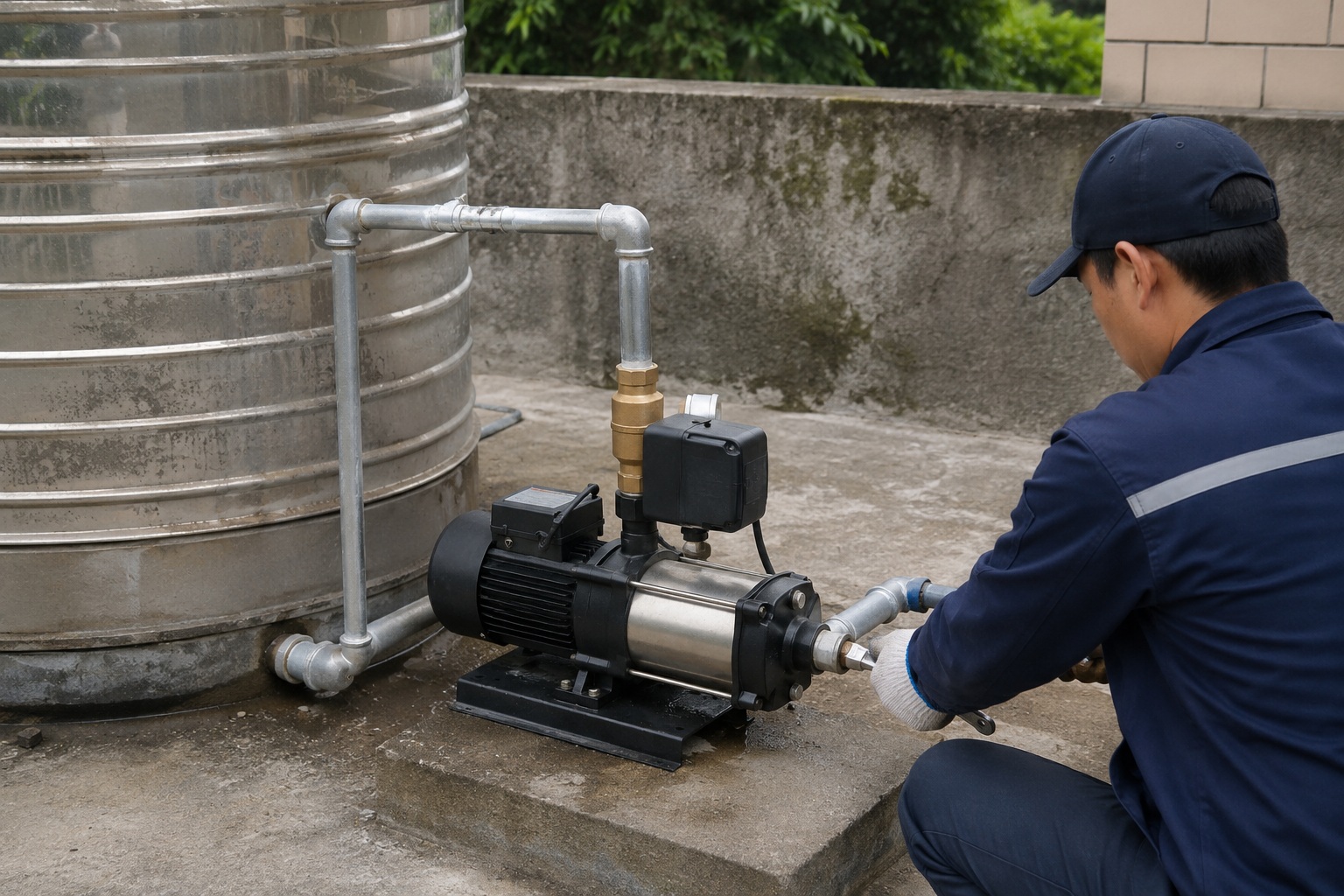
Proper installation near the tank on a solid, level base is crucial to prevent vibration damage.
For maintenance, regularly inspect for leaks, clean filters and inlet screens, and ensure the pump area is dry and well-ventilated.
Scheduling a professional service every 1-2 years prevents major failures.
A high-quality pump is an investment.
Like any mechanical device, its performance and lifespan are directly linked to how it's installed and cared for.
Many pump failures are not due to manufacturing defects but to poor installation practices or a complete lack of maintenance.
Following a few basic principles can double your pump's lifespan and ensure it runs efficiently for years to come.
Essential Installation Checklist
Getting the installation right from the start prevents 80% of common pump problems.
Whether you're doing it yourself or hiring a professional, ensure these points are covered:
- Solid Foundation: The pump must be mounted on a flat, solid, and level base (e.g., a concrete slab) to minimize vibration. Vibration is a leading cause of premature bearing and seal failure.
- Protection from Elements: House the pump in a well-ventilated, weather-proof pump cover or shed. This protects it from rain, which can short the electronics, and direct sun, which can degrade plastic components and cause overheating.
- Correct Pipe Sizing: The suction pipe (from the tank to the pump) should be at least the same diameter as the pump's inlet, or even one size larger. A narrow suction pipe restricts flow and can cause cavitation (air bubble formation), which is highly destructive to the impeller.
- Install Check and Foot Valves: A check valve (non-return valve) on the outlet pipe stops water from flowing back and causing the pump to cycle unnecessarily. A foot valve with a strainer on the suction line in the tank keeps the line primed and prevents large debris from entering the pump.
- Secure Electricals: All wiring should be done by a licensed electrician. Ensure the power supply matches the pump's voltage and that the circuit is protected by a suitable breaker.
A Simple Maintenance Schedule
Proactive maintenance is far cheaper than reactive repairs.
Create a simple schedule to keep your pump in top condition.
| Task | Frequency | Description |
|---|---|---|
| Visual Inspection | Monthly | Look and listen for leaks, unusual noises, or vibrations. Check that the pump area is dry. |
| Clean Inlet Filter/Strainer | Every 3 Months | The strainer on the suction line in the tank can get clogged with algae or debris. A clean filter ensures optimal flow. |
| Check Pressure | Every 6 Months | Note the pressure when the pump turns off. A significant drop may indicate a leak or internal pump wear. |
| Test Pressure Switch | Annually | Run a tap slowly to ensure the pump turns on and off cleanly without rapid cycling. |
| Professional Service | Every 1-2 Years | A qualified technician can inspect internal components like seals, bearings, and the pressure tank's air charge. |
Conclusion
Choosing the right water tank pump ensures a reliable and efficient water supply.
Match your specific needs with the right pump type, considering factors like flow, pressure, and power source.
FAQs
What size pump do I need for a 5000 litre water tank?
The pump size depends on usage, not tank size. For a standard home, a pump providing 40-60 LPM at 300-400 kPa is typical, regardless of tank volume.
Do I need a pump for a rainwater tank?
Yes, if you need pressurized water for your home or garden. A pump is essential to create flow comparable to mains pressure, especially if the tank is below the house.
What is the difference between a pressure pump and a transfer pump?
A pressure pump increases pressure for taps and showers. A transfer pump moves large volumes of water at low pressure, like from one tank to another or for flood irrigation.
How long should a water tank pump last?
A quality water pump can last 8 to 10 years, or even longer with proper installation and regular maintenance. Cheaper models may only last a few years.
Can a water pump be too powerful?
Yes. An oversized pump can cause excessive pressure, lead to rapid on-off cycling (short cycling), increase energy consumption, and cause premature wear on the pump and plumbing system.
Should a water pump run continuously?
No. A pump should only run when a tap is open or water is being used. If it runs continuously, you likely have a leak or a faulty pressure switch.
How do I stop my water pump from vibrating?
Ensure the pump is on a solid, level base. You can also install flexible connectors on the inlet/outlet and place anti-vibration rubber mounts under the pump's feet.
What does head mean on a water pump?
Head refers to the maximum height the pump can lift water. It's a measure of pressure, where 10 meters of head is approximately equal to 1 bar or 100 kPa of pressure.