Struggling to find a reliable pump for your project?
The wrong choice can lead to costly downtime and inconsistent performance.
Discover top US-made options and innovative global alternatives that ensure you get the job done right.
Many high-quality water pumps are made in the USA by leading manufacturers like Flowserve, Gorman-Rupp, Franklin Electric, and ITT Goulds. These companies produce a wide range of industrial, municipal, and residential pumps known for their engineering quality, regulatory compliance, and robust performance in demanding applications.
The United States has a rich history of industrial manufacturing, and its pump industry is a testament to this legacy.
American-made pumps are trusted worldwide in critical sectors, from oil refineries to municipal water systems.
But the global landscape is changing.
While the U.S. remains a powerhouse, new technologies and sustainable solutions are emerging from innovators across the globe.
This guide will explore the strengths of American pump manufacturers and introduce the modern, eco-friendly alternatives that are transforming how we access water.
Why the USA Leads in Pump Manufacturing
Is a US-made pump always the best choice for your needs?
Their global reputation is strong, but understanding the reasons behind it is key to making an informed decision.
Explore the foundation of America's manufacturing leadership in the pump industry.
The USA leads in pump manufacturing due to its strong industrial history, significant investment in research and development (R&D), and specialized engineering expertise. American companies excel in creating durable, compliant pumps for critical sectors like oil and gas, water treatment, and mining, backed by strong domestic support networks.
The United States has long been recognized as a global industrial leader, and the pump sector is no exception.
This leadership isn't accidental; it's built on a solid foundation of engineering talent, industrial demand, and a commitment to quality.
Let's dive deeper into the specific advantages that set U.S. pump manufacturers apart.
A Strong Industrial Foundation
Some of the world’s most established pump brands originated in the U.S. and continue to expand internationally.
Companies like Flowserve (founded 1790), Goulds Pumps (1848), and Gorman-Rupp (1933) have centuries of combined experience.
This long history has cultivated a deep pool of mechanical engineering talent and a culture of continuous improvement.
American manufacturers benefit from advanced automation technologies, which improve precision and production efficiency by over 25% compared to older methods.
Key Competitive Advantages
U.S. pump companies are known for their significant investment in research and testing facilities.
This allows them to simulate extreme operating conditions and validate pump performance before market release.
They were early adopters of energy-efficient designs and digital technologies, such as smart monitoring, which can reduce a pump's energy consumption by up to 30%.
This focus on innovation gives them a competitive edge, especially in specialized verticals.
- Oil and Gas: Expertise in API 610 pumps for high-pressure, high-temperature refinery applications.
- Water Treatment: Development of ANSI-certified pumps and smart systems for municipal utilities.
- HVAC: Engineering of high-efficiency circulator and booster pumps for commercial buildings.
- Mining: Production of rugged slurry pumps designed to handle highly abrasive materials.
Focus on Compliance and Safety Standards
A major strength of U.S.-made pumps is their adherence to strict safety and quality standards.
These certifications are not just labels; they are a guarantee of safety, durability, and environmental responsibility.
Compliance with these standards is critical for projects in regulated industries and for federal procurement programs.
| Certification | Industry Application | Purpose |
|---|---|---|
| API 610 | Petroleum, Oil & Gas | Ensures safety and reliability for heavy-duty centrifugal pumps in hazardous environments. |
| ANSI/HI | General Industrial | Sets standards for pump design, performance, and testing from the Hydraulic Institute. |
| UL & NSF | Residential & Sanitation | Certifies electrical safety (UL) and suitability for drinking water contact (NSF). |
| ISO 9001 | Quality Management | Guarantees a manufacturer's commitment to consistent quality control processes. |
This commitment to certified quality provides peace of mind and ensures a pump will perform as expected, even in the most challenging conditions.
A Look at Top U.S. Pump Manufacturers
Choosing a manufacturer feels overwhelming with so many different options available.
How do you effectively compare the giants of the industry?
We'll break down the core strengths and specializations of the leading American pump companies.
Top U.S. pump manufacturers include Flowserve, known for oil and gas pumps; Gorman-Rupp, specializing in rugged self-priming systems; and Franklin Electric, a leader in deep-well submersible pumps. Each offers unique strengths tailored to specific industries, from chemical processing to agriculture.
The American pump market is home to dozens of reputable companies, each with a distinct area of expertise.
While some focus on heavy industrial applications, others are leaders in the residential or agricultural sectors.
Understanding these specializations is the first step in finding the right supplier for your project.
Here, we profile a few of the most influential U.S. pump manufacturers and compare their core offerings.
Comparison of Leading U.S. Manufacturers
This table provides a quick overview of some of the top players in the U.S. pump industry, highlighting their specialties and the markets they serve.
| Manufacturer | Headquarters | Founded | Core Strengths | Key Industries |
|---|---|---|---|---|
| Flowserve | Irving, Texas | 1790 | API 610 process pumps, global support network | Oil & Gas, Power, Chemical |
| Gorman-Rupp | Mansfield, Ohio | 1933 | Self-priming systems, rugged construction | Municipal, Wastewater, Construction |
| Franklin Electric | Fort Wayne, Indiana | 1944 | Deep-well submersible systems, motors | Agriculture, Residential, Plumbing |
| ITT Goulds Pumps | White Plains, NY | 1920s | Engineered slurry and process pump systems | Mining, Pulp & Paper, Oil & Gas |
| Liberty Pumps | Bergen, NY | 1965 | Smart home pump systems, grinder pumps | Residential, Light Commercial |
Manufacturer Profiles
Flowserve Corporation
As one of the world's largest pump manufacturers, Flowserve has a deep legacy in American engineering.
Its pumps, including the renowned Durco and Worthington lines, are designed for the harshest environments.
They are a dominant force in the energy sector, with over 70% of their industrial pumps serving oil, gas, and power generation clients.
With more than 50 service centers across the U.S., Flowserve also provides strong local support and full lifecycle services.
Gorman-Rupp Company
Gorman-Rupp has built its reputation on dependability and straightforward maintenance.
The company proudly makes all its pumps in the USA and emphasizes rapid parts availability, promising a 24-hour turnaround for over 90% of replacement part orders.
Their Super T Series® self-priming pumps are an industry standard in wastewater lift stations, valued for their rugged construction and ability to handle solids up to 3 inches in diameter.
Franklin Electric
Franklin Electric is a global leader in groundwater and fueling systems.
They pioneered the development of the reliable submersible motor, revolutionizing deep-well pumping.
Their pumps are engineered for long-term, maintenance-free use in demanding water supply applications.
With a strong U.S. manufacturing base and an extensive distribution network, they play a crucial role in providing clean water access in both rural and urban areas.
The Shift Towards Global and Sustainable Pumping Solutions
Are traditional, grid-powered pumps the only answer for modern water needs?
Grid dependency, high energy costs, and environmental concerns are major issues for many users.
Discover the sustainable solutions that are changing the global water landscape for the better.
While traditional industrial pumps are powerful, the future of water access is moving towards sustainable, off-grid solutions like solar water pumps. These systems offer energy independence, lower operating costs, and significant environmental benefits, meeting the critical needs of remote regions in Africa, Asia, and the Americas.
The powerful industrial pumps made in the USA are essential for large-scale infrastructure.
However, a different kind of water crisis exists in vast parts of the world.
Millions of people in Africa, Asia, and Latin America live in areas without reliable access to an electrical grid.
For them, a grid-powered pump is not an option.
This global challenge has spurred a new wave of innovation focused on self-sufficiency and sustainability.
The Rise of Solar Pumping Technology
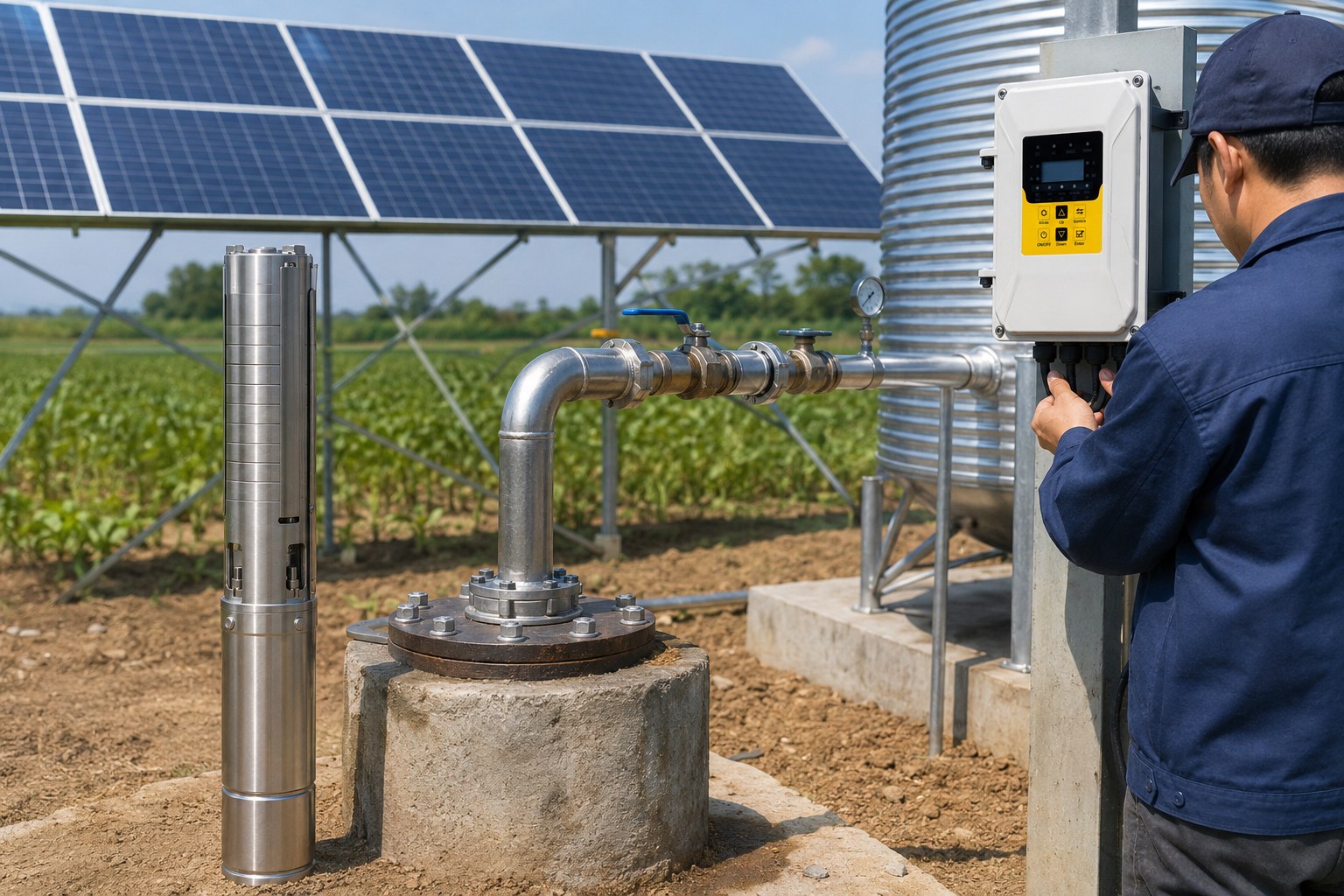
The answer to off-grid water access has arrived in the form of solar water pumps.
These systems operate entirely on the power of the sun, making them completely independent of the electrical grid and fossil fuels.
This technology has become a game-changer for several reasons:
- Cost-Effectiveness: After the initial investment, the energy is free. There are no monthly electricity bills or fuel costs, leading to a return on investment in as little as 2-3 years.
- Environmental Friendliness: Solar pumps produce zero carbon emissions, helping to preserve the environment.
- Reliability in Remote Areas: They are designed to work in the very places that need them most—sunny, remote locations far from urban infrastructure.
This technological shift is not just for developing countries.
In Australia and the Americas, farmers and ranchers are adopting solar pumps to reduce operating costs and increase water security for their livestock and crops.
As this technology matures, a complete and competitive product portfolio has emerged to meet diverse needs.
Solar Screw Pumps: For Deep Wells and High Head
Do you need to lift water from a very deep well without access to grid power?
Conventional pumps often fail in these conditions or are prohibitively expensive to operate.
Solar screw pumps provide a reliable, high-head solution designed for the toughest jobs.
The solar screw pump is a type of positive displacement pump ideal for low-flow, high-head applications. It excels in deep well water supply for homes and livestock, especially in areas with sandy water conditions common in parts of Africa and Latin America.
When water is hundreds of feet below the ground, you need a pump with exceptional lifting power.
This is where the solar screw pump shines.
Unlike centrifugal pumps that "throw" water, the screw pump uses a different principle to move water efficiently against immense pressure.
How It Works
The core of a screw pump consists of a single-helix stainless steel screw (the rotor) that turns inside a double-helix rubber chamber (the stator).
As the rotor turns, it creates sealed cavities of water that are pushed progressively upward through the pump.
This compression mechanism allows the pump to generate very high pressure, or "head."
It can lift water from depths exceeding 500 feet (150 meters), a task where many other pump types would struggle.
Advantages and Applications
The unique design of the solar screw pump gives it several key advantages:
- High Head Capability: It is the go-to solution for very deep wells, providing consistent pressure even at extreme depths.
- Sand Resistance: The rubber stator and slow-moving rotor can handle water with a higher concentration of sand and sediment without suffering rapid wear. It can typically manage sand content up to 3%, whereas a standard centrifugal pump may fail with less than 1%.
- High Efficiency at Low Flow: It maintains high efficiency even when delivering a low volume of water, making it perfect for domestic use or livestock troughs.
These features make it the ideal choice for domestic water supply, livestock drinking water, and small-scale drip irrigation in electricity-scarce regions.
Limitations
The primary limitation is its flow rate.
Because it moves water in small, sealed cavities, it cannot produce the high volumes needed for large-scale flood irrigation.
It is a specialist pump designed for depth, not volume.
Solar Plastic Impeller Pumps: The High-Flow Workhorse
Do you need to irrigate a farm or water a large pasture affordably?
Finding a durable, high-volume pump that won't break the bank is a common challenge.
The solar plastic impeller pump offers an economical solution without sacrificing performance.
This multi-stage centrifugal pump uses durable, engineered plastic impellers to deliver high flow at a medium head. It is perfect for farm irrigation, pasture water supply, and residential gardens, offering an excellent balance of performance, wear resistance, and cost-effectiveness that makes it popular worldwide.
When the goal is to move a large amount of water quickly, a centrifugal pump is the right tool for the job.
The solar plastic impeller pump is a modern take on this classic design, optimized for efficiency and affordability.
It is the most popular choice for agricultural applications in Africa and the Americas.
High-Flow Centrifugal Design
This pump features multiple impellers stacked on top of each other.
Each impeller and diffuser stage adds pressure, allowing the pump to achieve a useful head while delivering a high flow rate.
Water is drawn in at the bottom and accelerated outward by the spinning impellers, with each stage boosting the pressure further.
The Advantage of Engineered Plastic
The key innovation in these pumps is the use of high-strength, wear-resistant plastic for the impellers, such as polyoxymethylene (POM).
This material offers several benefits:
- Wear Resistance: Engineered plastic impellers demonstrate excellent resistance to abrasion from fine sand, which can quickly erode softer materials. This extends the pump's life in typical well conditions.
- Lightweight: Plastic components make the pump significantly lighter than its all-metal counterparts. This reduces shipping costs by up to 20% and makes installation easier, often allowing one person to do the job.
- Cost-Effective: The material and manufacturing process for plastic impellers are more economical, making the pump more accessible to a wider range of users.
Applications and Limitations
With its high water output, this pump is the workhorse for farm irrigation, pasture water management, and filling reservoirs.
It provides the volume needed to support productive agriculture and large herds of livestock.
However, its main limitation is in highly corrosive water or extremely deep wells.
While durable, the plastic may not hold up as long as stainless steel in acidic or alkaline water conditions, and its head capability is generally moderate, typically under 350 feet (100 meters).
Solar Stainless Steel Impeller Pumps: The Premium Choice
Is your local water source corrosive, causing standard pumps to fail prematurely?
Replacing pumps frequently is a costly and time-consuming frustration.
A solar stainless steel impeller pump is engineered to last in the harshest water conditions.
Designed specifically for corrosive water environments, this premium pump model utilizes SS304 stainless steel for its impellers, diffusers, and pump body. It delivers high flow rates and is ideal for regions with acidic or alkaline water, ensuring maximum durability and long-term reliability.
For some applications, durability is non-negotiable.
When water quality is poor, investing in a pump made from superior materials can save a significant amount of money and hassle in the long run.
The solar stainless steel impeller pump is built for ultimate resilience.
Unmatched Corrosion Resistance
The primary advantage of this pump is its material.
SS304 is a high-grade stainless steel that offers exceptional resistance to both rust and corrosion from acidic or alkaline substances.
While a plastic impeller pump might last 3-5 years in aggressive water, a stainless steel model can often last 10 years or more in the same conditions.
This makes it the clear choice for:
- Coastal Regions: Where saltwater intrusion can occur.
- Mining Areas: Where water may have a low pH (acidic).
- Alkaline Soil Regions: Common in parts of Australia and the Americas.
- High-End Applications: For premium homes and ranches where reliability is the top priority.
Performance and Total Cost of Ownership
This pump provides both high flow and medium-to-high head capabilities, combining the volume of a centrifugal pump with impressive pressure.
Although its initial purchase price is higher—often 30-50% more than a plastic impeller model—its value becomes clear when considering the total cost of ownership (TCO).
| Feature | Plastic Impeller Pump | Stainless Steel Impeller Pump |
|---|---|---|
| Initial Cost | Lower | Higher |
| Lifespan (Corrosive Water) | 3-5 Years | 10+ Years |
| Maintenance | More frequent replacement | Less frequent replacement |
| Total Cost of Ownership | Higher over 10 years | Lower over 10 years |
By eliminating the need for frequent replacements, the stainless steel pump provides a more cost-effective and reliable solution over the long term for users in challenging water environments.
Its main drawbacks are the higher initial cost and increased weight, which can make installation more difficult.
The Core Technology: BLDC Motors and Hybrid Control
What makes a modern solar pump so efficient and reliable?
The pump end is only half of the story.
The motor that drives it and the controller that manages it are what truly determine its overall performance and competitiveness.
Modern solar pumps are powered by high-efficiency (over 90%) Brushless DC (BLDC) permanent magnet motors. These compact, powerful motors reduce solar panel requirements. When paired with intelligent hybrid AC/DC controllers, they ensure a reliable 24/7 water supply, even on cloudy days or at night.
The true revolution in solar pumping lies in the advanced electronics that power and control the system.
The motor and controller work together to maximize the use of solar energy and provide features that were once impossible in off-grid applications.
The BLDC Permanent Magnet Motor
The heart of the system is the Brushless DC (BLDC) motor.
Unlike older brush motors that lose energy to friction, BLDC motors use electronics to switch the motor's phases, resulting in much higher efficiency.
Key technical advantages include:
- High Efficiency: With efficiencies exceeding 90%, they convert more sunlight into pumping power. A traditional DC motor might only be 60-70% efficient.
- Powerful Magnets: The rotor is made of high-strength neodymium iron boron (NdFeB) magnets, which generate strong torque for reliable startups, even in low light.
- Compact Design: These motors are significantly smaller and lighter. A BLDC motor can be up to 47% smaller and 39% lighter than a traditional motor of the same power output.
- Maintenance-Free: With no brushes to wear out, they have an extremely long service life with virtually no maintenance.
This high efficiency means you need fewer solar panels to run the pump, reducing the total system cost by 15-25%.
The Intelligent Hybrid Controller
The brain of the system is the controller.
It uses Maximum Power Point Tracking (MPPT) to constantly adjust the pump's load to extract the maximum possible power from the solar panels as sunlight conditions change throughout the day.
Advanced controllers now also feature hybrid functionality.
They are designed with both DC (solar) and AC (grid/generator) power inputs.
This allows the system to operate 24/7, ensuring you have water whenever you need it.
- During Sunny Conditions: The controller prioritizes DC power from the solar panels.
- During Cloudy Conditions: The hybrid function can blend solar power with AC power, maximizing the use of free solar energy.
- At Night or No Sun: The controller automatically switches to the AC power source (grid or generator).
This ensures a worry-free, uninterrupted water supply, making solar pumps a viable primary water source for any application.
Conclusion
The U.S. offers robust, reliable industrial pumps with a long history of engineering excellence.
Simultaneously, global innovators are leading the way with efficient, sustainable solar solutions for modern water needs.
Ultimately, choosing the right pump means matching the best technology to your specific application and environment.
FAQs
Are Grundfos pumps made in the USA?
Yes, while Grundfos is a Danish company, it operates major manufacturing facilities in the United States, producing pumps for the North American market.
Is Goulds Pumps an American company?
Yes, Goulds Pumps was founded in Seneca Falls, New York, in 1848. It is now a prominent brand within Xylem Inc., a large American water technology company.
What is the largest pump manufacturer in the USA?
Flowserve Corporation is one of the largest and oldest U.S.-based pump manufacturers, with a vast global presence in the oil and gas, chemical, and power industries.
Are all parts of a "US-made" pump from the USA?
Not always. While a pump may be assembled in the USA to meet "Made in USA" standards, some components might be sourced globally to ensure quality and cost-competitiveness.
What is the difference between an industrial pump and a residential pump?
Industrial pumps are built for heavy-duty, continuous operation in harsh environments like refineries. Residential pumps are designed for lighter, intermittent tasks like home water supply or basement drainage.
Can I use a solar pump with my existing AC power?
Yes, many modern solar pump systems come with hybrid controllers. These devices can automatically switch between DC solar power and an AC source like the grid or a generator.
What does a self-priming pump do?
A self-priming pump can clear air from its suction line without external help. This makes them ideal for applications where the pump is located above the water source.
What does API 610 certification mean for a pump?
API 610 is a strict standard from the American Petroleum Institute. It ensures a pump is safe, reliable, and robust enough for demanding use in oil and gas refineries.