Struggling to find a reliable water source for your farm or community?
A failing pump can be a disaster.
The right solar water pump can provide a constant, cost-effective water supply for decades.
Global leaders like Grundfos and Lorentz are top choices for reliability, while specialized manufacturers offer a competitive portfolio of pump types, including high-head screw pumps and high-flow impeller pumps.
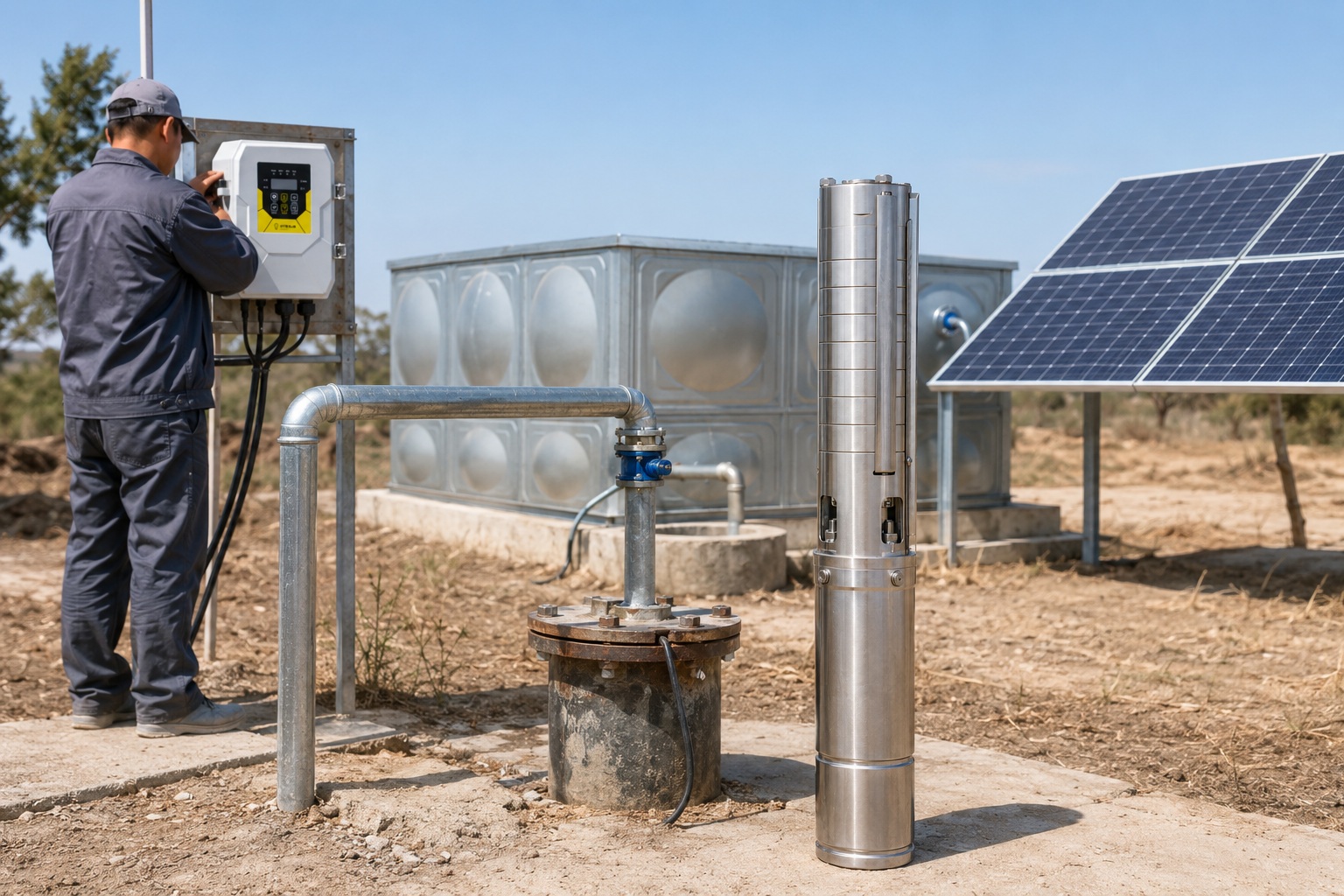
Choosing the perfect solar water pump can feel overwhelming with so many brands and technologies available.
You need a solution that matches your specific water needs, whether it's for deep well irrigation, livestock, or community water supply.
This guide will break down the top pump types, the best manufacturers for different regions, and the core technologies that determine a pump's true performance and reliability.
Keep reading to find the perfect solar water pump solution for your project.
Which is the Largest Manufacturer of Solar Water Pumps in India?
India's agricultural sector is rapidly adopting solar, but who are the key players?
Choosing a local champion can mean better access to service and government subsidies.
Shakti Pumps stands as India’s largest manufacturer, with a significant export footprint.
However, Tata Power Solar and Kirloskar Brothers are also dominant forces, each offering unique strengths for different agricultural scales.
Understanding the leaders in a major market like India provides valuable insights for any buyer.
India's solar pump market is a case study in rapid growth, driven by strong government support and a clear need for sustainable irrigation.
The brands that succeed here must be robust, affordable, and well-supported.
For distributors and large-scale buyers, looking at the Indian market leaders offers a blueprint for what works in demanding agricultural environments.
India’s Solar Pump Powerhouses
The Indian market is not just about one company; it's an ecosystem.
Shakti Pumps has earned its top spot through a combination of affordability and a wide range of products tailored for small to medium-sized farms.
Their focus on export-quality pumps has also given them a global reputation.
Tata Power Solar takes a different approach.
They often focus on larger, integrated projects, bundling high-quality solar panels with their pumping systems.
This makes them a go-to for large-scale agricultural operations or community water projects.
Kirloskar Brothers, a legacy brand in pumping, brings decades of engineering experience.
Their systems are known for durability and versatility, capable of handling a wide array of irrigation challenges.
Why This Matters for Global Buyers
The success of these companies is tied to their ability to meet the demands of the Pradhan Mantri Kisan Urja Suraksha evam Utthaan Mahabhiyan (PM-KUSUM) scheme.
This government initiative provides subsidies of up to 60% for farmers installing solar pumps.
This has created a highly competitive market where value and reliability are rigorously tested.
For an international buyer, this means that pumps proven in the Indian market have already passed a significant real-world stress test.
They are built to be cost-effective and durable enough to serve millions of farmers who depend on them for their livelihood.
| Brand | Strength | Best For | Market Focus |
|---|---|---|---|
| Shakti Pumps | Affordable, High Volume, Export-Ready | Small & Medium Farms | Global & Domestic |
| Tata Power Solar | Integrated Solar Solutions, Project-Based | Large-Scale Projects | Domestic Focus |
| Kirloskar Bros. | Durable, Versatile, Strong Engineering | Mixed Irrigation Needs | Strong Domestic Legacy |
What is the Most Reliable Solar Pump?
A pump that fails in a remote location is more than an inconvenience; it's a crisis.
When reliability is non-negotiable, which pump can you truly count on?
For ultimate, long-term reliability, Grundfos and Lorentz are the global benchmarks, with lifespans often exceeding 15 years.
For budget-conscious projects where solid performance is still key, brands like Hober and Difful offer durable solutions with lifespans of 8-10 years.
Reliability isn't just about a brand name; it's engineered from the inside out.
The true measure of a pump's dependability lies in its core components, its material science, and the intelligence of its control system.
While established European brands have built a reputation over decades, understanding the technology allows you to find reliability at different price points.
Let's break down what truly makes a solar pump reliable.
The Core of Reliability: The Motor
The heart of any modern solar pump is its motor.
The most efficient and reliable systems use a Brushless DC (BLDC) permanent magnet motor.
These motors achieve efficiencies exceeding 90%, which is a significant leap over older technologies.
This high efficiency means more water is pumped using less solar power.
The rotor, a critical component, is often made from high-grade materials like 40SH neodymium iron boron.
This choice of material ensures strong torque and long-term performance even in high temperatures.
Technologically, this results in a motor that is up to 47% smaller and 39% lighter than traditional motors of equivalent power.
For installers and end-users, this means easier transportation, simpler installation, and lower structural requirements for mounting.
Material Science and Pump Design
A great motor is useless if the pump itself can't withstand the environment.
Reliability is also determined by the pump's construction.
- Premium Options: Brands like Grundfos often use stainless steel throughout their pump construction. Their SQFlex line is legendary for its ability to last over 15 years in deep wells with minimal maintenance.
- Specialized Solutions: For corrosive water with high or low pH, pumps with SS304 stainless steel impellers and bodies are essential. They resist corrosion and offer a much longer service life in harsh conditions, justifying their higher initial cost.
- Budget-Friendly Durability: Many reliable pumps from manufacturers like Hober and Difful use a combination of stainless steel bodies and durable polymer impellers. This offers a great balance of cost, performance, and longevity, often lasting 8-10 years.
Intelligence and Protection
Modern reliability is also about smarts.
An intelligent MPPT (Maximum Power Point Tracking) controller is crucial.
It constantly adjusts the electrical load to ensure the solar panels deliver the maximum possible power to the motor as sunlight conditions change throughout the day.
This can increase the amount of water pumped daily by up to 30%.
Furthermore, built-in protections are vital for a long lifespan.
- Dry Run Protection: This feature automatically shuts off the pump if the water level drops too low, preventing the motor from overheating and burning out.
- Over-voltage/Under-voltage Protection: Protects the motor from unstable power delivery.
- Overload Protection: Safeguards the pump if it becomes jammed or has to work too hard.
| Brand | Typical Lifespan | Key Reliability Feature | Best For |
|---|---|---|---|
| Grundfos | 15+ years | Unmatched engineering & materials | Deep wells, long-term critical projects |
| Lorentz | 12-15 years | Advanced solar tech & support | Off-grid community water systems |
| Hober/Difful | 8-10 years | Durable build at a lower cost | Budget-conscious NGO & farm projects |
Which Solar Water Pump is Best for Agriculture?
Your farm's water source and crop needs are unique.
Choosing the wrong pump can lead to wasted water, crop loss, and high operational costs.
For agriculture, the "best" pump is a matter of matching the right technology to the water source.
Submersible pumps from brands like Grundfos and Shakti excel in deep borewells, while a portfolio of specialized pumps offers tailored solutions for flow, head, and water quality.
Finding the ideal agricultural pump isn't about finding a single "best" brand.
It's about understanding that different farming applications require different types of pumps.
A deep well for irrigating corn has vastly different requirements than a shallow pond watering a vegetable garden.
A truly competitive product portfolio provides specific solutions for these diverse needs, powered by a common, high-efficiency motor technology.
Let's explore the three key types of solar deep well pumps that form the backbone of modern solar agriculture.
The Specialist: Solar Screw Pump
For deep wells where water needs to be lifted from great depths, the solar screw pump is the champion.
- How it Works: This is a positive displacement pump. It uses a single rotating stainless steel screw within a rubber stator. As the screw turns, it creates sealed cavities of water that are pushed progressively up the pump, generating immense pressure.
- Performance: It delivers low flow but an exceptionally high head (vertical lift).
- Best Applications: Domestic water supply from very deep wells, drinking water for livestock, and small-scale, high-lift irrigation. It's ideal for regions in Africa and Latin America with deep water tables.
- Key Advantage: It has excellent resistance to sand and can operate reliably in harsh water conditions where other pumps might fail.
The Workhorse: Solar Plastic Impeller Pump
When you need to move a lot of water for irrigation, the plastic impeller centrifugal pump is the go-to choice.
- How it Works: This is a multi-stage centrifugal pump. It uses a series of stacked, durable plastic impellers that spin at high speed to push water outward and upward.
- Performance: It provides a high flow rate at a medium head.
- Best Applications: General farm irrigation, filling storage tanks, pasture water supply, and larger home gardens. It's widely used across Africa and the Americas for its cost-effectiveness.
- Key Advantage: It delivers the most water for the money. The specially designed plastic impellers offer excellent wear resistance against fine sand, and the pump is lightweight and economical.
The Survivor: Solar Stainless Steel Impeller Pump
In environments where water is corrosive or quality is paramount, the stainless steel impeller pump is the premium solution.
- How it Works: It functions like the plastic impeller pump but utilizes high-grade SS304 stainless steel for both the impellers and the pump body.
- Performance: It offers high flow rates at medium-to-high head, with unmatched durability.
- Best Applications: Pumping water with acidic or alkaline properties, use in alkaline soil regions like parts of Australia, and high-end water supply for premium homes and ranches.
- Key Advantage: Its superior corrosion resistance ensures a very long service life and high reliability in water conditions that would quickly destroy lesser pumps.
| Pump Type | Performance Profile | Primary Application | Key Advantage |
|---|---|---|---|
| Solar Screw Pump | Low Flow, High Head | Deep Wells, Livestock | Handles extreme depth & sand |
| Plastic Impeller | High Flow, Medium Head | Farm Irrigation, General Use | High water output, cost-effective |
| Stainless Steel Impeller | High Flow, Med-High Head | Corrosive Water, Premium Use | Extreme durability, long life |
The Rise of Hybrid Systems
The biggest limitation of solar has always been a simple one: no sun, no water.
However, modern systems have solved this.
Advanced controllers now offer AC/DC hybrid functionality.
These controllers can accept power from both the solar panels (DC) and the grid or a generator (AC).
The system automatically prioritizes free solar power.
When solar energy is insufficient on a cloudy day, the controller intelligently blends in AC power to maintain pump operation.
At night or during extended bad weather, it can switch entirely to the AC source.
This ensures a worry-free, 24/7 water supply, giving farmers the reliability of the grid with the cost savings of solar.
What Are the Top Chinese Solar Water Pump Manufacturers?
You need an affordable, reliable pump, and you've heard Chinese brands offer great value.
But how do you navigate the options and choose a quality manufacturer?
For cost-effective and durable pumps, especially for NGOs, distributors, and budget-conscious projects, leading Chinese brands include Hober, Difful, Solartech, MNE, and CNP.
They offer a competitive range of products by focusing on efficient manufacturing and core technology.
The "Made in China" label in the solar pump industry has evolved dramatically.
It's no longer just about low cost; it's about providing immense value by combining economies of scale with significant investment in research and development.
For distributors and importers, partnering with the right Chinese manufacturer means gaining access to a comprehensive and competitive product portfolio that can meet the needs of virtually any customer.
Understanding why these brands matter helps you make a more strategic sourcing decision.
Why Chinese Brands Offer a Strategic Advantage
The strength of leading Chinese manufacturers lies in their business model and scale.
Many operate on a B2B wholesale-only model, which streamlines the supply chain and reduces costs for their partners—the medium to large local importers and distributors.
This focus allows them to invest heavily in what matters:
- Large-Scale Production: A factory with 10+ production lines and an annual output of over 300,000 units can achieve significant economies of scale, driving down the cost per unit.
- R&D Investment: A dedicated R&D department with 30+ engineers can lead to rapid innovation. This is how they develop core technologies like high-efficiency BLDC motors and intelligent AC/DC hybrid controllers.
- Quality Control: Serious manufacturers implement rigorous quality control systems (IQC, PQC, OQA) and test their products extensively—like 144+ hour salt spray tests and 1000+ hour UV resistance tests—to ensure they meet international standards like CE, IEC, and RoHS.
A Portfolio Approach to Market Dominance
The smartest Chinese manufacturers don't just sell one type of pump.
They offer a complete portfolio to empower their distributors.
This includes the three key types of solar deep well pumps: the high-head screw pump, the high-flow plastic impeller pump, and the corrosion-resistant stainless steel pump.
By also developing related products like solar booster pumps, pool pumps, and AC/DC hybrid inverters, they become a one-stop shop.
This allows a distributor in, for example, Australia, to source a variety of pumps to serve different customers—from a rancher needing a deep well pump to a homeowner needing a pool pump—all from a single, trusted supplier.
| Brand Example | Strength | Best For |
|---|---|---|
| Hober | Durable, Advanced Controllers | NGO Projects, Irrigation |
| Difful | Versatile AC/DC Pumps | Distributors, Rural Setups |
| Solartech | High-Efficiency Systems | Large Agricultural Projects |
| MNE Solar Pump | Affordable Off-Grid Solutions | Small-Scale Irrigation |
| CNP Solar Pump | Competitive Pricing | Bulk Purchases for NGOs |
The Real Competitive Edge
The true competitive advantage lies in the synergy of the system.
It's the combination of a high-efficiency BLDC motor, a pump body optimized for a specific application (flow vs. head vs. corrosion resistance), and an intelligent MPPT controller.
This "system thinking" is what sets leading manufacturers apart.
For a distributor, this means you can confidently offer your customers a solution that is not only affordable upfront but also energy-saving, durable, and easy to maintain over its entire lifespan.
It allows you to build your own brand's reputation on the pillars of efficiency, durability, and value.
Conclusion
Choosing the best solar pump means matching the right technology to your needs.
Focus on motor efficiency, pump type, and controller intelligence for a reliable, cost-effective water solution.
FAQs
How much water can a solar-powered water pump move?
It varies greatly, from a few gallons per minute for a small pump to thousands for large agricultural systems.
The key specs are flow rate (GPM/GPH) and total dynamic head.
How much do solar pumps cost?
Small fountain kits can be under $100, while deep well agricultural systems can be several thousand dollars.
However, they save money long-term by eliminating fuel and electricity costs.
How deep will a solar water pump work?
This depends on the pump type.
Solar screw pumps are designed for very deep wells, capable of lifting water from hundreds of feet, while centrifugal pumps are better for shallower sources.
Can a solar pump work at night or on cloudy days?
Only if the system includes a battery backup or an AC/DC hybrid controller.
Hybrid systems can automatically switch to grid power or a generator when solar energy is unavailable.
How long do solar water pumps last?
A good quality solar pump can last 8 to 15+ years.
The solar panels themselves often have a warranty of 25 years.
Reliability depends on brand quality and proper maintenance.
What maintenance do solar pumps require?
Maintenance is minimal.
It typically involves periodically cleaning the solar panels, checking for debris in the pump inlet, and inspecting any filters to ensure efficient operation.