Solar energy has major limitations.
These challenges can undermine your investment in clean power.
Understanding them is the first step toward finding a viable, long-term solution.
The biggest problem with solar power is its intermittency.
Sunlight isn't available 24/7, creating an unreliable energy supply, especially at night or on cloudy days.
This variability requires effective energy storage or backup systems to ensure a consistent power flow, which adds complexity and cost.
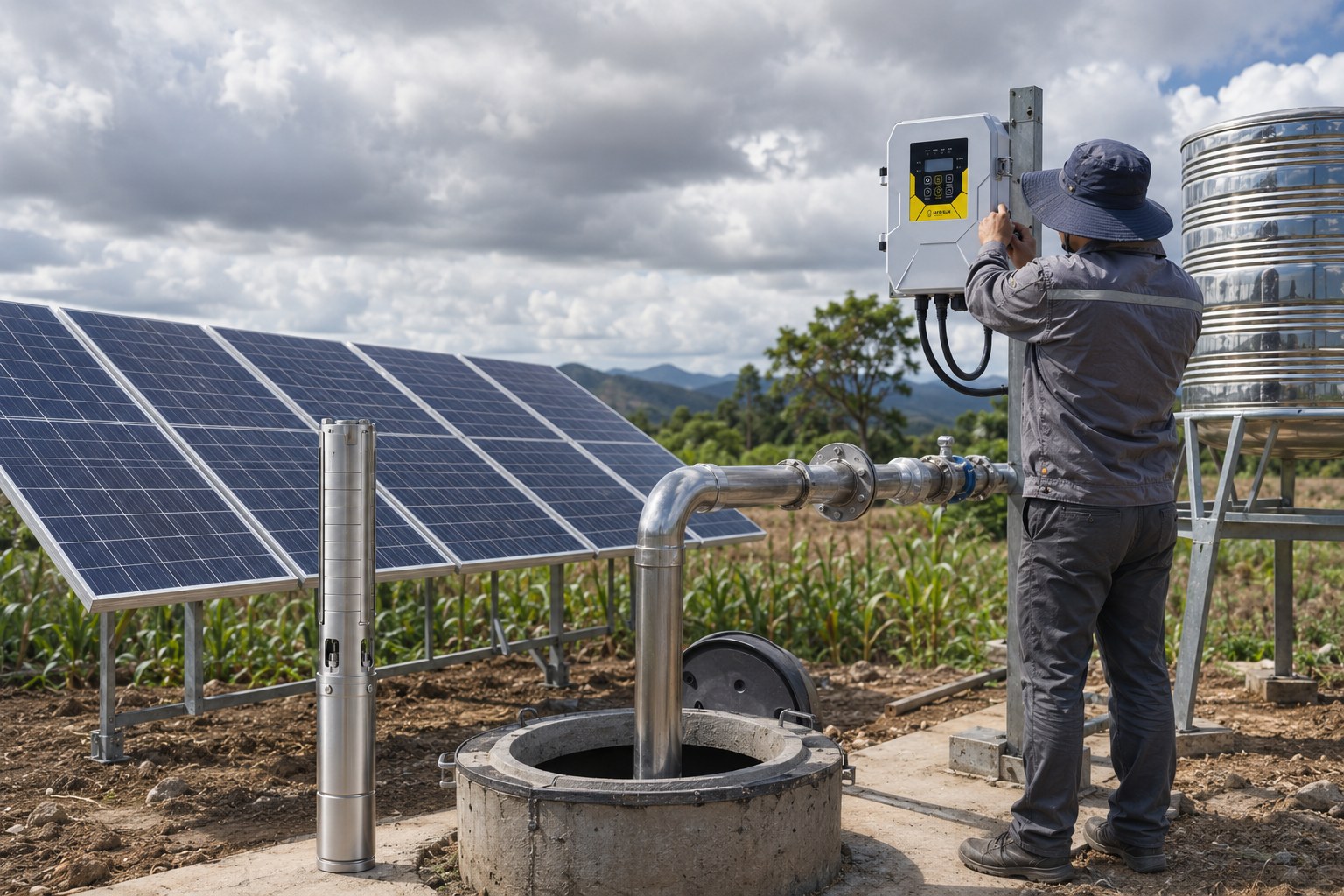
This fundamental challenge of intermittency raises valid concerns.
You might wonder if solar can truly meet the demands of a home or business.
It's a fair question.
However, the problem isn't just about when the sun shines.
It's also about cost, efficiency, and environmental impact.
Let's break down these disadvantages one by one.
We will also explore the powerful solutions that are making solar energy more reliable and accessible than ever before.
The High Initial Costs of Installing Panels
High upfront costs can be a major roadblock.
This initial investment can feel overwhelming, delaying your move to energy independence.
But innovative financing and powerful incentives are changing the financial landscape of solar.
The high initial cost is a significant barrier for many potential solar users.
A standard residential system can cost anywhere from $21,900 to over $25,200.
This makes solar a long-term investment that requires careful financial planning and leveraging available incentives to become feasible.
The sticker price of a solar installation can be daunting.
It's one of the most frequently cited disadvantages of solar energy.
While prices have fallen dramatically over the past decade, the upfront expense remains a considerable hurdle for homeowners and businesses alike.
The total cost depends on several factors, including system size, equipment quality, and local labor rates.
For example, data from the U.S. Department of Energy shows a significant cost difference based on scale.
Breaking Down the Costs
A utility-scale 100-megawatt system might cost between $0.98 and $1.12 per watt.
In contrast, a residential 8-kilowatt system costs between $2.74 and $3.15 per watt.
This difference highlights the economies of scale in larger projects.
For a typical homeowner, this translates to a total investment that often takes several years to pay back through electricity savings.
This long-term payback period makes solar more suitable for property owners than for renters.
Strategies to Reduce Upfront Costs
Fortunately, a growing number of solutions are making solar more affordable.
These mechanisms help offset the initial financial burden and accelerate the return on investment.
| Incentive/Model | Description | Impact on Cost |
|---|---|---|
| Federal Tax Credits | A federal incentive that allows you to deduct a percentage of the cost of your solar system from your federal taxes. | Can reduce the net cost by 30% or more. |
| State Rebates | Many states and municipalities offer direct cash rebates for installing solar energy systems. | Provides immediate cash back, lowering the initial outlay. |
| SRECs | Solar Renewable Energy Credits are tradable certificates generated for every megawatt-hour of solar electricity produced. | Creates an ongoing revenue stream, helping to pay off the system. |
| Solar Leases / PPAs | Agreements where a third party owns and maintains the system on your property. You pay a fixed monthly rate for the energy. | Drastically reduces or eliminates the upfront cost, but you don't own the system. |
| Group-Buying Schemes | Programs that bring together a community of buyers to purchase solar systems in bulk, securing a lower price from installers. | Can lower the per-unit cost significantly through collective bargaining power. |
Expanding equitable access is also a key focus.
Innovations in community solar programs and inclusive financing models are designed to ensure the benefits of solar energy become available to everyone, not just those who can afford the initial investment.
These programs allow individuals to buy into a larger solar project and receive credits on their electricity bills, making solar accessible without a personal installation.
Solar Energy Storage Is Expensive and Complex
The sun doesn't shine at night.
This simple fact creates a major energy gap that can make you reliant on the grid.
Modern storage solutions are closing this gap, but they come at a price.
Storing solar energy is crucial for 24/7 power, but the batteries required are expensive.
Historically, lead-acid batteries were the standard, but they are inefficient and have a short lifespan.
Newer lithium-ion and flow batteries offer better performance but significantly increase the total system cost.
The intermittency of solar power is its greatest weakness.
When the sun sets or clouds roll in, energy production stops.
This creates a reliability problem, especially for critical applications.
The most direct solution is a battery storage system.
However, this solution introduces its own set of challenges, primarily cost and technological complexity.
Old storage technologies like lead-acid batteries were cumbersome and required regular maintenance.
They were being replaced by far superior, yet more expensive, alternatives.
The Evolution of Battery Technology
The battery industry is advancing rapidly.
Lithium-ion batteries, similar to those in electric vehicles, have become the leading choice for residential and commercial solar storage.
They offer higher energy density, longer lifespans, and greater efficiency compared to their predecessors.
However, their cost can add thousands of dollars to a solar installation.
Newer technologies promise even better performance.
Flow batteries, for instance, offer extreme durability and scalability, making them ideal for large-scale applications.
Initiatives like the Battery 2030+ roadmap are pushing for next-generation batteries that are more efficient, cost-effective, and safer.
Smart Systems for Critical Needs
For some applications, a constant power supply is not just a convenience—it's a necessity.
Consider agricultural water pumping.
Livestock and crops depend on a consistent water supply, regardless of weather or time of day.
This is where intelligent hybrid systems become critical.
Advanced controllers now exist that can manage multiple power sources automatically.
The Hybrid Power Solution
A modern hybrid system provides a seamless solution to intermittency.
Here’s how it works:
- Primary Power: The system prioritizes using energy directly from the solar panels when sunlight is available.
- Intelligent Switching: When solar output drops due to clouds or at night, the controller automatically switches to an alternative power source.
- AC/DC Integration: These controllers can accept both DC power from solar panels and AC power from the utility grid or a generator. Some can even blend the two sources, using as much solar power as possible and supplementing the rest with AC power.
This ensures a 24/hour, worry-free operation for critical infrastructure like water pumps.
It maximizes the use of free solar energy while guaranteeing reliability, effectively solving the storage problem without requiring an oversized and expensive battery bank.
The Environmental Impact of Manufacturing
Solar energy is celebrated as a clean power source.
However, the manufacturing process for panels and batteries has its own environmental footprint.
This hidden impact is an important part of the conversation.
While solar energy operation is emission-free, the production of panels and batteries is not.
Manufacturing requires significant energy, often from fossil fuels, and involves mining materials like silicon and lithium.
This process can lead to habitat destruction and pollution if not managed responsibly.
While solar energy is a massive improvement over fossil fuels, it is not without environmental drawbacks.
The journey of a solar panel from raw material to rooftop installation has an environmental cost.
Manufacturing photovoltaic (PV) cells is an energy-intensive process.
It often relies on electricity generated from fossil fuels, which contributes to greenhouse gas emissions.
According to the World Nuclear Association, fossil fuels produce around 17 times more lifecycle emissions than utility-scale solar PV.
Still, the goal is to reduce this impact even further.
Mining and Material Sourcing
The production of solar panels and batteries depends on the extraction of raw materials.
This includes silicon for panels and lithium, cobalt, and other rare earth metals for batteries.
Mining these materials can lead to significant ecological consequences.
These include habitat destruction, soil erosion, and water pollution.
As the demand for solar technology grows, the pressure on these resources will increase.
This makes sustainable sourcing and recycling essential for the industry's long-term health.
The Importance of Durability and Lifecycle
One of the most effective ways to minimize environmental impact is to extend the lifespan of the products.
The longer a solar system operates, the more its initial manufacturing footprint is offset.
Most solar panels today have a lifespan of 25-30 years and retain over 80% of their production capacity.
Research efforts highlighted by the National Renewable Energy Laboratory (NREL) aim to extend this lifespan to 50 years or more.
This focus on durability is also critical for system components.
For example, in solar water pumping systems, the choice of materials is crucial.
| Pump Component | Standard Material | High-Durability Material | Environmental Advantage |
|---|---|---|---|
| Impeller | Plastic | 304 Stainless Steel | Resists corrosion in acidic or alkaline water, extending pump life and reducing replacement frequency. |
| Pump Body | Cast Iron | 304 Stainless Steel | Prevents rust and degradation, ensuring long-term reliability and less material waste. |
| Motor | Standard Brushed Motor | Permanent Magnet Brushless DC Motor | Higher efficiency reduces energy consumption and wear, leading to a much longer service life. |
By prioritizing high-quality, corrosion-resistant materials and long-lasting motors, manufacturers can create systems that endure for decades.
This reduces the need for replacements, conserves resources, and minimizes the overall environmental impact over the system's lifetime.
Furthermore, the industry is making progress in recycling.
Promising research is demonstrating effective methods to reuse silicon from old solar panels, turning waste into a valuable resource.
Technological Limitations in Efficiency
Solar panels don't convert all sunlight into electricity.
A significant portion of solar energy is lost during the conversion process.
Overcoming these efficiency limits is key to making solar power more potent and cost-effective.
A major technological problem is conversion efficiency; most commercial solar panels only convert around 21% of sunlight into electricity.
The rest is lost as reflected light or heat.
This limitation, known as the Shockley-Queisser limit, means larger surface areas are needed to generate sufficient power.
Not all sunshine that hits a solar panel becomes usable electricity.
In fact, most of it is lost.
This is due to a fundamental principle of physics and the properties of the materials used.
The maximum theoretical efficiency of a single-junction silicon solar cell is around 33%.
Commercial panels today typically achieve efficiencies between 19% and 22%.
This means for every 1,000 watts of sunlight hitting a panel, only about 210 watts are converted into electrical power.
This limitation requires installing a larger number of panels to meet energy demands, which in turn increases both cost and space requirements.
The Core of the System: Motor Efficiency
While panel efficiency is a well-known issue, another critical factor is often overlooked: the efficiency of the device the panels are powering.
In a solar water pumping system, the motor is the heart of the operation.
Its efficiency determines how much of the generated electricity is converted into the mechanical work of pumping water.
This is where major technological leaps have been made.
The use of Brushless DC (BLDC) permanent magnet motors represents a massive improvement over traditional motors.
Comparing Motor Technologies
| Feature | Traditional AC/Brushed DC Motor | Brushless DC (BLDC) Permanent Magnet Motor |
|---|---|---|
| Efficiency | 50% - 70% | > 90% |
| Power Output | Lower torque, less powerful | High torque, strong and consistent power |
| Size & Weight | Larger and heavier | 47% smaller, 39% lighter on average |
| Lifespan | Shorter due to wear on brushes | Longer, no brushes to wear out (maintenance-free) |
| Heat Generation | Higher, leading to energy loss | Lower, runs cooler and more efficiently |
A high-efficiency BLDC motor can achieve efficiencies exceeding 90%.
This means it makes the most of every watt of electricity produced by the solar panels.
This has a powerful ripple effect on the entire system.
A more efficient motor requires fewer solar panels to do the same amount of work.
This directly reduces the system's overall cost, complexity, and installation footprint.
The advanced design, using powerful neodymium iron boron magnets, results in a motor that is not only more efficient but also significantly smaller and lighter.
This strategic role of the motor is crucial; it acts as a force multiplier, overcoming some of the inherent limitations of PV panel efficiency.
Geographic and Application-Specific Limitations
Solar power doesn't work the same everywhere.
The amount of sunlight varies by location, and not all roofs are suitable for panels.
More importantly, not every solar application has the same needs, requiring tailored solutions.
Solar energy's effectiveness is highly dependent on geographic location, climate, and the specific application.
Areas closer to the equator receive more solar radiation, while cloudy or high-latitude regions produce less energy.
Furthermore, a standard one-size-fits-all system cannot meet the diverse needs of different environments.
The performance of a solar energy system is directly tied to its environment.
A system in sunny Arizona will generate far more electricity than an identical one in cloudy Seattle.
Factors like solar radiation levels, local weather patterns, pollution, and even foliage can impact how much energy a panel can produce.
Beyond geography, physical constraints like roof type, angle, and available space also play a major role.
Roofs made of asphalt shingles or metal are ideal, while other materials can make installation more difficult and expensive.
However, the biggest limitation is often trying to apply a generic solution to a specific problem.
This is especially true in the world of solar water pumping, where water conditions and performance requirements vary dramatically.
Tailoring the Pump to the Problem
A truly effective solar water pumping portfolio isn't about a single "best" pump.
It's about having a range of specialized solutions designed to excel in different conditions.
The core technology might be a high-efficiency motor, but the pump end must match the job.
Solution for Deep Wells: The Screw Pump
In regions with deep water tables, like parts of Africa and Latin America, you need a pump that can generate high pressure (head) to lift water from great depths.
- Technology: A solar screw pump uses a stainless steel screw rotating inside a rubber stator.
- Performance: It delivers low flow but a very high head.
- Best For: Deep domestic wells, livestock watering where water is far below the surface. It's also highly resistant to sand, a common issue in boreholes.
Solution for High Volume: The Plastic Impeller Pump
For applications like farm irrigation or large gardens, the priority is moving a lot of water (high flow).
- Technology: A multi-stage centrifugal pump with durable, wear-resistant plastic impellers.
- Performance: It provides high flow at a medium head.
- Best For: Agricultural irrigation, pasture water supply, and general-purpose water transfer in regions like the Americas and Africa. It's lightweight and economical.
Solution for Harsh Water: The Stainless Steel Impeller Pump
In areas with corrosive water, such as regions with acidic water or alkaline soils in Australia, durability is paramount.
- Technology: A pump with both the impeller and pump body made from SS304 stainless steel.
- Performance: High flow and medium-to-high head, with superior corrosion resistance.
- Best For: High-end homes, ranches, and any application with aggressive water conditions. It offers maximum reliability and a long service life, justifying its higher cost.
This portfolio approach demonstrates that the "disadvantage" of location-specific performance can be overcome.
By matching the right pump technology to the specific environmental challenge, you can create a reliable and efficient water solution anywhere in the world.
| Pump Type | Key Feature | Best Application | Ideal Regions |
|---|---|---|---|
| Solar Screw Pump | Low Flow, High Head | Deep wells, domestic supply | Africa, Latin America |
| Solar Plastic Impeller Pump | High Flow, Wear-Resistant | Farm irrigation, ranches | Africa, The Americas |
| Solar SS Impeller Pump | Corrosion Resistance, High Quality | Acidic/alkaline water | Australia, Parts of the Americas |
Conclusion
While intermittency is solar's biggest problem, modern technology offers powerful solutions.
Advancements in motor efficiency, hybrid controllers, and specialized system designs are making solar a reliable, cost-effective global standard.
Frequently Asked Questions
What are the 2 main disadvantages of solar energy?
The two main disadvantages are its intermittency, as it only generates power when the sun is shining, and the high initial cost of installation for panels and storage systems.
Why is solar not always a good investment?
Solar may not be a good investment if you plan to move soon, as the payback period is long. It's also less viable for homes with heavy shade or unsuitable roofs.
Do solar panels work on rainy days?
Yes, solar panels still produce electricity on rainy or cloudy days, but their output is significantly reduced. They convert both direct and indirect sunlight into power.
Can a house run on solar power alone?
Yes, a house can run on solar power alone, but it requires a sufficiently large solar panel array and a battery storage system to provide power at night and during bad weather.
What happens to solar panels after 25 years?
After 25 years, most solar panels still function but at a reduced capacity, typically around 80% of their original output. They can be recycled to recover valuable materials like silicon and metal.
How long does it take for solar panels to pay for themselves?
The payback period for solar panels typically ranges from 7 to 15 years, depending on the system's cost, local electricity rates, and available government incentives and rebates.
What is the environmental cost of solar panel disposal?
Improper disposal can be harmful, as some older panels contain hazardous materials like lead. However, dedicated recycling facilities can safely dismantle them and recover up to 95% of the materials.
Are there different types of solar panels?
Yes, the most common are monocrystalline panels, which are highly efficient and expensive, and polycrystalline panels, which are slightly less efficient but more affordable. Thin-film panels are flexible but less common.