Struggling with unreliable water access and soaring electricity bills?
You need a consistent water supply but are tired of the high costs and environmental impact of traditional pumps.
Yes, solar water pumps exist and are a highly effective solution for reliable, off-grid water access.
These systems use solar panels to power a pump, providing water for homes, farms, and livestock with minimal operating costs and a low environmental footprint, making them a game-changer globally.
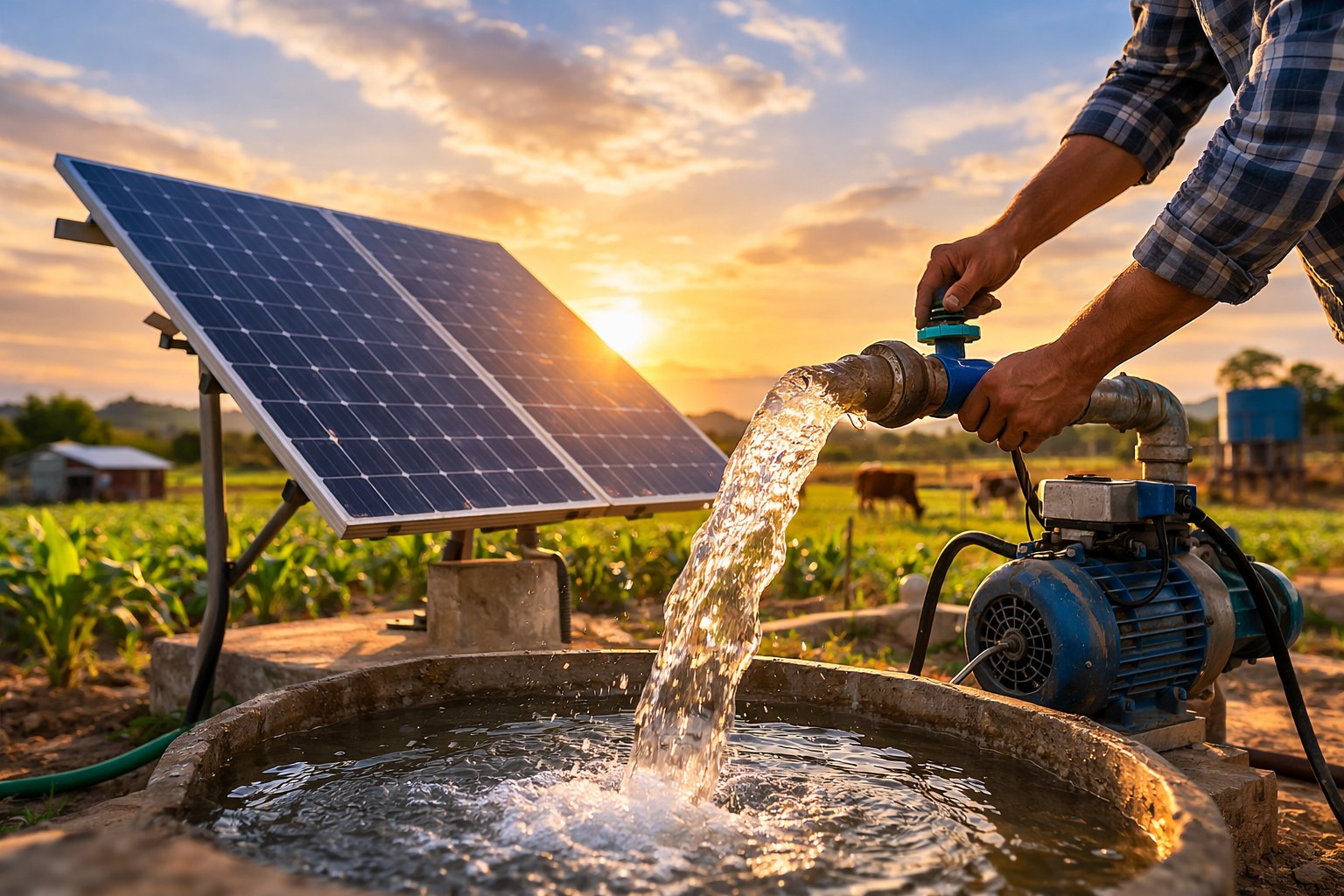
The concept of using the sun to move water isn't just a fleeting idea; it has become a cornerstone of modern water management, especially in areas where grid power is unreliable or completely absent.
The global demand for these sustainable solutions has spurred incredible innovation, leading to a wide variety of pumps designed for specific needs.
From deep wells in arid landscapes to large-scale irrigation projects, there is a solar pump designed for the task.
Understanding the different types available and the technology that drives them is the first step toward achieving true water independence.
This article will guide you through the various options, from surface pumps to robust deep-well systems, helping you understand how to select the perfect solution for your specific water requirements.
Solar Surface Pumps
Struggling to move water from a nearby pond, river, or shallow well?
You need an efficient way to transfer surface water for irrigation or livestock, but conventional electric or fuel-powered pumps are costly and cumbersome.
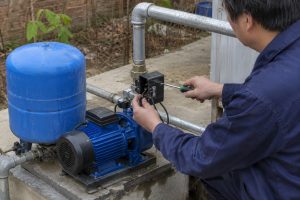
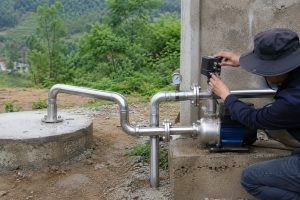
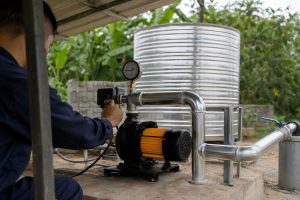
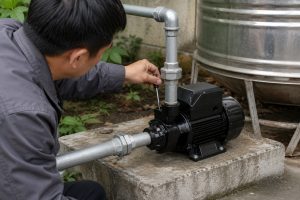
Solar surface pumps are the ideal solution for transferring water from sources like ponds, streams, and tanks.
They are designed to sit on the ground and pull water from shallow depths, offering an incredibly efficient and eco-friendly alternative for various agricultural and domestic applications.
Diving Into Surface Pump Applications
Solar surface pumps represent a significant leap forward for anyone needing to move water over short distances without the hassle of grid power.
They are fundamentally different from their submersible counterparts.
Instead of being lowered into a well, these pumps remain on the surface, using suction to draw water from a source.
This design makes them exceptionally well-suited for a range of applications where the water level is close to the ground.
Key Applications for Solar Surface Pumps
- Farm and Garden Irrigation: Easily transfer water from a holding tank or pond to irrigate crops or maintain a large garden. Their consistent low-pressure output is perfect for drip irrigation systems, delivering water directly to plant roots and minimizing evaporation.
- Livestock Watering: Automatically pump water from a nearby stream or dam to a trough, ensuring your animals have a constant supply of fresh water without daily manual intervention or fuel costs.
- Pond Management: Use a surface pump for aeration or to circulate water, which is vital for maintaining a healthy aquatic ecosystem. They can also be used to transfer water between ponds.
- Tank Filling and Transfer: Efficiently move water from one storage tank to another or fill a main tank from a shallow well or rainwater collection system.
Comparing Surface Pump Types
| Pump Type | Best For | Typical Flow Rate | Key Advantage |
|---|---|---|---|
| Centrifugal Surface Pump | High flow, low pressure applications like flood irrigation or fast tank filling. | High | Moves large volumes of water quickly. |
| Booster Pump | Increasing water pressure from a tank for home use or sprinklers. | Medium to High | Provides the pressure needed for modern plumbing. |
| Transfer Pump | General-purpose water movement from one point to another. | Varies | Versatile and straightforward for basic transfer needs. |
The true power of solar surface pumps lies in their autonomy.
When paired with an appropriately sized solar array, they operate from sunrise to sunset, performing their duties without any running costs.
This self-sufficiency is not just a convenience; it's a strategic advantage, providing predictable water access and freeing users from volatile fuel prices and the limitations of the power grid.
For anyone with a surface water source, these pumps are a dependable and economically sound investment.
America’s #1 Most Trusted Solar Powered Water Pumps
Worried about investing in a new technology that might not be reliable?
You hear claims about performance, but you need a proven solution from a source you can trust to deliver consistent results for your farm, ranch, or home.
The most trusted solar pumps are those with a long track record of performance, extensive customer reviews, and robust warranties.
These systems are built to withstand harsh conditions and are supported by expert sizing and service, guaranteeing you get water after installation.
What Builds Trust in a Solar Pump?
In a market filled with choices, trust isn't built on advertising slogans; it's forged through years of real-world performance and unwavering customer support.
When a brand becomes "most trusted," it signifies that thousands of users have put its products to the test and found them to be reliable, effective, and a worthwhile investment.
This trust is an ecosystem built on several critical pillars that separate market leaders from the rest.
The Pillars of a Trusted Solar Pump Brand
- Proven Reliability and Durability: The most trusted pumps are engineered to last. This means using high-quality materials like stainless steel for corrosion resistance or robust polymers for sand-laden water. For example, some leading pumps undergo over 1,000 hours of UV resistance testing to ensure they won't degrade under the intense sun.
- Performance Guarantees: A confident manufacturer stands behind its product. Top-tier brands often offer a "Water Assurance Guarantee." This means if you work with their specialists to size your system correctly, they guarantee it will pump water as promised, or you get your money back. This removes the financial risk for the buyer.
- Extensive Customer Validation: Nothing speaks louder than the voices of thousands of satisfied customers. With over 50,000+ customer reviews from international markets, leading brands showcase a proven track record. Testimonials from users in demanding environments—like a rancher in Texas or an off-grid homeowner in California—provide tangible proof that the pumps deliver on their promises day in and day out.
- Expert Support and Sizing: A pump is only as good as its application. Trusted companies invest heavily in expert support teams. These specialists help customers accurately calculate their Total Dynamic Head (TDH) and daily water needs, ensuring the system purchased is a perfect match. A pump that is improperly sized will fail to perform, regardless of its quality.
- Transparent and Comprehensive Warranties: A long and clear warranty is a direct reflection of a manufacturer's confidence in their product's longevity. Ten-year warranties, for instance, are becoming a benchmark for premium solar pumps, assuring the user of long-term reliability and support.
This combination of product quality, performance guarantees, social proof, and expert guidance creates the foundation of trust.
It assures the customer that they are not just buying a piece of equipment but a complete and reliable water solution backed by a company dedicated to their success.
Solar Well Pumps & Surface Pumps in All Types and Sizes
Feeling overwhelmed by the different types of solar pumps available?
Your water source is unique, whether it's a 500-foot deep well or a shallow pond, and you're unsure which pump technology is the right fit for your specific needs.
There is a solar pump for nearly any application, with specialized designs for deep wells (submersible pumps) and shallow sources (surface pumps).
Key types include screw pumps for high head, and centrifugal impeller pumps (in plastic or stainless steel) for high flow rates.
Matching the Right Pump to Your Water Source
Choosing the right solar pump is not a one-size-fits-all decision.
The effectiveness of your entire system hinges on selecting a pump specifically engineered for your water depth, required volume, and water quality.
The market offers a diverse portfolio to meet these varied demands, centered around a few core technologies.
The primary distinction is between submersible pumps, which operate deep underground, and surface pumps, which move water from sources like ponds and tanks.
Within these categories, the internal mechanism of the pump determines its ideal application.
Let's break down the three most popular deep-well pump technologies.
1. The Solar Screw Pump: The Deep Well Specialist
- How it Works: This pump uses a helical screw rotor rotating inside a rubber stator. As the screw turns, it creates sealed cavities that move water upward through compression.
- Best For: Deep wells where high lift (head) is needed, but a large volume of water is not required. It excels in providing water for single homes, livestock troughs, or small-scale drip irrigation from wells as deep as 1,000 feet.
- Key Advantage: Exceptional sand and silt resistance. The screw design can handle water with higher sediment content than centrifugal pumps, making it highly durable in less-than-ideal well conditions, which are common in parts of Africa and Latin America.
2. The Solar Plastic Impeller Pump: The High-Flow Workhorse
- How it Works: This is a multi-stage centrifugal pump. It uses a series of stacked, wear-resistant plastic impellers. Each stage adds pressure, pushing a high volume of water to the surface.
- Best For: Applications requiring high water output, such as farm irrigation, filling large tanks, or supplying water to multiple homes. It's a highly economical choice for wells with moderate depth and high water demand.
- Key Advantage: Cost-effective high performance. It delivers a significantly higher flow rate than a screw pump at a similar price point. The engineered plastic is lightweight and offers excellent resistance to fine sand, making it a popular choice for agriculture in the Americas and Africa.
3. The Solar Stainless Steel Impeller Pump: The Premium Durability Option
- How it Works: Functionally identical to the plastic impeller pump, but every component that touches water—including the impellers, diffusers, and pump body—is made from SS304 or SS316 stainless steel.
- Best For: Wells with corrosive water, such as acidic or alkaline conditions found in certain geological areas like parts of Australia. It's also the top choice for high-end residential water systems or commercial applications where longevity and purity are paramount.
- Key Advantage: Unmatched corrosion resistance and service life. While it has a higher initial cost, its ability to withstand aggressive water chemistry ensures reliability and prevents premature failure, protecting the long-term investment.
| Pump Type | Primary Use | Flow Rate | Head (Lift) | Key Feature |
|---|---|---|---|---|
| Screw Pump | Deep Well, Domestic, Livestock | Low | Very High | Excellent Sand Resistance |
| Plastic Impeller | Farm Irrigation, Tank Filling | High | Medium | High Flow, Economical |
| Stainless Steel Impeller | Corrosive Water, Premium Homes | High | Medium-High | Maximum Durability |
Underpinning all these pump types is the motor.
Modern solar pumps rely on highly efficient Brushless DC (BLDC) permanent magnet motors.
With efficiencies often exceeding 90%, these motors are the heart of the system, converting precious solar energy into powerful water-pumping action with minimal waste.
This high efficiency means fewer solar panels are needed, reducing the overall system cost and footprint.
100% WATER ASSURANCE GUARANTEE
Are you hesitant to invest in a solar pump, fearing it might not work for your specific well?
Buying complex equipment online can feel risky.
What if you spend thousands and end up with a system that can't deliver the water you critically need?
Leading solar pump companies eliminate this risk with a Water Assurance Guarantee.
By working with their sizing experts to plan your system, you are guaranteed to get water after proper installation, or you receive your money back, ensuring a completely risk-free investment.
Demystifying the Performance Guarantee
A "Water Assurance Guarantee" is more than just a clever marketing phrase; it's a contractual promise that fundamentally changes the purchasing experience for a customer.
It shifts the responsibility of performance from the buyer to the seller.
This type of guarantee is a hallmark of a company that is supremely confident in both its products and its support process.
It acknowledges that sizing a solar water pump system can be complex, involving variables like well depth, water level, pipe friction, and daily water needs.
A mistake in any of these calculations can lead to an underperforming system.
How Does the Guarantee Process Work?
Achieving the security of a water guarantee typically involves a simple, collaborative process between you and the pump specialist.
- Step 1: Provide Your Well and Water Use Details: You start by providing key information about your well. This usually includes Total Well Depth, Static Water Level (the distance from the ground to the water when the pump is off), and your desired Gallons Per Day. You can often do this through an online sizing tool or a direct phone call.
- Step 2: Collaborative System Design: A pump sizing specialist reviews your data. They calculate the Total Dynamic Head (TDH), which accounts for the lift from your well plus the friction loss in your pipes. Based on this, they recommend a specific pump model, motor, controller, and the exact number of solar panels required to meet your needs, even on less-than-perfectly sunny days.
- Step 3: Guaranteed Performance: Once you purchase the recommended system and install it according to the provided instructions, the guarantee is active. The system is guaranteed to produce the agreed-upon amount of water. If it doesn't, the company's support team will work with you to troubleshoot the installation. If the issue cannot be resolved, the guarantee provides a full refund.
Why This Guarantee is a Game-Changer
| Customer Concern | How the Guarantee Resolves It |
|---|---|
| "What if I buy the wrong size pump?" | The expert sizing service ensures you get the correct pump, eliminating guesswork. |
| "What if it's not powerful enough for my deep well?" | The specialist calculates the exact power needed, guaranteeing performance at your specific depth. |
| "Is this a worthwhile financial investment?" | The money-back promise removes the financial risk, making the purchase secure. |
| "What if I have trouble with the installation?" | The guarantee is backed by expert support to guide you through any installation challenges. |
This assurance transforms the purchase from a speculative risk into a secure investment in your property's water infrastructure.
It demonstrates a company's commitment to results, not just sales, and provides the ultimate peace of mind for anyone looking to harness solar power for their water needs.
RAIN IS UNPREDICTABLE
Are you tired of your farm's productivity being at the mercy of unpredictable rainfall?
Relying on rain for irrigation leads to inconsistent crop yields and financial uncertainty.
Droughts can be devastating, while unexpected downpours can be just as problematic.
A solar water pump allows you to take back control of your irrigation schedule.
By providing a reliable, on-demand water source independent of the weather, you can irrigate precisely when your crops need it most, ensuring healthier growth and maximizing your harvest.
Breaking Free from Weather Dependency
For generations, farming has been a gamble against the weather.
Unpredictable rainfall is one of the biggest variables affecting agricultural success worldwide.
A season with too little rain can lead to failed crops and financial ruin, while too much rain at the wrong time can cause flooding and disease.
This volatility makes it nearly impossible to plan for consistent growth and profitability.
Solar irrigation fundamentally changes this dynamic.
It decouples your water supply from the weather forecast, transforming irrigation from a reactive measure into a proactive strategy.
The Strategic Advantage of On-Demand Irrigation
- Precision and Efficiency: With a solar pump, you control exactly when and how much water your crops receive. This enables the use of highly efficient methods like drip irrigation, which delivers water directly to the plant's root zone. This targeted approach can reduce water consumption by up to 70% compared to traditional flood irrigation, a crucial benefit in water-scarce regions.
- Improved Crop Health and Yield: Consistent watering schedules prevent the stress cycles of dehydration and over-saturation that plants experience with irregular rainfall. This leads to stronger, healthier plants, improved nutrient uptake, and ultimately, higher and more predictable yields. Farmers can confidently plant higher-value crops that may have been too risky otherwise.
- Extended Growing Seasons: In many climates, the growing season is cut short not by temperature, but by the onset of a dry season. A solar pump allows you to extend your growing season by providing water long after the rains have stopped, potentially enabling multiple harvests per year. For example, a UK farmer noted a solar pump "saved our growing season" during an unexpected drought.
- Cost Savings and Financial Stability: Every gallon of water pumped by the sun is a gallon you don't have to pay for with expensive grid electricity or diesel fuel. One farmer in Kenya celebrated that "the best thing is I no longer buy fuel." This elimination of variable energy costs stabilizes your operational budget and increases your farm's profitability.
By installing a solar water pump, you are no longer just a farmer subject to the whims of nature.
You become a water manager, empowered with the tools to create the optimal growing environment for your crops.
This control doesn't just lead to better harvests; it leads to a more resilient, sustainable, and profitable agricultural operation.
It's time to stop looking at the sky for answers and start looking to the sun for solutions.
WHY SWITCH TO SOLAR?
Are you hesitant about the upfront cost of switching to a solar water pump?
You see the long-term benefits, but the initial investment feels substantial compared to a conventional pump, and you're wondering if it truly pays off.
Switching to a solar pump is a strategic investment that pays for itself through zero energy costs, minimal maintenance, and increased property value.
It offers complete energy independence, operates silently, and is environmentally friendly, providing benefits far beyond simple water transfer.
A Financial and Practical Breakdown of the Solar Advantage
The decision to switch to a solar water pump is often viewed through the lens of initial cost.
However, a true evaluation requires looking at the Total Cost of Ownership (TCO) over the lifetime of the system.
When you factor in energy, maintenance, and reliability, the financial and practical advantages of solar become overwhelmingly clear.
Traditional pumps, powered by grid electricity or diesel engines, come with a lifetime of recurring and unpredictable expenses.
Solar pumps turn this model on its head.
The Economic Case for Solar Pumps
- Elimination of Fuel and Electricity Costs: This is the most significant financial benefit. A diesel or gas pump requires constant refueling, with prices that are volatile and consistently trend upward. A grid-tied electric pump adds a substantial and permanent load to your utility bill. A solar pump’s fuel—sunlight—is free. This can save thousands of dollars annually. For a farm running an AC pump for hours a day, the savings can pay back the initial investment in as little as 2-3 years.
- Drastically Reduced Maintenance: Internal combustion engines have hundreds of moving parts, requiring regular oil changes, filter replacements, and mechanical repairs. Solar pump systems are elegantly simple. The BLDC motor is brushless and maintenance-free, and the solar panels require only occasional cleaning. This minimizes downtime and eliminates the cost and hassle of frequent servicing.
- Increased Property Value and Independence: An off-grid water source is a powerful asset. It makes a property more attractive and valuable, especially in rural or remote areas. It provides true water and energy independence, insulating you from power outages, grid failures, and rising utility rates. This self-sufficiency is a form of insurance against infrastructure instability.
Technical and Environmental Advantages
Beyond the financial savings, solar pumps offer a superior user experience and a positive environmental impact.
| Feature | Solar Pump Advantage | Conventional Pump Disadvantage |
|---|---|---|
| Energy Source | Clean, free, and renewable sunlight. | Costly, polluting fossil fuels or grid electricity. |
| Operation | Silent and automatic. Runs whenever the sun shines. | Noisy, requires manual starting/refueling |
| Reliability | Solid-state electronics, minimal moving parts. | Prone to mechanical failure, requires constant upkeep. |
| Installation | Can be installed anywhere the sun shines. | Requires access to power lines or fuel delivery. |
| Environmental Impact | Zero emissions, carbon-neutral. | Emits CO2, nitrogen oxides, and particulates. |
The core technology driving these benefits is the combination of highly efficient photovoltaic (PV) panels and advanced BLDC motors paired with a smart controller.
An MPPT (Maximum Power Point Tracking) controller, for example, constantly adjusts the electrical load to extract over 98% of the available power from the solar panels, ensuring the pump works effectively even in low-light conditions like cloudy days.
Switching to solar is not just about replacing a pump; it's about upgrading to a more intelligent, autonomous, and cost-effective water management system.
Conclusion
The combination of advanced pump designs, hyper-efficient motors, and intelligent controllers makes solar pumps a superior choice for global water needs, offering unparalleled reliability, efficiency, and long-term value.
FAQs
How long will a solar water pump last?
A high-quality solar water pump system is designed for longevity. The solar panels typically have a warranty of 20-25 years, while the pump and motor can last for 10 years or more with proper maintenance.
Do solar water pumps work on cloudy days?
Yes, they do. Modern systems use MPPT controllers that maximize power from available sunlight. While flow will be reduced compared to a bright sunny day, they will continue to operate in overcast conditions.
Can a solar pump fill a tank?
Absolutely. A common and highly effective use is to pump water into a storage tank during the day. This creates a water reserve that can be accessed by gravity pressure 24/7, even at night.
How deep can a solar pump go?
Specialized solar deep well pumps, particularly screw pump models, can effectively lift water from depths of 1,000 feet (over 300 meters) or more, making them suitable for the vast majority of water wells.
What size solar water pump do I need?
This depends on your Total Dynamic Head (well depth + friction) and your daily water requirement (gallons per day). It is crucial to work with a specialist or use an online sizing calculator for an accurate recommendation.
Can solar pumps run AC and DC?
Yes, advanced systems offer AC/DC hybrid controllers. These systems prioritize free solar (DC) power but can automatically switch to or blend with an AC source (grid or generator) during cloudy weather or for nighttime use.