Struggling with unreliable water access in off-grid areas?
The solution is expensive and complex.
A solar water pump provides a sustainable, cost-effective answer.
The "best" solar water pump depends entirely on your specific needs.
Factors like well depth, required water volume (flow rate), and water quality determine the ideal choice.
This guide will break down the main types, helping you select the most efficient and durable pump for your application.
Choosing the right solar pump can feel overwhelming with so many options available.
You need a reliable water source, but technical terms like "head," "flow rate," and "motor efficiency" can be confusing.
Making the wrong choice can lead to a system that underperforms, breaks down, or costs you more in the long run.
This article demystifies the process.
We will explore the core types of solar water pumps, from surface to submersible, and dive deep into the specific models designed for different jobs.
You'll learn about the technology that powers them and how to match a pump to your exact requirements, ensuring you get a dependable water supply for years to come.
Types of Solar Pumps: Surface vs. Submersible
Struggling to move water from a pond or a well?
Different water sources require different pump designs.
Choosing the wrong one means wasted energy and poor performance.
The best solar pump type depends on your water source's location.
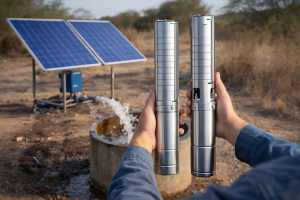
Surface pumps are for sources at ground level, like ponds or tanks.
Submersible pumps are for deep sources, like wells.
Understanding the fundamental difference between surface and submersible pumps is the first step in selecting the right equipment.
Each type is engineered for a distinct purpose, and using one where the other is needed will lead to inefficiency and potential system failure.
Your choice will directly impact the pump's performance, lifespan, and overall cost-effectiveness.
Surface Pumps
Surface pumps are installed at or near the water level.
They work by drawing water from one side and pushing it out the other.
This makes them ideal for applications where the water source is easily accessible.
- Applications: Common uses include garden irrigation, moving water between tanks, boosting pressure from a storage tank, and draining flooded areas.
- Advantages: They are generally easier to install and maintain because all components are accessible above ground.
- Limitations: They are not effective at pulling water from deep sources. Their suction lift is typically limited to less than 7 meters (about 23 feet).
Submersible Pumps
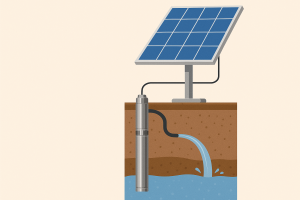
Submersible pumps, as the name implies, are designed to be fully submerged in the water source.
They push water up to the surface rather than pulling it.
This design makes them far more efficient for deep water applications.
- Applications: They are the standard for deep wells, boreholes, and reservoirs where the water level is far below the ground.
- Advantages: They are highly efficient at lifting water from great depths and are protected from freezing. The surrounding water also helps cool the motor.
- Limitations: Installation and maintenance can be more complex and costly, as the pump needs to be retrieved from the well for servicing.
Key Technical Factors
When comparing either type, two technical specifications are critical.
Max Vertical Head (MVH): This is the maximum vertical height the pump can lift water. If your well is 50 meters deep, you need a pump with an MVH greater than 50 meters. Pump efficiency decreases as it approaches its MVH.
Dry Run Protection: This is a crucial safety feature. It automatically shuts off the pump if it detects a lack of water, preventing the motor from overheating and burning out. This is vital for both surface and submersible pumps to ensure a long service life.
| Feature | Surface Pump | Submersible Pump |
|---|---|---|
| Placement | At or near the water source | Fully submerged in the water source |
| Best Use | Ponds, tanks, shallow wells | Deep wells, boreholes |
| Lift Method | Suction (pulling water) | Pushing water upwards |
| Maintenance | Easier access, simpler | More complex, requires retrieval |
| Primary Advantage | Simple installation and access | High efficiency for deep water |
The Screw Pump: Low Flow, High Head Champion
Need to get water from a very deep well but don't need high volume?
Traditional pumps can struggle with extreme depths.
They often fail or use too much energy.
The solar screw pump is the perfect solution for deep wells with low water demand.
It uses a unique mechanism to efficiently push water from great depths, making it ideal for domestic water supply and livestock watering in remote areas.
When your water source is hundreds of feet below ground, pump selection becomes critical.
The solar screw pump, also known as a progressive cavity pump, is a specialized tool engineered precisely for these challenging conditions.
Its design principles differ significantly from common centrifugal pumps, giving it a unique advantage in high-head, low-flow scenarios.
Understanding how it works reveals why it's the go-to choice for deep wells across Africa, Latin America, and other regions with limited grid access.
How It Works: The Progressive Cavity Principle
The core of the pump consists of a single helical metal rotor (the screw) turning inside a double helical rubber stator.
As the rotor turns, it creates a series of sealed cavities that "progress" from the intake to the outlet of the pump.
These cavities trap a specific volume of water and push it upward.
This compression-based mechanism is what allows the pump to generate immense pressure and overcome the extreme head of a deep well.
- Low Flow, High Head: The design inherently produces lower flow rates but can achieve heads exceeding 150 meters (nearly 500 feet) with high efficiency.
- Sand Resistance: This is a major advantage. The rubber stator and slow turning speed allow the pump to handle water with higher concentrations of sand and silt without the rapid wear and tear that would destroy a centrifugal pump. This makes it highly durable in imperfect well conditions.
Ideal Applications
The screw pump's characteristics make it perfect for specific uses.
Domestic Water Supply: It provides ample water for households in off-grid locations, reliably filling storage tanks for daily needs like cooking, cleaning, and sanitation.
Livestock Watering: It's an excellent choice for ranches and farms, ensuring a consistent water supply for animal troughs spread across large, remote pastures.
Small-Scale Irrigation: While not suited for large-scale farming, it can support drip irrigation for small gardens or plots where water needs to be lifted from a deep borehole.
Performance and Limitations
The screw pump is a specialist tool.
Its strengths also define its limitations.
| Feature | Specification | Impact |
|---|---|---|
| Typical Flow Rate | 0.5 - 2.5 m³/hour | Excellent for storage tanks, not for flood irrigation. |
| Maximum Head | Up to 200 meters+ | Can access water from very deep aquifers. |
| Sand Tolerance | High (up to 0.5% by volume) | Increased durability and lower maintenance in sandy wells. |
| Primary Limitation | Low Flow Rate | Unsuitable for applications requiring large volumes of water quickly. |
Ultimately, the solar screw pump excels where others fail.
Its ability to deliver water reliably from extreme depths using minimal solar power makes it an indispensable tool for life and agriculture in the world's most challenging environments.
The Plastic Impeller Pump: The High-Flow Workhorse
Need to irrigate a farm or water a large pasture?
A low-flow pump just won't cut it.
You need a high volume of water, quickly and efficiently.
The solar plastic impeller pump delivers high flow rates, making it the workhorse for agriculture.
This multi-stage centrifugal pump is designed for moving large volumes of water for farm irrigation, pasture management, and large gardens.
When the goal is to move a lot of water, centrifugal force is the most efficient method.
The solar plastic impeller pump leverages this principle through a multi-stage design to achieve impressive flow rates.
It's the go-to solution for many agricultural applications in Africa and the Americas, where maximizing water output from solar power is essential for crop and livestock survival.
This pump's design prioritizes high volume and wear resistance, making it both powerful and practical for demanding jobs.
Multi-Stage Centrifugal Design
Unlike a screw pump, this pump uses a series of impellers stacked on top of each other.
Water enters the first impeller at the bottom, is spun outward by centrifugal force, and is then guided into the next impeller above it.
Each stage adds more pressure (head), while the impeller's design determines the flow rate.
- High Flow, Medium Head: This design is optimized to move a large volume of water. While it can't reach the extreme depths of a screw pump, it offers a powerful combination of high flow at a moderate head, often up to 100 meters.
- Durable Plastic Impellers: The impellers are made from advanced, wear-resistant polymers. This material choice offers several key benefits. It provides excellent resistance to abrasion from fine sand, is lighter than metal, and is more economical to produce.
Key Applications
The plastic impeller pump's high output makes it ideal for water-intensive tasks.
Farm Irrigation: This is its primary application. It can supply enough water for sprinklers or flood irrigation systems, making it possible to cultivate crops in arid or semi-arid regions. A single pump can often irrigate several acres.
Pasture Water Supply: For large herds of livestock, this pump can quickly fill multiple large tanks or ponds across a wide area, ensuring animals have constant access to water.
Community Water Systems: In villages, these pumps can fill large central storage towers, providing a reliable water supply for the entire community.
Advantages and Trade-offs
The plastic impeller pump offers a compelling balance of performance, durability, and cost.
| Aspect | Advantage | Limitation |
|---|---|---|
| Performance | Very high flow rate (up to 15 m³/hour or more). | Lower maximum head compared to a screw pump. |
| Durability | Excellent resistance to fine sand and abrasion. | Not suitable for highly corrosive (acidic/alkaline) water. |
| Cost & Weight | More economical and lighter than stainless steel models. | Plastic components may have a shorter lifespan than metal in harsh, deep wells. |
| Efficiency | Highly efficient at converting solar power into water movement. | Efficiency drops if used in wells deeper than its optimal range. |
In summary, the solar plastic impeller pump is the undisputed champion for agricultural applications.
Its ability to deliver a high volume of water efficiently makes it a vital tool for food production and livestock management in off-grid areas worldwide.
The Stainless Steel Impeller Pump: The Premium Durability Option
Is your water corrosive or do you demand the longest possible service life?
Standard pumps can corrode and fail quickly in acidic or alkaline water.
This leads to costly replacements and downtime.
The solar stainless steel impeller pump is the premium solution for harsh water and maximum durability.
It uses high-grade SS304 stainless steel for all water-contact parts, ensuring extreme corrosion resistance and a very long operational life.
For some applications, standard is not enough.
When water quality is poor or when the pump must operate flawlessly for decades in a deep, inaccessible well, only the most robust materials will do.
The solar stainless steel impeller pump is an investment in reliability.
Built on the same high-flow centrifugal principle as its plastic counterpart, it substitutes polymer components for high-grade stainless steel, creating a pump that is virtually immune to corrosion and built to last.
The Power of SS304 Stainless Steel
The defining feature of this pump is its construction.
Every part that touches water—the impellers, pump body, intake screen, and outlet—is made from SS304 stainless steel.
- Ultimate Corrosion Resistance: SS304 is a high-grade alloy renowned for its ability to resist rust and corrosion from a wide range of chemicals, including acids and alkalis found in some groundwater. This prevents the degradation that would destroy lesser pumps over time.
- Structural Integrity and Longevity: Stainless steel is incredibly strong and resistant to abrasion. This means the pump maintains its precise internal tolerances for much longer, ensuring consistent high performance and a service life that can exceed 15-20 years with proper installation.
Specialized Applications
This premium pump is designed for niche but critical applications where other pumps would fail.
Corrosive Water Conditions: It is the only viable choice for wells with acidic (low pH) or alkaline (high pH) water. This is common in certain geological regions, including parts of Australia and the Americas.
High-Value Installations: For high-end homes, luxury ranches, or critical commercial operations, the added cost is justified by the pump's extreme reliability and the avoidance of costly service interruptions.
Food-Grade and Purity Requirements: Stainless steel is non-reactive and does not leach materials into the water, making it suitable for applications where water purity is a concern.
Comparing Durability and Cost
While it offers unmatched durability, it comes at a higher price point.
The choice between plastic and stainless steel is a strategic one based on water conditions and budget.
| Pump Type | Best For | Primary Advantage | Relative Cost |
|---|---|---|---|
| Plastic Impeller | General irrigation, sandy water | High flow, wear-resistant, economical | $$ |
| Stainless Steel Impeller | Corrosive water, maximum lifespan | Unmatched corrosion resistance, long-term reliability | $$$$ |
In conclusion, the solar stainless steel impeller pump represents the peak of durability and reliability in the solar pumping world.
It is the definitive choice for challenging water environments and for users who demand a long-term, maintenance-free solution and are willing to invest in premium engineering.
The BLDC Motor: Core of the System's Efficiency
What makes one solar pump so much better than another?
It's not just the pump itself.
The motor driving it is the true heart of the system.
The high-efficiency BLDC motor is the core technology that makes modern solar pumps so powerful.
This advanced motor delivers over 90% efficiency, converting more precious solar energy into water pumping power and reducing overall system costs.
Behind every great solar pump—whether it's a screw, plastic impeller, or stainless steel model—is an equally great motor.
The shift to Brushless DC (BLDC) permanent magnet motors has revolutionized the industry.
This technology is the single most important factor determining a solar pumping system's overall efficiency, reliability, and competitiveness.
Understanding the BLDC motor's advantages is key to appreciating the performance of the entire system.
Technical Superiority
A BLDC motor is fundamentally different from older brushed motors.
It uses powerful permanent magnets on the rotor and a sophisticated electronic controller instead of physical brushes to commutate the motor.
- Exceptional Efficiency: With no friction from brushes, BLDC motors achieve electrical-to-mechanical conversion efficiencies exceeding 90%. Traditional DC motors often struggle to reach 75%. This 15%+ efficiency gain is massive in a solar-powered system.
- Powerful Permanent Magnets: The rotor is typically made from high-strength neodymium iron boron (NdFeB) magnets. These create a powerful magnetic field, resulting in high torque even at low speeds. This means the pump can start easily even in low-light conditions.
- Compact and Lightweight: The efficient design results in a motor that is significantly smaller and lighter than traditional motors of equivalent power. This makes the pump easier to handle, transport, and install, especially in remote locations. A modern BLDC motor can be up to 47% smaller and 39% lighter than older designs.
The Market Value of High Efficiency
The benefits of a high-efficiency motor extend beyond technical specifications.
They translate into real-world cost savings and performance gains.
| Motor Feature | Technical Advantage | Customer Benefit |
|---|---|---|
| Efficiency > 90% | More water pumped per watt of solar power. | Reduces Solar Panel Costs: Fewer solar panels are needed to achieve the same water output, lowering the entire system's initial cost by 15-25%. |
| Brushless Design | No brushes to wear out. | Maintenance-Free: Eliminates the most common failure point in DC motors, leading to a much longer service life and zero maintenance needs. |
| High Torque | Strong starting power. | Reliable Operation: Ensures the pump starts and runs reliably even on cloudy days or during early morning and late afternoon hours, maximizing daily water output. |
The Role of the MPPT Controller
The BLDC motor's performance is further enhanced by an intelligent Maximum Power Point Tracking (MPPT) controller.
This controller constantly analyzes the output of the solar panels and adjusts the electrical load to ensure the motor is always receiving the optimal voltage and current.
This maximizes the energy harvested from the sun throughout the day, boosting total water volume by up to 30% compared to systems without MPPT.
In essence, the BLDC motor and MPPT controller form a highly intelligent power unit that is the true engine of any modern solar water pump.
Choosing Your System: AC/DC Hybrid Options
What happens when the sun doesn't shine?
A purely solar system can leave you without water on cloudy days or at night.
This can be a critical problem for households and farms.
An AC/DC hybrid system provides a 24/7 water-pumping solution, ensuring reliability.
It automatically switches between solar power and a grid or generator backup, giving you the best of both worlds: free solar energy and uninterrupted water access.
The biggest limitation of solar power is its intermittency.
For applications where a constant water supply is non-negotiable, a standard DC-only solar pump might not be enough.
This is where AC/DC hybrid technology comes in, providing a seamless and intelligent solution.
A hybrid controller is designed to manage power from two different sources, maximizing the use of free solar energy while guaranteeing water is always available, day or night, rain or shine.
How AC/DC Hybrid Controllers Work
The heart of the hybrid system is the intelligent controller.
It features separate inputs for both DC power from solar panels and AC power from the grid or a generator.
The controller's internal logic is programmed to prioritize solar power.
- Solar Priority: When the sun is shining and the solar panels are generating sufficient power, the controller directs this DC electricity straight to the pump. The AC input remains on standby.
- Hybrid Function: If solar power is reduced due to clouds, the controller can blend AC power with the available DC power. It uses as much solar energy as possible and only draws the supplemental power it needs from the AC source to maintain pump performance. This maximizes your use of free energy.
- Automatic Switchover: When the sun goes down or if solar input drops to zero, the controller instantly and automatically switches to the AC power source to keep the pump running.
- Seamless Transition: When the sun rises again and solar power becomes available, the controller automatically switches back to using the free solar energy.
The Benefits of a Hybrid System
| Feature | Description | Main Advantage |
|---|---|---|
| 24/7 Operation | The pump can run around the clock, regardless of weather. | Uninterrupted Water Supply: Guarantees water for critical needs like irrigation schedules or household use, even overnight. |
| Energy Cost Savings | Prioritizes and maximizes the use of free solar energy. | Lower Utility Bills: You only pay for grid/generator power when absolutely necessary, significantly reducing long-term operating costs. |
| System Reliability | Provides redundancy and eliminates dependence on a single power source. | Peace of Mind: Eliminates "range anxiety" about water availability during extended periods of bad weather. |
| Fully Automatic | The controller handles all power management without user intervention. | Effortless Operation: Simply set it up and let the system intelligently manage itself for optimal efficiency and reliability. |
An AC/DC hybrid system is the ultimate solution for those who want the environmental and financial benefits of solar power without compromising on the reliability of a traditional grid-powered pump.
It offers a robust, flexible, and intelligent approach to modern water management.
Conclusion
The best solar pump combines a type matched to your well with a high-efficiency BLDC motor and an intelligent controller.
This ensures a reliable, cost-effective, and sustainable water solution.
FAQs
How much water can a solar-powered water pump move?
It varies greatly, from a few gallons per minute for small pumps to thousands for large agricultural systems.
The flow rate depends on the pump type, motor power, and sun intensity.
How deep will a solar water pump work?
Specialized solar screw pumps can work in wells over 200 meters (650 feet) deep.
Centrifugal pumps are typically used for depths up to 100 meters (330 feet).
How do I install a solar-powered pump?
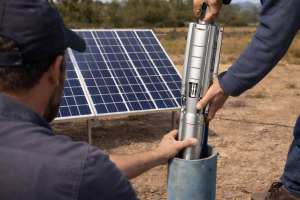
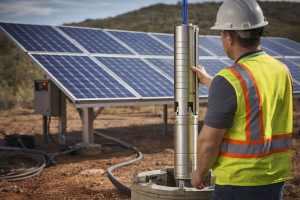
Installation involves placing the pump in the water source, positioning the solar panels in a sunny, unshaded location, and connecting them to the controller.
Professional installation is recommended for deep wells.
Can solar pumps run at night?
Standard solar pumps cannot.
However, systems with an AC/DC hybrid controller can automatically switch to grid or generator power at night.
Systems with battery backup can also run overnight.
Do solar water pumps require maintenance?
They are very low maintenance.
The brushless motors are maintenance-free.
Periodic cleaning of solar panels and checking the pump's intake screen for debris is typically all that's required.
How long do solar water pumps last?
A quality system with a BLDC motor can last for 15-20 years or more.
The solar panels themselves often have a power-output warranty of 25 years.
What size solar pump do I need?
This depends on your daily water requirement (gallons per day) and the total dynamic head (well depth plus friction loss).
A professional supplier can help you calculate the correct size.
Are solar water pumps worth it?
Yes, for off-grid locations, they are extremely cost-effective.
They eliminate electricity bills or fuel costs for generators and provide a reliable, long-term water supply with a very low operating cost.