Struggling with high energy bills or unreliable water access in off-grid areas?
You are solving a problem that needs a durable and efficient solution.
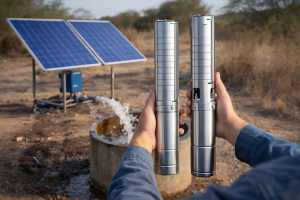
A 4 HP solar water pump generally costs between $1,700 for the pump alone and can range from $3,800 to over $6,000 for a complete kit. This price varies based on the pump type, required solar panel wattage, controller features, and well depth.
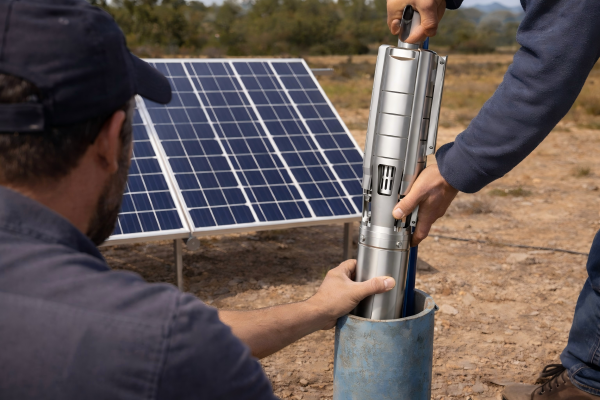
The final price tag on a solar water pump system is more than just the pump itself.
It's a complete solution where multiple components must work together perfectly.
Understanding these individual parts is the key to calculating your true investment and ensuring you select a system that delivers reliable water for years to come.
This guide will break down every factor, from the pump's internal mechanics to the brain of the operation, giving you the knowledge to make a confident purchasing decision.
Understanding the Key Factors That Influence Pump Price
**Finding a reliable water source shouldn't be a guessing game.
Yet, different prices for similar pumps can be confusing, making it hard to budget effectively.
The total cost of a solar water pump system is determined by the specific pump type, the motor's efficiency, the controller's capabilities, and the number of solar panels needed.
The pump itself might only be 30-50% of the total system cost.
A 4 HP solar water pump is a powerful tool.
But its price is not a single number.
It is a sum of its parts.
Think of it like buying a car.
The engine size matters, but so do the transmission, the onboard electronics, and the type of tires.
Similarly, the true cost of a solar water system depends on a collection of crucial components, each with its own role and price point.
System Components Breakdown
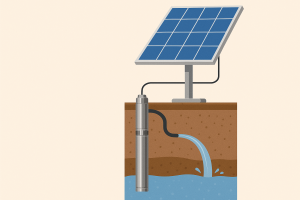
A complete system is more than just the part that goes in the water.
- The Pump End: This is the physical mechanism (screw, plastic impellers, or stainless steel impellers) that moves the water.
- The Motor: The engine that drives the pump, with efficiency being the most critical factor.
- The Controller: The "brain" that manages power from the solar panels to the motor, optimizing performance.
- Solar Panels: The power source. The number and wattage of panels directly impact cost.
- Mounting & Wiring: The hardware needed to securely install panels and connect the entire system.
Neglecting any of these components can lead to an underperforming system or a higher long-term cost.
For a distributor, understanding how these parts contribute to the final price is essential for creating competitive and effective packages for different customer needs.
A system for a deep well with low water demand will have a different cost structure than one for shallow well with high-volume irrigation needs.
| Component | Primary Cost Driver | Approximate % of Total Cost |
|---|---|---|
| Pump & Motor | Type (Screw, Impeller), Materials, HP | 30% - 50% |
| Solar Panels | Wattage, Quantity, Technology | 30% - 40% |
| Controller | MPPT Efficiency, Hybrid Capability | 10% - 15% |
| Mounting & Accessories | Size of Array, Material, Location | 5% - 15% |
This table shows that focusing only on the pump's price can be misleading.
A cheaper pump might require a less efficient motor, which in turn demands more solar panels, potentially increasing the total system cost.
This is why a holistic view of the system's engineering and components is vital.
Exploring Solar Deep Well Pump Types and Their Costs
**Choosing the wrong pump can lead to system failure or inefficient water flow.
This wastes your investment and leaves you without the water you need.
The cost and performance of a 4 HP solar pump are directly tied to its specific type: screw pumps for high head, plastic impeller pumps for high flow, or stainless steel impeller pumps for durability.
Each is designed for different applications and water conditions.
The term "4 HP solar pump" describes the power of the motor, but not how that power is used.
The actual work of moving water is done by the pump end, and the design of this component is critical.
It dictates whether the pump is better at lifting water from extreme depths or at moving large volumes of water across a shorter distance.
Matching the pump type to your specific well conditions and water requirements is the first step toward building a cost-effective and reliable system.
Let's examine the three most common designs.
Solar Screw Pumps: For High Head, Low Flow Needs
This pump design is a specialist in deep well applications.
It uses a simple but effective mechanism: a single rotating stainless steel screw (rotor) inside a rubber housing (stator).
As the screw turns, it creates sealed cavities of water that are pushed upward.
This compression method allows the pump to generate immense pressure, making it ideal for lifting water from very deep wells.
The trade-off is a lower flow rate compared to other designs.
Their primary application is in domestic water supply for homes, providing drinking water for livestock, and small-scale irrigation where the well is hundreds of feet deep.
They are particularly valuable in arid regions where groundwater levels are low.
A key advantage is their high resistance to sand.
The rubber stator can handle abrasive particles better than the tight tolerances of an impeller pump, giving it a longer life in wells that are not perfectly clean.
While a 4 HP screw pump might have a higher initial cost than a comparably powered pump for shallow wells, it is often the only viable and cost-effective solution for depths exceeding 400-500 feet.
Solar Plastic Impeller Pumps: The High-Flow Workhorse
This is the most common type of centrifugal pump.
It features a series of stacked impellers made from durable, engineered plastics.
As the motor spins the impellers, centrifugal force flings water outward and upward from one stage to the next.
Each stage adds more pressure, and the result is a high volume of water flow at a moderate head.
These pumps are the go-to solution for many agricultural applications.
They excel at farm irrigation, watering large herds of livestock, and supplying water to home gardens where the well depth is moderate (typically under 400 feet).
Their main advantage is the ability to move a lot of water efficiently.
The plastic impellers offer excellent resistance to fine sand and are lightweight, which makes the pump more economical to produce and easier to install.
For a 4 HP system, a plastic impeller pump will generally offer the highest gallons per minute (GPM) for its price point.
However, its limitation lies in durability in highly corrosive water or under the extreme pressures of very deep wells, where a more robust material is necessary.
Solar Stainless Steel Impeller Pumps: Premium Durability
This pump operates on the same multi-stage centrifugal principle as the plastic impeller model.
The critical difference is the material.
Both the impellers and the pump housing are constructed from SS304 or higher-grade stainless steel.
This design is engineered specifically for longevity in harsh environments.
It is the premium choice for wells with acidic or alkaline water conditions.
It is also ideal for regions with alkaline soils, such as parts of Australia, or for high-end residential and commercial properties where maximum reliability is paramount.
The primary advantage is its superior resistance to corrosion and abrasion, leading to a significantly longer service life.
A 4 HP stainless steel impeller pump can handle demanding water conditions without degrading over time.
This reliability comes at a price.
These pumps have a higher upfront cost and are heavier due to the materials used.
They target a market segment that prioritizes long-term total cost of ownership over initial purchase price.
For a distributor, offering this option is crucial for serving customers in areas with known water quality issues.
| Pump Type | Best For | Flow Rate | Head (Lift) | Sand Resistance | Cost Factor |
|---|---|---|---|---|---|
| Screw Pump | Deep Wells, Homes | Low | Very High | Excellent | Mid-to-High |
| Plastic Impeller | Farm Irrigation, High Volume | Very High | Moderate | Good | Low-to-Mid |
| Stainless Steel Impeller | Corrosive Water, Longevity | High | High | Moderate | High |
The Core Component: How BLDC Motors Impact Overall Cost
**An inefficient motor wastes precious solar power.
This forces you to buy more solar panels, dramatically increasing your total system cost for no extra water.
The heart of every modern solar pump is a Brushless DC (BLDC) permanent magnet motor.
Its efficiency, often exceeding 90%, directly reduces the number of solar panels required, lowering the overall system price and simplifying installation.
The pump end moves the water, but the motor provides the power to do it.
The efficiency of this motor is arguably the most important factor in the entire system's performance and cost.
An inefficient motor is like having a leak in your fuel tank; you have to put more energy in to get the same work out.
In a solar pump system, "more energy" means "more solar panels," which is often one of the most expensive parts of the installation.
This is why the transition to high-efficiency BLDC motors has been a game-changer for the industry.
Efficiency is Everything
Traditional DC motors used "brushes" to transmit power.
These brushes would wear down over time, creating maintenance needs and eventually leading to motor failure.
They also had efficiency ratings closer to 60-70%.
A modern BLDC motor, by contrast, has no brushes to wear out, making it virtually maintenance-free.
Its design, often using powerful neodymium iron boron permanent magnets in the rotor, allows it to convert electrical energy into mechanical force with over 90% efficiency.
What does a 20-30% efficiency gain mean for a 4 HP system?
It means the motor requires 20-30% less power to do the same amount of work.
This translates directly into a smaller, and therefore less expensive, solar panel array.
A system that might have needed 16 solar panels with an older motor might now only need 12 panels to achieve the same water output.
This reduces the cost of panels, mounting hardware, and wiring.
The Value Proposition of a High-Quality Motor
Beyond panel savings, a superior BLDC motor offers more benefits that impact the total cost of ownership.
- Higher Torque: They produce strong turning force even at low speeds, which is crucial for starting the pump reliably on cloudy days or early in the morning.
- Compact & Lightweight: Advanced designs can be up to 47% smaller and 39% lighter than older motors of the same power. This simplifies transportation and installation, especially for deep well pumps that must be lowered hundreds of feet.
- Long Service Life: The absence of brushes and the use of high-quality components means these motors are designed to operate for many years without intervention.
For a pump distributor, the motor's quality is a key selling point.
It's the core technology that underpins the entire system's value proposition of efficiency and durability.
Explaining to a customer that a slightly higher initial investment in a pump with a premium motor can lead to thousands of dollars in savings on solar panels and future maintenance is a powerful argument.
The motor isn't just a component; it's the foundation of the system's long-term financial performance.
Optimizing Performance: The Role of the Smart Controller
**Without proper power management, your pump won't work on cloudy days.
You will lose access to water when you need it most, defeating the pump's purpose.
A smart controller with Maximum Power Point Tracking (MPPT) acts as the brain of the system.
It maximizes water output by constantly optimizing the power from the solar panels, ensuring the pump runs effectively even in low-light conditions and protecting the motor from damage.
If the motor is the heart of the solar pump, the controller is the brain.
It's a sophisticated piece of electronics that sits between the solar panels and the pump motor, and its job is to manage the flow of energy.
A simple switch could turn the pump on or off, but a smart controller does much more.
It actively works to squeeze every last drop of power from the sun, which directly translates to more water pumped over the course of a day.
This optimization is especially critical for a 4 HP system, which has significant power demands.
What is Maximum Power Point Tracking (MPPT)?
Solar panels have a unique characteristic: their power output (a combination of voltage and current) changes constantly with the amount of sunlight and the temperature.
There is a specific "sweet spot," or maximum power point, where the panel produces the most energy.
An MPPT controller's job is to find this sweet spot and adjust the electrical load of the motor to match it.
It does this thousands of times per second.
Controllers with high-efficiency MPPT (often 99% or higher) can increase the daily water output of a system by up to 30% compared to a system without it.
This means you get more water without adding a single extra solar panel.
It effectively makes your entire investment more productive, especially on overcast days or during the early morning and late afternoon.
The Strategic Value of Hybrid AC/DC Controllers
For applications requiring 24/7 water access, a hybrid AC/DC controller offers the ultimate solution.
This advanced controller is designed with inputs for both solar DC power and grid AC power (or a generator).
The controller's logic prioritizes solar energy.
When the sun is shining, the pump runs entirely on free solar power.
If clouds roll in and solar power is insufficient, the controller can automatically blend in AC power to maintain the required pump speed and water flow.
When no solar power is available at night, it seamlessly switches over to the AC source.
| Controller Type | Best For | Key Feature | Cost Impact |
|---|---|---|---|
| Standard MPPT | Daily water needs, off-grid | Maximizes solar panel output | Standard |
| Hybrid AC/DC | 24/7 operations, grid backup | Automatic switching between solar and AC | Higher initial cost |
For distributors, offering a hybrid controller option opens up a larger market.
It addresses the needs of customers who want the cost savings of solar but cannot afford any interruption in their water supply.
It transforms a solar pump from an off-grid-only solution to a versatile, energy-saving system suitable for residential, agricultural, and commercial clients, regardless of grid access.
This feature provides peace of mind and ensures a worry-free water supply around the clock.
Conclusion
The cost of a 4 HP solar pump is a blend of pump type, motor efficiency, and controller intelligence.
Understanding these elements allows you to build a reliable, cost-effective water solution for any need.
FAQs
What size solar pump do I need for a 4-inch well?
For a 4-inch well, you can use either 3-inch or 4-inch diameter pumps. The choice depends on your required flow rate and the well's depth, not just the casing diameter.
How many solar panels are needed for a 4hp water pump?
A 4 HP motor requires approximately 3,000 watts (3 kW) of power. This typically means you will need between eight to twelve 300-400 watt solar panels, depending on panel efficiency.
How deep can a 4hp solar pump go?
The depth depends on the pump type. A 4HP screw pump can potentially lift water from over 800 feet, while a 4HP high-flow impeller pump is typically used for depths under 400 feet.
How much water can a 4 HP solar pump?
A 4HP pump's output varies greatly. A high-head screw pump might deliver 10-20 gallons per minute (GPM) from a deep well, while a high-flow impeller pump could deliver over 100 GPM in a shallow application.
Can a solar pump run without a battery?
Yes, almost all modern solar water pump systems are designed to run directly from solar panels during the day without batteries. The water is typically pumped to a storage tank for later use.
How long do solar water pumps last?
A high-quality solar pump system with a BLDC motor can last for 10-15 years or more with minimal maintenance. The solar panels themselves often have a warranty for 25 years of power output.
Is there a government subsidy for solar water pumps?
Many countries and regions offer subsidies, tax credits, or grants for agricultural solar installations. For example, the USDA's NRCS program in the U.S. often helps fund these projects for farmers and ranchers.
Does a solar pump work on cloudy days?
Yes, thanks to MPPT controllers, modern solar pumps can still operate on cloudy days, though at a reduced flow rate. The system optimizes the low available light to keep the motor running.