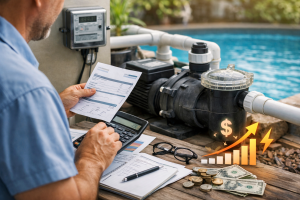
Struggling to keep your pool clean and warm without running the pump constantly?
You're losing heat and spending too much on energy.
There's a better way to manage your pool.
Yes, you can and should run your pool pump with a solar cover on. It's perfectly safe. In fact, this combination is highly recommended. It helps circulate the warm water, keeps the pool cleaner, and can significantly reduce the pump's required runtime, saving energy and extending its lifespan.
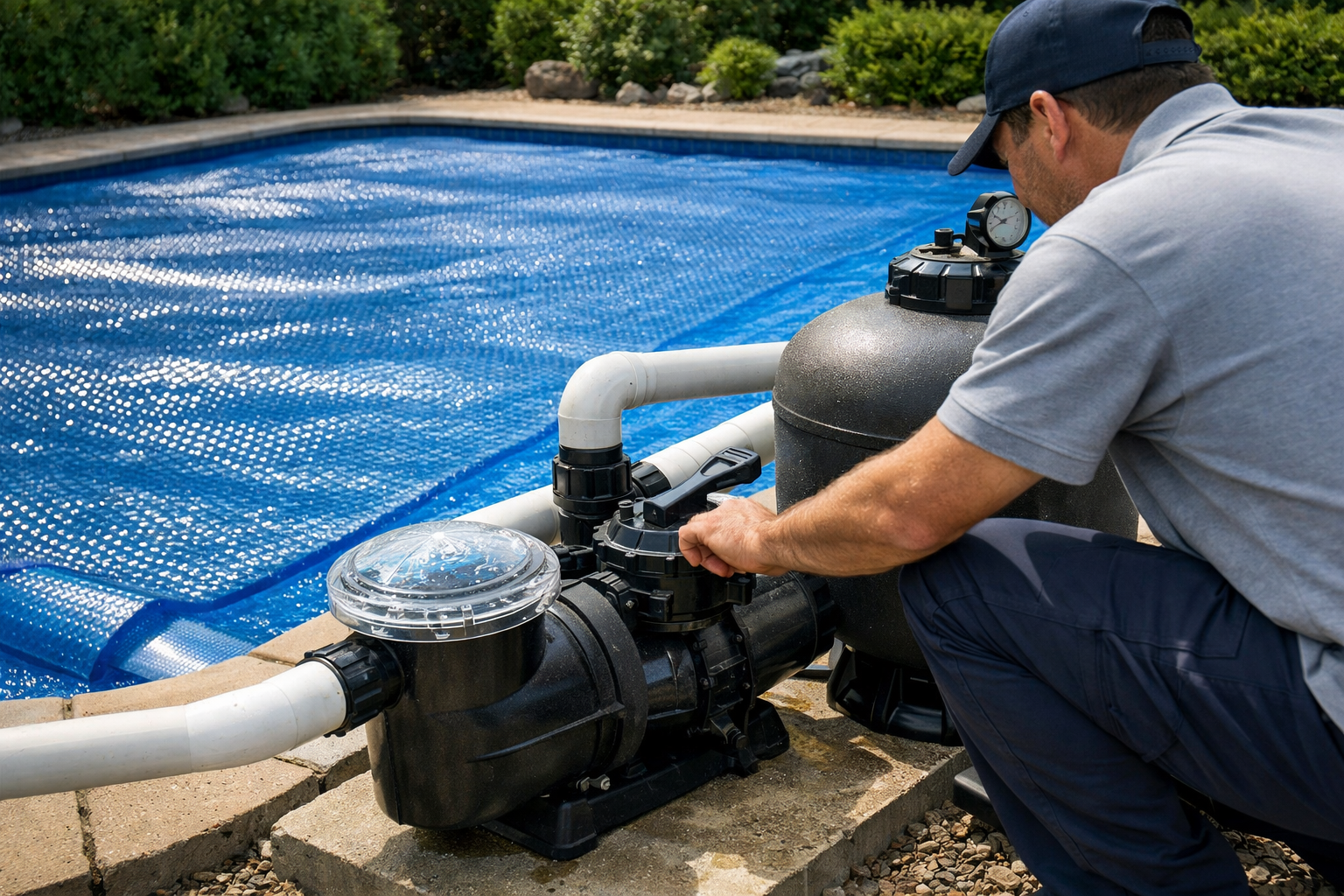
Leaving a solar cover on your pool is one of the most effective ways to maintain its temperature and cleanliness.
But many pool owners wonder if it's safe or effective to run their filtration system at the same time.
Running the pump circulates water, distributing heat and chemicals, while the cover prevents evaporation and debris.
When used together, they create a powerful and efficient system for pool maintenance.
This article will break down exactly how these two essential pool components work together.
We will explore the safety aspects, the benefits, and provide practical tips to maximize their combined effectiveness.
You'll learn how to save time, money, and energy while enjoying a pristine pool.
Is it Safe to Run a Pool Pump and Use a Solar Pool Blanket at the Same Time?
Worried that running your pump with the cover on could cause damage?
This fear can lead to inefficient pool maintenance and higher energy bills.
You might be missing out on key benefits.
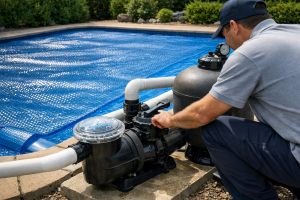
It is completely safe to run your pool pump while a solar blanket is on the water. The cover floats on the surface and does not block the skimmers or return jets. This allows the pump to circulate water effectively, distributing heat and chemicals without any risk to your equipment.
The primary job of your pool pump is to circulate water.
It pulls water from the pool through the skimmer and main drain, pushes it through the filter, and returns it to the pool.
This process is essential for removing debris and distributing chemicals evenly.
A solar cover, on the other hand, rests on the water's surface.
Its main purpose is to prevent heat and water loss through evaporation.
It also blocks leaves, dirt, and other debris from entering the pool.
These two functions do not interfere with each other.
The cover does not create a seal that would impede water flow into the skimmer, as long as the water level is correct.
In fact, using them together creates a synergistic effect that enhances pool maintenance.
Why It's a Recommended Practice
Running the pump with the cover on is not just safe; it's smart.
The cover significantly reduces the amount of debris entering the pool.
This means the skimmer basket and filter have less work to do.
As a result, you don't need to run the pump for as many hours each day to keep the water clean.
A typical pool without a cover might need its pump to run for 8-12 hours daily.
With a cover, this can often be reduced to just 3-4 hours, representing a potential energy saving of over 50%.
This reduction in runtime directly translates to lower electricity bills and less wear and tear on your pump motor, extending its operational life.
Special Considerations for Cold Climates
There is an important exception for pools in freezing climates.
During winter, if temperatures drop near or below freezing, you must run your pump for longer periods.
We recommend running it for at least 8-10 hours a day, even with a cover.
The goal here is not filtration but preventing the water in your pipes from freezing and causing catastrophic damage.
The constant water movement generated by the pump is the best defense against frozen and burst pipes.
| Condition | Pump Runtime (with Cover) | Primary Goal |
|---|---|---|
| Normal Summer Use | 3-4 Hours/Day | Filtration & Debris Removal |
| Freezing Winter | 8-10+ Hours/Day | Prevent Pipes from Freezing |
Ultimately, combining a solar cover with your pump operation is a safe and efficient strategy for the vast majority of pool owners.
It streamlines cleaning, conserves energy, and saves money.
What is a solar cover?
Considering a solar cover but unsure what it actually is?
You see them on neighbors' pools but don't know the details.
They seem like simple bubble wrap.
A solar cover, also known as a solar blanket, is a large sheet of UV-stabilized plastic designed to float on the surface of a swimming pool. It looks similar to packaging bubble wrap but is much thicker and more durable, made specifically to withstand sunlight and pool chemicals.
Think of a solar cover as a high-tech lid for your pool.
It's not just a simple piece of plastic.
These covers are engineered with specific materials and designs to perform several key functions.
They are typically made from a durable polymer like polyethylene or vinyl.
The "bubbles" are a critical part of the design.
They create an insulating layer of air between the cover and the pool water, which is a key factor in heat retention.
Understanding the Variations
Solar covers are not one-size-fits-all.
They come in a variety of types, allowing you to choose one that best fits your needs and budget.
The main differences lie in their thickness, color, and shape.
-
Thickness: This is measured in 'mils' (one-thousandth of an inch). Common thicknesses range from 8 mils to 16 mils. A thicker cover generally provides better heat retention and is more durable, leading to a longer lifespan. A 14-mil or 16-mil cover can be up to 30% more effective at retaining heat than a basic 8-mil version.
-
Color: Covers come in various colors, with blue being the most common. Clear or translucent covers allow more of the sun's solar energy to pass through and heat the water directly. Darker or opaque covers are better at absorbing solar heat themselves and transferring it to the water, but they are most effective at preventing algae growth by blocking sunlight.
-
Shape and Size: You can buy solar covers in standard shapes like round, oval, and rectangular. For a free-form or kidney-shaped pool, you simply purchase a rectangular cover large enough to cover the widest and longest points of your pool and then trim it to fit perfectly with a pair of scissors. A precise fit is crucial for maximum effectiveness.
Beyond the Bubbles
While the classic "bubble wrap" style is most prevalent, technology has evolved.
There are now other types of covers that serve a similar purpose.
Thermal blankets, for example, are made of a foam-like material.
They don't heat the pool using the sun but are exceptionally good at insulating and preventing heat loss, making them ideal for heated pools.
There are also liquid solar covers, which are chemical formulas that form an invisible, one-molecule-thick layer on the water's surface to reduce evaporation.
Each type has its own set of pros and cons related to cost, effectiveness, and ease of use.
How does a solar cover work?
Wondering how a simple sheet of plastic can have such a big impact?
It seems too simple to be effective at heating a large pool.
You doubt it can really save you money.
A solar cover works by minimizing heat loss from evaporation, which accounts for up to 75% of a pool's heat loss. It acts as a physical barrier between the pool water and the air, trapping heat and reducing your pool heating costs by as much as 70%.
The science behind a solar cover is straightforward but powerful.
Its primary function is to combat evaporation.
When water evaporates from your pool's surface, it takes a massive amount of heat energy with it.
This process is the single largest cause of heat loss in a swimming pool.
By placing a physical barrier over the water, the solar cover dramatically slows this evaporative process.
This not only keeps your water warmer but also conserves a significant amount of water, reducing the need for frequent top-offs.
A covered pool can reduce water evaporation by up to 95%.
The Double-Action Benefit: Heating and Insulating
Solar covers do more than just insulate.
They also actively help to heat the pool water.
This is where the design and color of the cover come into play.
-
Solar Heating (Insolation): Translucent covers, particularly clear ones, are designed to allow the sun's shortwave solar radiation to pass through the cover and directly heat the water. The cover then traps this heat, creating a greenhouse effect in your pool. On a sunny day, a clear solar cover can increase your pool's temperature by 10-15°F (5-8°C) over several days of use.
-
Heat Retention (Insulation): At night, or on cloudy days, the cover's primary role switches to insulation. The air-filled bubbles create a thermal barrier that slows the transfer of heat from the warmer water to the cooler air. This is why you might wake up to a pool that's only lost 1-2 degrees overnight with a cover, compared to a 5-10 degree loss without one.
The Role of Bubbles
The bubbles on a solar cover are not just for looks.
They serve a dual purpose that is critical to the cover's function.
First, they trap air, which is a poor conductor of heat.
This trapped air forms the insulating layer that prevents heat from escaping the water.
Second, on some clear covers, the bubbles are designed to act like tiny magnifying lenses.
They help to focus and intensify the sunlight, directing more solar energy into the water for more efficient heating.
It is essential to place the cover with the bubble-side down, in direct contact with the water.
This ensures both the insulating and heating functions work as intended.
| Function | How it Works | Estimated Effectiveness |
|---|---|---|
| Evaporation Control | Physical barrier stops water vapor from escaping. | Reduces evaporation by up to 95% |
| Solar Heating | Allows solar radiation to pass through and heat water. | Can increase temp by 10-15°F |
| Heat Insulation | Air-filled bubbles trap heat in the water. | Reduces nighttime heat loss by over 50% |
By understanding these mechanics, it's clear that a solar cover is a multi-functional tool that provides significant value beyond its simple appearance.
Tips for Running Your Pool Pump and Using Your Pool Cover
Ready to use your cover and pump together but want to do it right?
Improper use can lead to problems like clogged skimmers or dirty water.
You want to maximize efficiency without creating new chores.
To get the most out of your pump and cover, always ensure the water level is high enough for the skimmer. Regularly clean debris off the cover before removing it, and take the cover off when adding chemicals to prevent damage and ensure proper mixing.
Using a solar cover and a pump together is simple, but following a few key tips can make the process much more effective.
These practices will help you maintain a cleaner pool, protect your equipment, and save time and money.
By integrating these habits into your routine, you ensure both components work at peak performance.
Small adjustments can lead to significant improvements in your pool's overall health and your own convenience.
1. Maintain the Proper Water Level
This is the most critical tip for running your pump with a cover on.
The water level in your pool should always be about halfway up the opening of your skimmer.
If the water level drops too low, the pump will start to suck in air instead of water.
This is known as "starving" the pump, and it leads to poor circulation, inefficient filtering, and can cause serious damage to your pump's motor from overheating.
A solar cover helps reduce evaporation, which naturally keeps the water level more stable.
However, you should still check it weekly to ensure it remains in the optimal range.
2. Keep the Cover's Surface Clean
Your solar cover will do an excellent job of keeping leaves, grass clippings, and other debris out of your pool.
But that debris doesn't just disappear.
It collects on top of the cover.
Before you remove the cover to swim, take a minute to clear this debris off.
You can use a soft pool brush, a leaf skimmer net, or even a leaf blower on a low setting.
If you don't, all that accumulated gunk will fall directly into your clean pool water the moment you lift the cover.
This defeats one of the cover's main purposes and creates more work for your pump and filter.
3. Manage Rainwater on the Cover
A solid solar cover will prevent rainwater from entering your pool.
This is a good thing, as rainwater is often acidic, dirty, and can throw off your pool's pH and chemical balance.
After a rainstorm, you will see water pooled on top of the cover.
Do not let this dirty water mix with your pool water.
Use a small, submersible cover pump or a siphon to remove the rainwater from the top of the cover.
This extra step saves you the time and money you would otherwise spend on rebalancing your pool's chemistry.
4. Remove the Cover When Adding Chemicals
This is a crucial step for protecting your investment.
Always remove the solar cover before adding any chemicals to your pool, especially chlorine shock.
Concentrated pool chemicals are highly corrosive.
If they come into direct contact with the cover, they can break down the plastic, causing it to become brittle and fall apart.
This will dramatically shorten the lifespan of your cover.
Furthermore, with the cover on, the chemicals won't be able to "gas off" properly, and circulation will not be as effective at mixing them throughout the entire body of water.
For best results, add chemicals with the cover off and the pump running to ensure they are fully dissolved and distributed before putting the cover back on.
Wait at least 30-60 minutes after adding chemicals before replacing the cover.
Conclusion
Using a solar cover with your pump is a safe, smart, and energy-efficient strategy.
It keeps your pool warmer and cleaner while reducing pump runtime and extending equipment life.
Frequently Asked Questions
Can you use a pool vacuum with a solar cover on?
It is possible but not recommended for automatic cleaners.
They can get tangled or their hose can get caught on the cover.
It is best to remove the cover before running your cleaner.
Should solar cover be on during the day or night?
Keep it on whenever the pool is not in use.
During the day, it helps heat the water.
At night, it prevents heat loss.
Maximum benefit comes from maximum coverage.
What are the disadvantages of a solar pool cover?
They can be bulky and difficult to manage, especially on large pools.
Debris accumulates on top and must be cleaned off before removal.
They also need to be replaced every few years.
How many hours a day should I run my pool pump with a solar cover?
With a cover, you can often reduce runtime to 3-4 hours per day in the summer.
This is enough to turn over the water and keep it clean, thanks to the cover reducing the debris load.
Do I lose chemicals with a solar cover?
No, a solar cover helps you save chemicals.
It reduces UV ray exposure, which breaks down chlorine.
It also prevents evaporation, keeping both water and dissolved chemicals in the pool.
Can a solar cover make a pool too hot?
In very hot, sunny climates, it is possible for a cover to raise the water temperature to an uncomfortable level.
If this happens, simply remove the cover during the hottest part of the day.
Should the bubbles on a solar cover be up or down?
The bubbles must always face down, in contact with the water.
This creates the insulating air layer and allows the cover to function correctly for both heating and insulation.