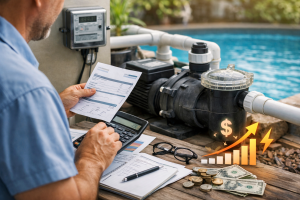
Struggling with high electricity bills from your pond pump?
Rising energy costs make pond maintenance expensive, while grid dependence can be unreliable.
Harness the sun's free energy for a cost-effective solution.
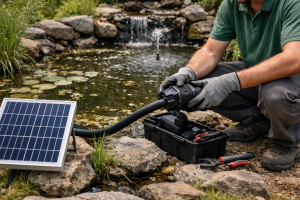
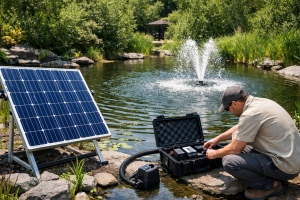
Yes, you can absolutely run a pond pump using solar power. It is an excellent, environmentally-friendly option that reduces or eliminates electricity costs. Solar pumps are ideal for aeration and circulation, keeping your pond healthy while operating independently from the power grid, making them perfect for any location.
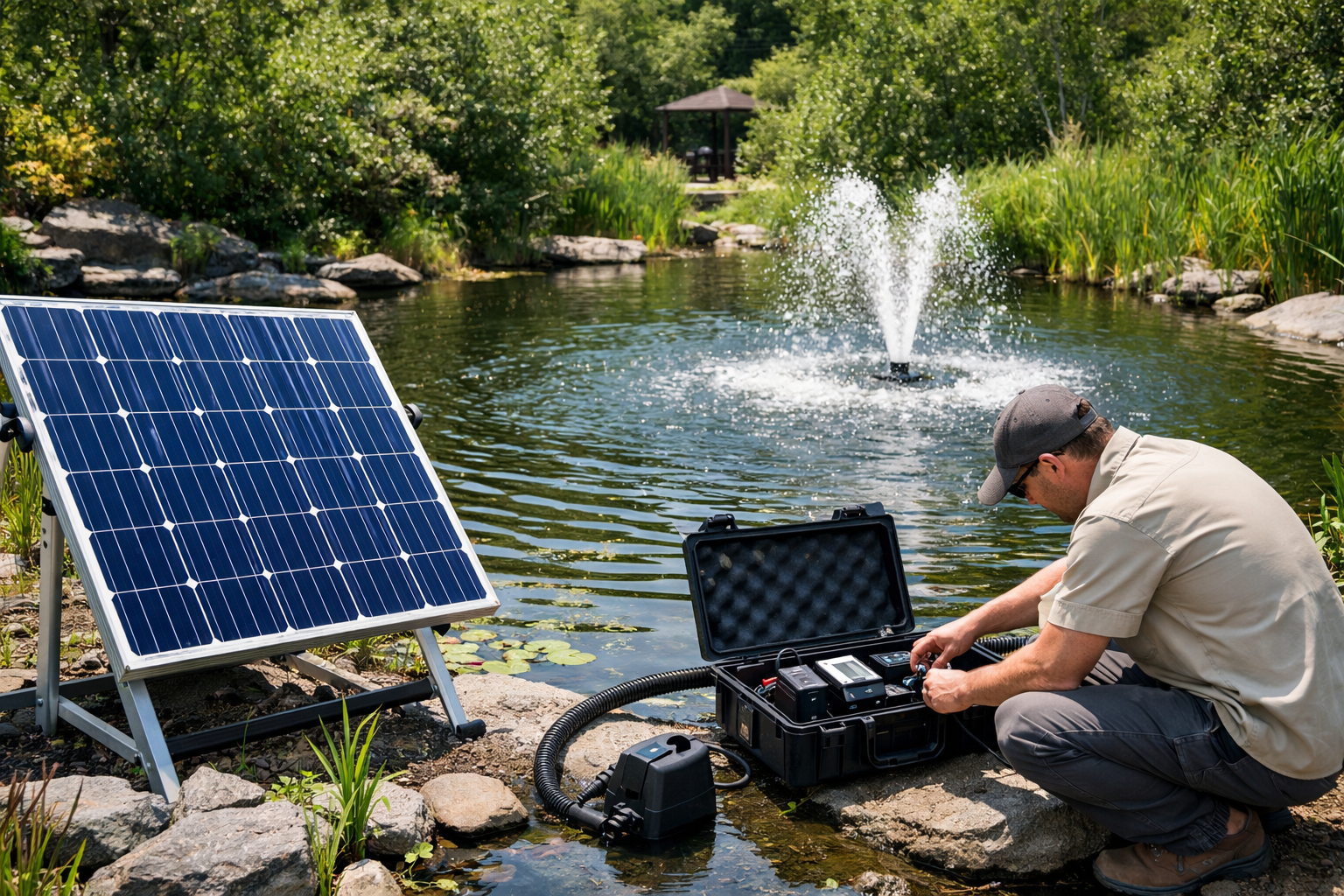
This solution offers energy independence and significant long-term savings, making it an increasingly popular choice for pond owners everywhere.
Whether you're looking to fill a new pond, maintain water levels, or run an aeration fountain, solar power presents a versatile and sustainable option.
Let’s dive into how these systems work, their benefits, what to look for, and how to choose the right pump for your specific needs.
How Do Solar Pumps Work?
Tired of complex wiring and reliance on the electrical grid?
Traditional pumps often mean difficult installations and constant energy consumption.
Solar pumps offer a simple, self-sufficient alternative powered by clean energy.
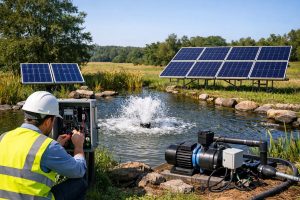
A solar pump system works by converting sunlight into DC electricity via photovoltaic (PV) panels. This power is sent to an intelligent controller, which manages the energy and runs the pump's motor. This process efficiently moves water without needing grid power, offering a simple and sustainable solution.
At the core of a modern solar pump system is a highly efficient motor, often a Brushless DC (BLDC) permanent magnet motor.
These motors are a game-changer in the industry.
They convert electrical energy into mechanical motion with efficiencies often exceeding 90%.
This is a significant improvement over traditional AC motors, which can have efficiencies closer to 70-80%.
This high efficiency means you need fewer solar panels to achieve the same water output, directly reducing the initial system cost by as much as 25%.
The Key Components
A solar water pumping system is more than just a pump and a panel.
It comprises several critical parts working in synergy:
- Solar Panels: These capture sunlight and convert it into direct current (DC) electricity. The number and wattage of panels determine the total power available.
- Pump Controller: This is the brain of the system. It often includes Maximum Power Point Tracking (MPPT) technology, which optimizes the power output from the panels to match the pump's needs, boosting efficiency by up to 30%. It also protects the pump from issues like dry-running or overheating.
- Submersible Pump: This is the unit that actually moves the water. It consists of the motor and the "pump end," which is the hydraulic component that pushes the water.
The Pumping Process
When sunlight hits the solar panels, electrons begin to move, generating DC power.
This power flows through a cable to the pump controller.
The controller conditions this power and delivers it to the BLDC motor.
The motor then spins the pump's impeller or screw.
This rotation creates pressure that pushes water up from your well or pond to its destination.
The system automatically adjusts its speed based on the intensity of the sunlight, pumping more water on bright, sunny days and less when it's cloudy.
What Are The Advantages Of Solar Water Pumps For Ponds?
Worried about the high cost and environmental impact of running a pond?
Traditional pumps consume a lot of electricity and contribute to your carbon footprint.
Solar pumps offer a green, cost-effective way to maintain a beautiful pond.
The main advantages are significant cost savings on electricity bills, environmental friendliness with zero emissions, and the ability to operate anywhere, even in remote off-grid locations. They are also low-maintenance and provide energy independence, freeing you from reliance on an unstable power grid and rising utility rates.
Let's break down the compelling benefits that make solar water pumps a superior choice for pond management.
These systems are not just a niche product; they represent a fundamental shift towards smarter, more sustainable water solutions.
Cost-Effectiveness and Return on Investment
The most immediate benefit is the elimination of electricity costs.
A standard 1HP AC pond pump running for 8 hours a day can add a significant amount to your monthly utility bill.
Over a year, this can easily amount to hundreds of dollars.
With a solar pump, the energy from the sun is free.
While there is an initial investment in the equipment, the payback period is often surprisingly short.
For many residential and agricultural applications, the system pays for itself in just 2-4 years.
Considering the lifespan of a quality solar pump system is often 10-20 years, the long-term savings are substantial.
Environmental Friendliness
Solar pumps operate on clean, renewable energy.
They produce zero greenhouse gas emissions during operation.
This helps reduce your property's carbon footprint and contributes to a healthier environment.
Unlike pumps powered by diesel generators, solar pumps are silent and do not release harmful pollutants into the air or potentially leak fuel into the ground, which is crucial for maintaining a healthy pond ecosystem.
Energy Independence and Reliability
Solar pumps can be installed anywhere the sun shines, completely independent of the electrical grid.
This is a massive advantage for rural properties, large farms, or locations where extending power lines would be prohibitively expensive (costing thousands of dollars per hundred feet).
It also provides water security during power outages, which are becoming more frequent in many areas.
While your neighbors might be without water during a blackout, your solar pump will continue to operate as long as the sun is out, ensuring your pond stays aerated and your livestock has drinking water.
Low Maintenance Requirements
Modern solar water pumps, especially those using brushless motors, are designed for longevity and require very little maintenance.
There are no brushes to wear out in the motor.
The pump ends are often made from durable materials like stainless steel.
The solar panels themselves are incredibly durable, often warrantied for 25 years, and typically only require occasional cleaning to maintain peak performance.
This "set it and forget it" nature saves both time and money on upkeep compared to combustion engines or older, less reliable electric pumps.
What Are The Disadvantages Of Solar Water Pumps For Ponds?
Concerned that solar pumps might not be reliable enough for your needs?
The idea of depending on the weather can be worrying, especially for critical water supply.
Understanding these limitations helps you choose the right system with proper backups.
The primary disadvantages are the initial upfront cost, which can be higher than conventional pumps, and their dependence on sunlight. This means reduced or no operation during cloudy days or at night without a backup power source like batteries or a hybrid AC connection.
While solar water pumps offer many benefits, it's crucial to acknowledge their limitations to make an informed decision.
A realistic understanding of these potential drawbacks allows for better system design and ensures your water needs are consistently met.
Upfront Cost
The initial investment for a complete solar pump kit is generally higher than that of a standard AC-powered pump.
The cost includes not just the pump but also solar panels, a controller, and mounting hardware.
This higher price point can be a barrier for some.
However, it's essential to view this as a long-term investment.
When you factor in the lifetime savings on electricity, the lack of fuel costs, and potential government incentives or rebates, the total cost of ownership for a solar pump is often lower.
Dependence on Sunlight
This is the most obvious limitation.
A solar pump's performance is directly tied to the amount of solar irradiation it receives.
Its output will be highest on clear, sunny days around noon.
Performance will decrease on cloudy or overcast days, and it will stop completely at night.
For applications requiring a consistent 24/7 water supply, this can be a problem.
However, this challenge can be easily overcome.
Solutions for Consistent Water Supply
To address the intermittency of solar power, several solutions have been developed:
- Water Storage: The most common and cost-effective solution is to pump extra water into a storage tank during peak sun hours. This stored water can then be gravity-fed to where it's needed, providing a reliable supply day and night.
- Battery Backup: A battery system can store excess energy generated during the day to power the pump at night or during cloudy periods. While effective, this significantly increases the system's cost and complexity.
- AC/DC Hybrid Systems: This is an increasingly popular and intelligent solution. A hybrid controller can accept both DC power from solar panels and AC power from the grid or a generator. The system prioritizes solar power, only drawing from the AC source when solar energy is insufficient. This ensures an uninterrupted water supply while maximizing the use of free solar energy.
The chart below compares these backup options:
| Backup Method | Pros | Cons | Best For |
|---|---|---|---|
| Water Tank | Low cost, simple, reliable | Requires space for a tank, relies on gravity | Livestock watering, irrigation, off-grid homes |
| Batteries | 24/7 pumping on demand | High cost, complex, limited battery lifespan | Critical applications, pressurizing a home system |
| AC/DC Hybrid | Uninterrupted supply, maximizes solar use | Requires AC source nearby, higher controller cost | Homes, farms, and businesses with grid access |
By understanding these disadvantages and planning for them with the right backup strategy, a solar water pump can be an incredibly reliable and effective solution for nearly any pond application.
What Size Solar Pump Do I Need For My Pond?
Unsure how to select the right pump for your pond?
Choosing the wrong size can lead to poor performance or wasted money.
Proper sizing ensures your pump meets your needs efficiently.
To size a solar pump, you must calculate two key factors: Total Dynamic Head (the total vertical lift and friction loss) and your required daily water volume (Gallons Per Day). These figures determine the specific pump model and the number of solar panels needed.
Sizing a pump correctly is the most critical step to ensure your system performs as expected.
It's a more involved process than just picking one off the shelf.
It involves understanding your water source, your water needs, and the physics of moving water.
Let's break down the essential elements you need to consider.
Calculating Total Dynamic Head (TDH)
Total Dynamic Head is the total pressure the pump must work against to move water.
It's measured in feet or meters and is the sum of several factors:
- Static Water Level: This is the vertical distance from the ground surface down to the water level in your well or pond when the pump is not running.
- Elevation: The vertical height from the ground at the wellhead to the inlet of your storage tank or the highest point of your discharge pipe.
- Drawdown: The distance the water level in your well drops while the pump is operating.
- Pressure Requirement: If you are pumping into a pressure tank, you need to convert the tank's pressure setting (in PSI) to feet of head. You can do this by multiplying the PSI by 2.31. For example, a 60 PSI requirement adds (60 * 2.31) = 138.6 feet to your TDH.
- Friction Loss: As water moves through pipes, it encounters friction, which effectively adds to the head. This loss depends on the pipe's diameter, length, and the flow rate (GPM). Longer, narrower pipes create more friction loss.
Determining Your Daily Water Needs
The next step is to calculate how much water you need per day.
This will vary greatly depending on the application:
- Filling a Pond: Calculate the pond's volume (Length x Width x Average Depth) to determine the total gallons needed. Your solar pump's output will determine how many days it takes to fill.
- Topping Off for Evaporation: In hot, windy climates, a pond can lose up to an inch of water per day. You need to calculate the surface area of your pond to estimate this volume and ensure your pump can keep up.
- Aeration Fountain: For fountains, the goal isn't volume but rather flow rate (Gallons Per Minute or GPM). The manufacturer's specifications will recommend a certain GPM for the desired fountain height and pattern.
Once you have your TDH and required daily volume, you can use a manufacturer's sizing chart or an online calculator to find a pump model that meets these requirements.
This will also tell you how many solar panels are needed to power that specific pump under your local solar conditions.
Conclusion
Solar water pumps provide a reliable, eco-friendly, and cost-effective solution for pond management.
By understanding your needs and choosing the right system, you gain energy independence and long-term savings.
Frequently Asked Questions (FAQs)
Do solar pond pumps work in winter?
Yes, but their performance is reduced.
Shorter days and lower sun angles mean less power generation, so the pump will run for fewer hours and at a lower flow rate.
Do solar pond pumps work at night?
Only if the system includes a battery backup or a hybrid AC/DC controller.
Standard systems without energy storage will shut off once the sun goes down.
How high can a solar pump lift water?
This varies widely by model.
Some small fountain pumps lift only a few feet, while heavy-duty submersible deep well pumps are capable of lifting water over 600 feet (200 meters).
Can I use a sludge pump for a pond?
It is not recommended.
Sludge pumps are designed for high-solids industrial use and are inefficient for pond circulation.
They can also damage a pond's delicate ecosystem.
Can a solar powered pump run a waterfall?
Absolutely.
You just need to size the pump correctly to provide the required flow rate (GPM) at the total head height of the waterfall for your desired visual effect.
How long do solar water pumps last?
A quality solar pump system can last for many years.
The brushless motor often has a lifespan of over 10 years, and the solar panels are typically warrantied for 25 years.