Struggling with unreliable water access or high electricity bills for your pump?
You need a sustainable solution but feel overwhelmed by the technical details of solar power.
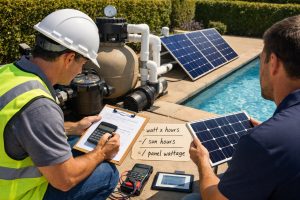
The number of solar panels depends on the pump's horsepower (HP), voltage, and type (DC or AC). A 1/2 HP DC pump may need 800 watts (e.g., two 400W panels), while a 1 HP pump typically requires about 1,200 watts. AC pumps generally need more panels than DC pumps.
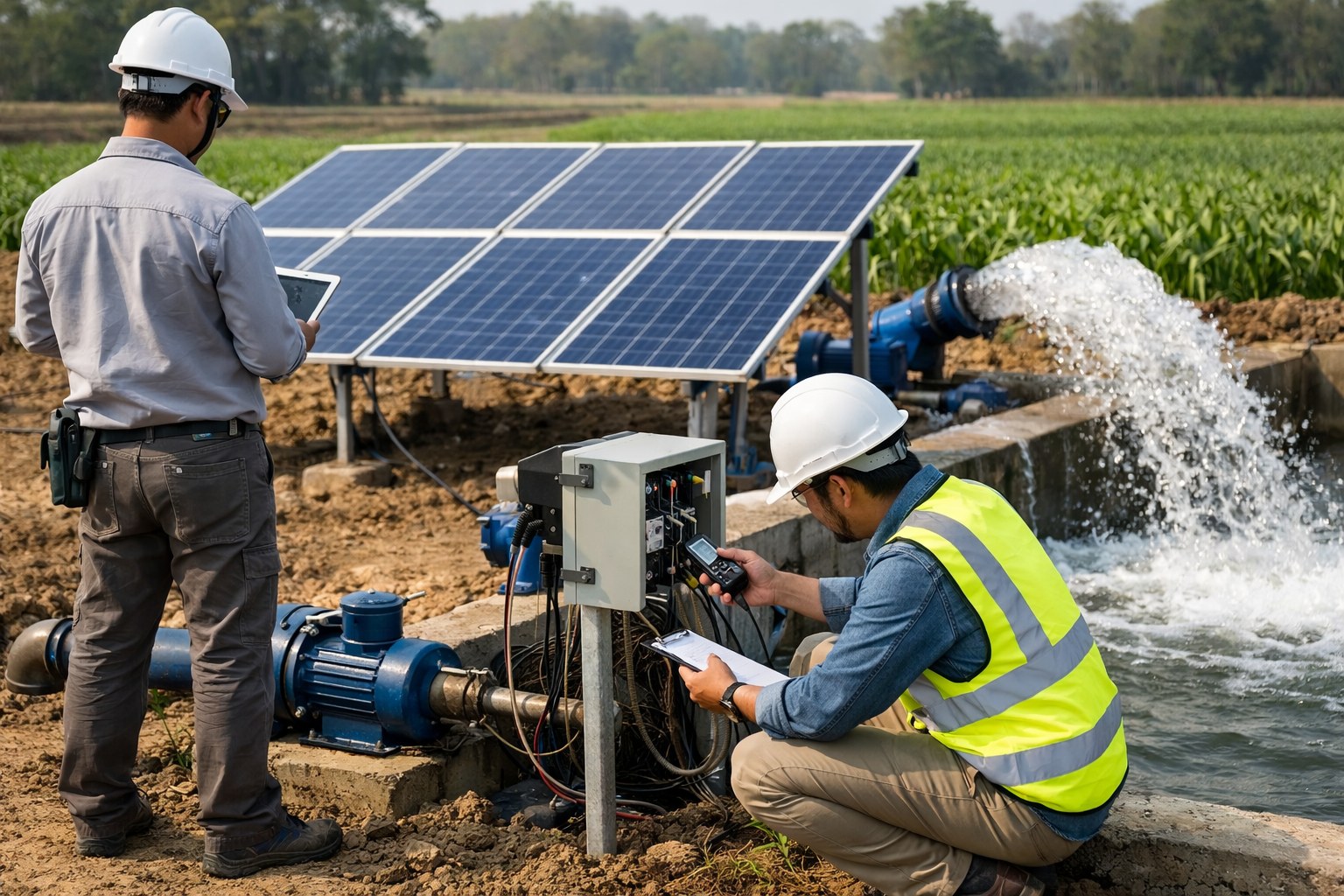
Choosing the right number of solar panels for your water pump is more than just matching watts.
It's about creating a reliable, efficient system tailored to your specific water needs.
Factors like pump type, motor efficiency, and even the type of well you have play a crucial role.
This guide will walk you through the key considerations, helping you understand how to build a robust solar pumping system that delivers water when and where you need it, maximizing your investment and ensuring long-term sustainability.
Let's explore the details to make sure you get the perfect setup.
How Many Panels Do You Need To Run A Solar Pump?
Struggling to figure out the right solar array for your pump?
The calculations seem complex, and a wrong choice means poor performance or wasted money.
The number is not fixed; it depends on the pump's wattage, which is tied to its horsepower (HP) and efficiency. For example, a 1 HP pump needs about 1200 watts, which could be twelve 100W panels or four 300W panels. The key is meeting the total wattage requirement.
The core principle behind sizing a solar array for a water pump is ensuring the panels can provide sufficient power to meet or exceed the pump's operational demand, especially during peak running times.
Think of it like an engine needing the right amount of fuel.
A pump is a motor, and its power consumption is measured in watts.
Your solar panels must generate at least that many watts under real-world conditions.
Factors Influencing Panel Requirements
Several critical factors determine the final panel count:
-
Pump Horsepower (HP): This is the most significant factor.
A higher horsepower motor requires more electrical power (watts) to operate.
A 3 HP pump will need substantially more wattage than a 1/2 HP pump. -
Pump Type (DC vs. AC): Pumps designed specifically for solar often use high-efficiency DC (Direct Current) motors.
These are generally more efficient, requiring up to 25% fewer panels than traditional AC (Alternating Current) pumps adapted for solar use. -
Motor Efficiency: The motor is the heart of the pump.
Modern systems often use Brushless DC (BLDC) permanent magnet motors with efficiencies over 90%.
A higher efficiency motor converts more electrical energy into pumping power, reducing the number of solar panels needed.
An older, less efficient pump might need 20-30% more power for the same water output. -
Pump Age and Condition: An older pump, perhaps 10-15 years old, loses efficiency over time due to wear.
It will require more power to start and run, necessitating a larger solar array compared to a brand-new pump of the same rating.
The table below provides a general estimate for modern, efficient DC pumps.
| Pump Horsepower | Estimated Wattage | Example Panel Array (375W panels) |
|---|---|---|
| 1/2 HP | ~800 Watts | 3 Panels |
| 1 HP | ~1200 Watts | 4 Panels |
| 2 HP | ~2200 Watts | 6 Panels |
| 3 HP | ~3000 Watts | 8 Panels |
| 5 HP | ~5500 Watts | 15 Panels |
Remember, these are starting points.
Your specific needs for water volume (Gallons Per Minute) and pressure (Total Dynamic Head) will ultimately determine the right pump horsepower, which then dictates your solar panel needs.
What size solar panel do I need to run a water pump?
Worried about selecting the wrong panel size?
A mismatch can lead to your pump underperforming or failing to run at all, especially on less sunny days.
The panel size (in watts) must match the pump's needs. Choose panels that, when combined, meet the pump's required wattage. Most systems use 100W panels for smaller pumps or higher-wattage 300W-400W panels for larger systems to reduce the total number of panels.
Choosing the right solar panel size involves a trade-off between the number of panels and their individual wattage.
While the total wattage is the most critical number, the physical size and quantity of panels matter for installation logistics, space, and wiring complexity.
A system requiring 1200 watts can be built in several ways, and understanding the pros and cons of each approach is key to an optimized system.
Comparing Panel Sizes
Modern solar pump systems primarily use two categories of panels:
-
Smaller Wattage Panels (e.g., 100W): These are often used for smaller pump kits (up to 1 HP).
They are lighter and easier to handle individually, which can simplify installation for a single person.
However, achieving a high total wattage requires more panels, leading to more connections and a larger mounting frame. -
Larger Wattage Panels (e.g., 300W - 400W): These are standard for residential and commercial solar installations and increasingly popular for larger pumps (1 HP and above).
Using fewer panels simplifies wiring and reduces the overall footprint of the mounting structure.
For a 3000-watt requirement, you would need eight 375W panels instead of thirty 100W panels, a significant reduction in complexity.
Technical Considerations for Panel Sizing
When deciding on panel size, consider the controller's input specifications.
-
Voltage (Vmp): The panels, when connected in series, must have a combined voltage that falls within the pump controller's operating range.
Connecting too many panels in series can exceed the maximum voltage limit and damage the controller. -
Amperage (Imp): The current from the panels must be within the controller's capacity.
Connecting panels in parallel increases the amperage. -
Physical Footprint: Consider the available space for your solar array.
While larger panels are more space-efficient in terms of watts per square foot, you must ensure you have a large enough contiguous area to install them.
A 1200W array made of 100W panels might be arranged in a more flexible pattern than an array with three large 400W panels.
The trend is moving towards larger, higher-efficiency panels because they offer better value in terms of cost per watt and reduce installation labor and materials.
For any system over 1 HP, using panels of at least 300W is generally the more professional and cost-effective approach.
How many solar panels do I need for a 1HP motor?
Unclear on the exact panel count for a 1 HP pump?
This popular size has different power needs depending on its design, creating confusion and risking an undersized system.
A modern, high-efficiency 1 horsepower (HP) three-phase pump typically requires 1200 watts. This can be achieved with twelve 100W panels or four 300W panels. However, an older or single-phase 1 HP pump may need 20-30% more power due to lower efficiency.
A 1 HP motor is a common size for a wide range of water pumping applications, from residential wells to livestock watering.
However, not all 1 HP pumps are created equal.
The exact number of solar panels required hinges on three critical variables: the pump's phase type, its internal efficiency, and its age.
Understanding these distinctions is crucial for designing a system that performs reliably.
Deconstructing the Power Needs of a 1 HP Pump
-
Phase Type: Single-Phase vs. Three-Phase
- Three-Phase Pumps: These are the standard for dedicated solar pumping systems.
They are inherently more efficient, have a smoother power draw, and a longer lifespan.
A solar controller takes DC power from the panels and outputs a specialized three-phase AC signal to run the pump motor.
A typical 1 HP, three-phase pump runs optimally on approximately 1200 watts. - Single-Phase Pumps: These are common in traditional, grid-powered residential wells.
While they can be converted to run on solar, they are less efficient than three-phase models.
This inefficiency means they require more power to produce the same water output.
A single-phase 1 HP pump might require 1500 to 1800 watts, or 25-50% more panels, to perform comparably.
- Three-Phase Pumps: These are the standard for dedicated solar pumping systems.
-
Pump Efficiency and Internal Design
The pump's "wet end"—the part that actually moves the water—also impacts power draw.- High-Efficiency Designs: A pump with a modern hydraulic design, such as a stainless steel impeller pump optimized for its task, will do more work with less energy.
- Low-Efficiency Designs: An older design or a pump not well-matched to the application (e.g., using a high-flow pump for a deep well) will be inefficient and draw more power.
-
Pump Age and Wear
Like any mechanical device, pumps wear out.
A pump that is 10-15 years old can lose significant efficiency.
Bearings can wear, and internal clearances can increase, forcing the motor to work harder.
An older 1 HP pump may draw as much power as a new 1.5 HP pump, requiring a correspondingly larger solar array to start and run effectively.
The table below contrasts the panel requirements for different 1 HP pump scenarios, assuming 375W panels.
| 1 HP Pump Type | Estimated Wattage | Number of 375W Panels |
|---|---|---|
| New, Three-Phase (High Efficiency) | 1200 Watts | 4 Panels |
| New, Single-Phase (Standard Efficiency) | 1600 Watts | 5 Panels |
| Old (15+ Years), Single-Phase (Low Efficiency) | 1800+ Watts | 5-6 Panels |
For any new installation, a three-phase system is the superior choice.
It guarantees higher efficiency, meaning you'll spend less on solar panels to achieve your water-pumping goals.
Conclusion
Sizing a solar water pump system correctly is key.
Your needs depend on pump type, horsepower, and motor efficiency, not just panel watts.
A well-designed system ensures reliable, long-term water access.
FAQs
How deep can a solar pump work?
Solar pumps can work at significant depths.
High-head models, like screw pumps, can lift water from over 1,000 feet, making them suitable for very deep wells.
Can I connect a solar panel directly to a pump?
It's not recommended.
A controller is needed to manage the variable power from the panels and protect the pump motor, ensuring efficiency and preventing damage.
How much solar do I need to run a well pump?
It depends on the pump's horsepower (HP).
A 1/2 HP pump needs about 800W, a 1 HP pump needs 1200W, and a 2 HP needs around 2200W of solar panels.
How much is a solar well pump?
Costs vary widely based on size and type.
Small DIY kits may start around a thousand dollars, while complete systems for deep wells or high-volume needs can cost several thousand.
Are solar well pumps any good?
Yes, they are highly reliable and cost-effective for off-grid water supply.
With no fuel costs and low maintenance, they provide excellent long-term value for homes, farms, and livestock.
What are the different types of solar water pump?
The main types are centrifugal and positive displacement (like screw pumps).
Centrifugal pumps offer high flow, while screw pumps provide high pressure for deep wells.