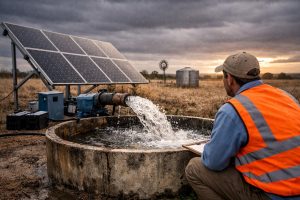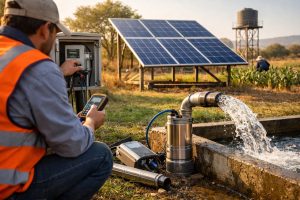
Struggling with unreliable water access for your remote property?
The constant cost of fuel for traditional pumps is a significant burden.
Solar water pumps offer a compelling alternative, but they aren't without their flaws.
The primary weakness of a solar water pump is its dependence on sunlight, leading to inconsistent water supply on cloudy days or at night.
This is closely followed by a high initial purchase cost compared to conventional pumps, though long-term operating expenses are nearly zero.
Both weaknesses can be managed with proper planning.
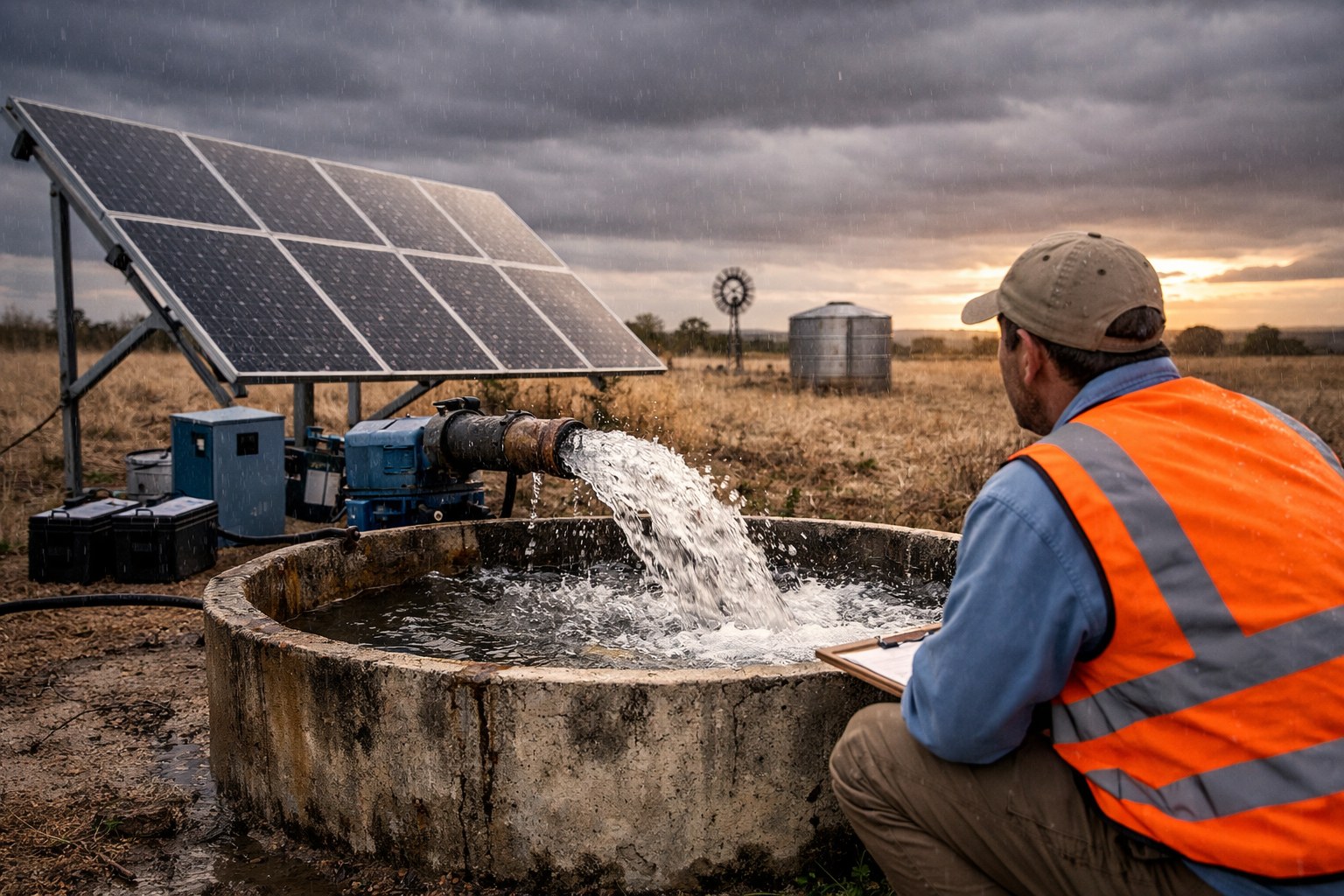
While solar water pumps present a modern solution to off-grid water needs, potential buyers often hesitate.
They worry if the investment is sound and if the system will be reliable when the sun isn't shining.
Understanding these weaknesses is the first step toward overcoming them.
This guide breaks down each disadvantage and provides practical solutions to ensure you make an informed decision and secure a dependable water supply for years to come.
The High Initial Investment: Is It Really a Weakness?
Concerned about the high upfront price tag of a solar pump system?
This initial cost can seem daunting compared to traditional pumps.
However, this perspective often overlooks the bigger financial picture of long-term ownership.
The high initial investment is a perceived weakness that diminishes significantly when you analyze the total cost of ownership over the pump's lifetime.
Unlike fuel-powered pumps, solar systems have no ongoing fuel costs and minimal maintenance expenses, leading to substantial long-term savings that often result in a payback period of just a few years.
The initial capital outlay for a solar water pump system is undeniably higher than for a comparable diesel or AC electric pump.
This is because the purchase includes not just the pump and motor, but also the solar panels, controller, and mounting hardware.
For many potential users, especially small-scale farmers or communities with limited capital, this upfront cost presents a significant barrier to entry.
It requires a larger one-time financial commitment that can be difficult to secure.
However, viewing this cost in isolation is a common mistake.
To truly understand the financial implications, one must consider the Total Cost of Ownership (TCO), which includes all expenses over the system's lifespan.
When TCO is calculated, the economic advantage shifts dramatically in favor of solar.
Calculating the Total Cost of Ownership (TCO)
The TCO provides a more accurate financial comparison between different pumping technologies.
A diesel pump may have a low purchase price, but it incurs continuous and often volatile expenses.
These include daily fuel consumption, regular oil changes, filter replacements, and periodic engine servicing.
Furthermore, transporting fuel to remote locations adds another layer of cost and logistical complexity.
An AC electric pump avoids fuel costs but is subject to monthly utility bills, which can be substantial and are prone to price hikes.
Extending a power line to a remote well can be prohibitively expensive, with costs sometimes reaching tens or even hundreds of thousands of dollars per mile.
In contrast, a solar pump system's TCO is heavily front-loaded.
Once installed, its primary "fuel"—sunlight—is free.
Operating costs are nearly zero.
Maintenance is minimal, typically limited to occasional panel cleaning and infrequent checks on the pump itself.
Modern brushless DC motors used in these pumps are highly reliable and have extremely long service lives, often exceeding a decade with no major servicing required.
The Economic Payback Period
The point at which the initial investment in a solar pump is offset by the savings from not buying fuel or paying electricity bills is the payback period.
For many agricultural and residential applications, this period is surprisingly short.
Depending on the daily water volume, local fuel prices, and solar irradiation levels, the payback period can range from as little as one year to five years.
After this point, the water is essentially free for the remaining 20+ year lifespan of the solar panels.
The table below illustrates a simplified cost comparison.
| Cost Factor | Diesel Pump System | Grid-Connected AC Pump | Solar Pump System |
|---|---|---|---|
| Initial Cost | Low | Low to Medium | High |
| Installation Cost | Low | High (if grid extension needed) | Medium |
| Fuel/Energy Cost | High & Ongoing | Medium & Ongoing | Zero |
| Maintenance Cost | High & Regular | Low | Very Low |
| System Lifespan | 5-10 years | 10-15 years | 20-25+ years |
| Total Cost (10 yrs) | Very High | Medium to High | High (but fixed) |
Market Trends and Financial Incentives
The perceived weakness of high cost is also diminishing year by year.
The price of solar photovoltaic (PV) panels has fallen by over 80% in the last decade and continues to trend downward.
This makes the initial investment more accessible than ever before.
Additionally, many governments and non-governmental organizations offer subsidies, tax credits, or low-interest financing options for renewable energy installations, further reducing the financial burden on end-users.
Therefore, while the upfront cost is a valid consideration, it is a temporary and increasingly manageable hurdle on the path to long-term financial and operational benefits.
Sun-Dependence: What Happens on Cloudy Days or at Night?
Need water when the sun isn't shining?
The inconsistent nature of solar power is a major concern for anyone needing a constant supply.
This limitation can impact everything from crop irrigation schedules to household water availability.
This core weakness is managed through energy or water storage solutions.
The most common and cost-effective method is to pump extra water into a storage tank during peak sun hours.
This stored water can then be used anytime, day or night, ensuring a reliable supply independent of immediate weather conditions.
The most fundamental weakness of a solar water pump is its direct reliance on solar irradiation.
The pump's performance is directly proportional to the intensity of the sunlight hitting the solar panels.
This means output is highest around midday on a clear, sunny day.
Performance decreases in the early morning and late afternoon, on overcast days, and ceases entirely at night.
This variability can be a significant challenge for applications that require a consistent water supply around the clock or the flexibility to irrigate at specific times, such as overnight to reduce evaporation.
Without a strategy to mitigate this intermittency, the pump’s utility is limited to peak sun hours, which may not align with water demand.
Fortunately, several well-established solutions can overcome this challenge, turning an unreliable system into a highly dependable one.
Water Storage: The Simplest Solution
The most practical and widely recommended solution is water storage.
Instead of storing electricity, which can be complex and expensive, you store the end product: water.
The strategy is simple: size the solar pump system to pump more water during peak sun hours than is immediately needed.
This excess water is directed into a storage tank, often elevated to allow for gravity-fed distribution.
A common rule of thumb is to have enough storage to cover three to five days of water needs.
This reserve provides a crucial buffer, ensuring water is available during extended periods of cloudy weather, stormy days, or at night.
Water tanks are durable, relatively inexpensive, and require virtually no maintenance, making them an ideal partner for a solar pump system.
Energy Storage: Batteries
Another approach is to store electrical energy in batteries.
During the day, the solar panels power the pump and simultaneously charge a battery bank.
When sunlight is unavailable, the pump can draw power from the batteries to continue operating.
This provides on-demand pumping capabilities 24/7.
However, this solution has notable drawbacks.
Batteries add significant cost and complexity to the system.
They have a much shorter lifespan than solar panels (typically 3-7 years) and require regular maintenance.
Their performance can also degrade in extreme temperatures.
Due to these factors, battery backup is generally recommended only for critical applications where a storage tank is not feasible.
Hybrid Power Systems: The Best of Both Worlds
For ultimate reliability, hybrid systems offer a versatile solution.
Many modern solar pump controllers are designed to accept multiple power inputs.
This allows the system to run on solar power when available and automatically switch to an alternative source when it is not.
The most common configurations are AC/DC hybrid systems.
- AC/DC Hybrid: The controller can be connected to both the solar panel array and a standard AC power source, like the utility grid or a generator.
The system prioritizes solar power to minimize costs.
If solar energy is insufficient due to clouds or at night, the controller seamlessly blends in or switches over to the AC source to maintain pump operation.
This ensures an uninterrupted water supply without compromise.
It's an excellent option for users who have grid access but want to reduce their electricity bills, or for off-grid users who have a backup generator for emergencies.
These solutions effectively transform the weakness of sun-dependence into a manageable design parameter.
With proper planning and the right combination of storage or hybrid technology, a solar water pump can provide a level of reliability that meets or even exceeds that of traditional pumping systems.
Performance and Sizing Challenges: Dealing with Solar Radiation Variability
Think all solar pumps deliver the same performance?
The output of a solar pump isn't constant; it changes with the weather, season, and time of day.
Miscalculating your needs can lead to a system that underdelivers, leaving you short of water when you need it most.
This weakness is overcome with proper system design and sizing, which accounts for local solar irradiation levels and daily water requirements.
An accurately sized system ensures the pump meets demand even on less-than-perfect days.
Using high-efficiency components, like a brushless DC motor, maximizes water output from the available sunlight.
Beyond the simple fact that solar pumps don't work at night, their performance during the day is highly variable.
The amount of water pumped is not a fixed number; it is a curve that rises and falls with the sun's intensity.
This dynamic output can be a challenge for users who are accustomed to the consistent, on-demand performance of a traditional pump.
An improperly sized system might provide enough water during the peak summer months but fail to meet demands during the winter when the days are shorter and the sun is lower in the sky.
This variability requires a more thoughtful approach to system design, where "average" performance is less important than performance during periods of minimum solar availability (solar insolation).
Understanding and planning for this variability is key to ensuring the system's year-round reliability.
The Importance of Accurate System Sizing
Sizing a solar water pump system is more complex than sizing a conventional pump.
It requires balancing four key variables:
- Daily Water Requirement (Volume): How many gallons or liters are needed per day.
- Total Dynamic Head (Pressure): The total vertical distance the water needs to be lifted, plus friction losses in the pipes.
- Well Location (Solar Insolation): The amount of solar energy the location receives, which varies greatly by geography and season.
- Desired Autonomy: How many days of water storage are needed to cover cloudy periods.
A professional installer or supplier will use specialized software to model these factors.
They will calculate the "design month," which is typically the month with the worst combination of solar availability and water demand (e.g., winter).
The system (pump, motor, and solar array) is then sized to meet 100% of the daily water requirement during this worst-case month.
This ensures that if the system can perform adequately in the winter, it will have more than enough capacity during the sunnier summer months, allowing excess water to be pumped into storage.
The Role of High-Efficiency Components
The efficiency of each component in the system plays a critical role in overcoming performance variability.
A more efficient system can pump more water with the same amount of sunlight.
This is particularly important during periods of low light.
The two most critical components for efficiency are the motor and the controller.
- Brushless DC (BLDC) Motors: Modern solar pumps utilize high-efficiency BLDC permanent magnet motors.
These motors can achieve efficiencies of over 90%, compared to 60-75% for their AC counterparts.
This means more of the solar energy captured by the panels is converted into the mechanical work of pumping water.
This efficiency advantage is crucial in making the system viable, as it reduces the number of solar panels required, thereby lowering the total system cost. - Maximum Power Point Tracking (MPPT) Controllers: The controller is the brain of the system.
An advanced controller with MPPT technology constantly adjusts the electrical load of the pump to match the output of the solar panels.
This ensures the panels are always operating at their peak efficiency point, maximizing the power delivered to the pump throughout the day as sunlight conditions change.
An MPPT controller can boost the system's water output by as much as 30% compared to a system without one.
By investing in proper sizing and high-efficiency components, the weakness of variable performance can be effectively managed, resulting in a system that reliably delivers the required amount of water every day.
Maintenance and Repair: Are Solar Pumps Truly 'Set and Forget'?
Hoping for a completely maintenance-free water solution?
While solar pumps are incredibly reliable, they are not immune to issues.
Neglecting simple upkeep or facing a repair in a remote area can lead to unexpected downtime.
While extremely low-maintenance, solar pumps are not zero-maintenance.
The key weakness is the potential difficulty in finding qualified technicians or spare parts in remote rural areas.
However, routine upkeep is simple, and choosing a reputable brand with a strong warranty and a reliable local distributor can mitigate repair challenges significantly.
One of the most frequently cited advantages of solar water pumps is their low maintenance requirements, and this is largely true.
With no moving parts in the solar panels and highly reliable brushless motors, these systems are designed for long periods of autonomous operation.
However, the idea that they are completely "set and forget" can be misleading and represents a potential weakness.
All mechanical systems require some level of care, and challenges can arise, particularly regarding access to skilled technicians and spare parts, especially in isolated, rural locations.
This logistical hurdle can turn a minor issue into a major problem if not anticipated.
Being aware of the realistic maintenance needs and planning for potential repairs is crucial for ensuring the long-term success of the system.
Routine Maintenance Requirements
The day-to-day maintenance of a solar pump is minimal and can be easily performed by the owner.
The primary task is ensuring the solar panels remain clean.
Dust, dirt, pollen, or bird droppings can accumulate on the surface of the panels, blocking sunlight and reducing their energy output by up to 25% or more.
In dusty environments, panels should be wiped clean with a soft cloth and water every few weeks or as needed.
It is also wise to periodically check for any loose wiring connections and ensure that vegetation is not shading the panels at any point during the day.
For the pump itself, especially surface pumps, a quick visual inspection for leaks or unusual noises is good practice.
Because they are not submerged, surface pumps are often designed for easy on-farm repair with basic tools.
The Challenge of Technical Support and Spare Parts
The more significant weakness lies in addressing non-routine repairs.
While high-quality solar pump systems are robust, components can eventually fail.
The inverter/controller is the most complex electronic component, and the pump itself contains wear parts like seals or bearings.
In many developed countries, finding a qualified solar technician is relatively easy.
However, in developing regions or extremely remote areas of countries like Australia or the United States, skilled technicians may be scarce and located hours away in the nearest capital or major city.
This can lead to extended downtime and high travel costs for a service call.
Similarly, the availability of spare parts can be a concern.
While a local hardware store might stock parts for a common diesel engine, they are unlikely to carry a replacement controller or motor for a specific solar pump model.
This makes the choice of supplier and distributor critically important.
Mitigating Repair and Maintenance Risks
Users can take several proactive steps to minimize this weakness.
- Choose a Reputable Manufacturer: Select a brand known for its product quality and durability.
Look for manufacturers that offer comprehensive warranties, such as a 10-year warranty, which demonstrates confidence in their product's longevity. - Work with a Local, Established Distributor: Purchase the system from a trusted local distributor who maintains a stock of common spare parts and has trained technicians on staff.
Their proximity is invaluable when you need support. - Understand the Warranty: Clarify the terms of the warranty.
Know what is covered, the duration of the coverage, and the process for making a claim. - Consider a Service Agreement: For critical applications, it may be worthwhile to enter into a service agreement with the installer or distributor for periodic check-ups and priority support.
By taking these steps, users can significantly reduce the risk associated with maintenance and repairs, ensuring that their investment remains a reliable source of water for many years.
Security Concerns: The Risk of Theft in Remote Locations
Worried your valuable solar equipment could be stolen?
In unsecured, remote locations, solar panels are a high-value target for theft.
Losing your power source means losing your water supply, a devastating blow to your investment and operations.
The risk of theft is a real weakness, as solar panels are valuable and often installed in isolated areas.
This threat can be effectively minimized by implementing security measures such as installing tamper-proof mounting hardware, fencing the installation site, and fostering a sense of community ownership and oversight.
A practical and often overlooked weakness of solar water pumping systems is their vulnerability to theft and vandalism.
Solar panels, in particular, are valuable, portable, and can be relatively easy to remove if not properly secured.
This risk is heightened in remote, unmonitored locations where the pump system may be out of sight for long periods.
The theft of panels is not just a financial loss; it results in the complete shutdown of the water supply until they can be replaced, which can have severe consequences for livestock, crops, or domestic water needs.
While no system is completely immune to a determined thief, there are several effective strategies that can be employed to significantly deter theft and protect the investment.
Addressing security from the outset of the installation process is a critical step that should not be ignored.
Physical Security Measures
The first line of defense is to make the equipment as difficult as possible to steal.
Simple physical barriers can be highly effective deterrents.
These measures increase the time and effort required to remove the equipment, making it a less attractive target.
- Secure Mounting: Use tamper-proof or one-way bolts to secure the solar panels to their mounting frames.
This prevents them from being easily unbolted with standard tools.
Welding the nuts to the bolts after tightening is another permanent and effective option. - Sturdy Framework: The mounting structure itself should be robust.
Setting the support posts in concrete makes the entire array much more difficult to dismantle or remove. - Protective Fencing: Installing a locked, chain-link fence around the solar array and pump equipment is one of the most effective deterrents.
While it adds to the initial cost, it provides a clear physical barrier and a visual signal that the area is secured. - Marking Equipment: Clearly marking the panels and pump with a unique, indelible identifier (such as an owner-applied number or property name) can make them harder for a thief to sell and easier to recover if stolen.
Location and Community Engagement
Strategic placement and social strategies can be just as important as physical hardware.
Where and how the system is integrated into its environment matters.
If possible, install the system in a location that is visible from a frequently occupied dwelling or a well-traveled path.
Simple visibility can be a powerful deterrent.
In community-based projects, fostering a sense of collective ownership is crucial.
When the entire community understands the value of the water system and feels responsible for it, they are more likely to watch over it and report suspicious activity.
This social "fence" is often more effective than a physical one.
For individual owners, building a good relationship with neighbors can create a similar network of informal surveillance.
Technological Deterrents
In some cases, technology can provide an additional layer of security.
Motion-activated lights or cameras can be installed, although they require their own power source and may not be practical for every off-grid location.
GPS tracking devices are becoming smaller and more affordable and can be concealed on the back of a panel.
If a panel is stolen, its location can be tracked, significantly increasing the chances of recovery and apprehension of the thieves.
While these options add cost, they may be justified for larger or particularly critical installations.
By combining these physical, social, and technological strategies, the risk of theft can be substantially reduced, helping to ensure the solar water pump remains a secure and reliable asset.
Conclusion
Solar water pumps have clear weaknesses like high initial cost and sun dependency.
However, with smart planning through storage, hybrid systems, and proper sizing, these challenges are easily overcome.
FAQs
What is the main disadvantage of a solar water pump?
The main disadvantage is its reliance on sunlight, meaning it doesn't pump water at night or on very cloudy days without a storage or backup system.
How long do solar water pumps last?
A quality solar water pump system can last over 20 years.
The solar panels are often warrantied for 25 years, while the pump and motor typically last for 10-15 years before needing major service.
Can solar pumps work on cloudy days?
Yes, but at a reduced capacity.
Modern panels can still generate power from ambient light, so the pump will run slower.
A water tank is key to ensuring supply during overcast periods.
Do solar water pumps work in the winter?
Yes, solar pumps work in winter, but their daily output is lower due to shorter days and a lower sun angle.
Systems must be sized for winter conditions to ensure adequate water supply year-round.
How much does a solar water pump system cost?
Costs vary widely from a few hundred to many thousands of dollars, depending on the pump size, well depth, and daily water needs.
The solar panels and controller often make up half the total cost.
Do solar pumps require batteries?
No, batteries are not required for most systems.
It is more efficient and cost-effective to store water in a tank rather than storing electricity in batteries.
How deep can a solar pump pull water from?
Solar pumps can draw water from significant depths.
Low-flow screw-type pumps can handle heads of over 200 meters (650 feet), while centrifugal pumps are used for higher flow rates at shallower depths.
What maintenance does a solar water pump require?
Maintenance is minimal.
The primary task is to periodically clean the solar panels of dust and debris to ensure they are operating at peak efficiency.