A stagnant pond can quickly become an unhealthy, murky mess.
You want the benefits of a clear, aerated pond but lack a convenient power source.
Modern off-grid solutions provide powerful and reliable water circulation.
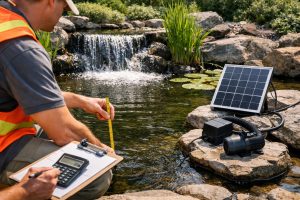
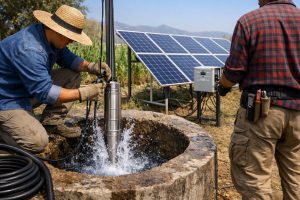
You can circulate pond water without electricity using solar-powered pumps, windmills, or natural methods.
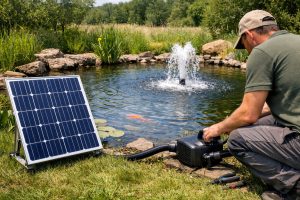
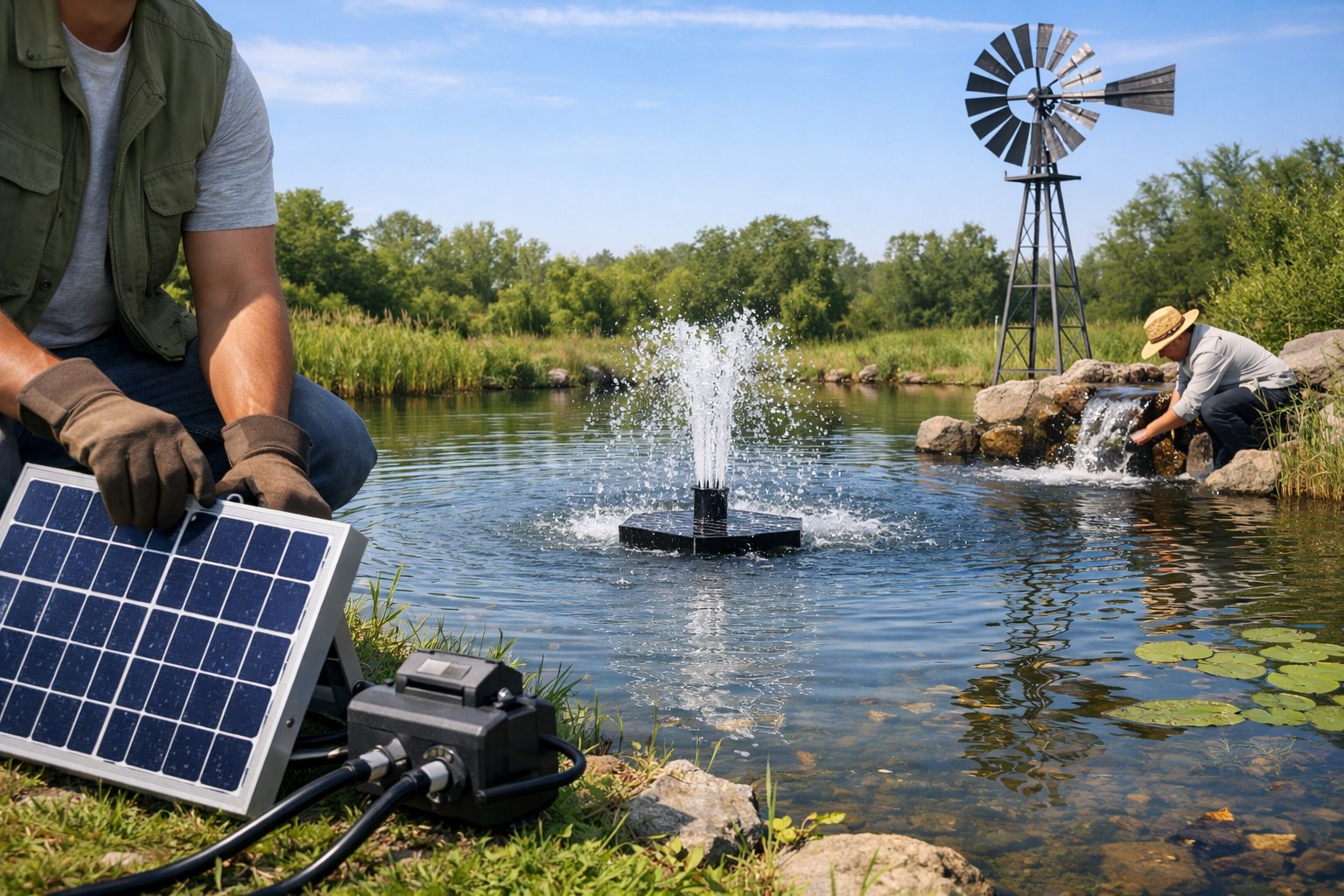
Solar pumps are highly effective, harnessing sunlight to power aeration systems or fountains.
This ensures consistent water movement and oxygenation for a healthy pond ecosystem, even in remote locations.
Now you know it is entirely possible to maintain a healthy pond without a grid connection.
The question shifts from "if" to "how".
Different off-grid scenarios require different solutions, from small decorative ponds to large agricultural reservoirs.
Let's explore the most dependable and efficient options available.
These technologies can transform your remote body of water into a thriving, balanced ecosystem.
Methods of Non-Electric Pond Aeration
Your remote pond suffers from low oxygen and muck buildup.
You need a reliable, automated solution without running expensive power lines.
Solar aeration systems offer a sustainable, set-and-forget fix.
Solar aeration systems use photovoltaic panels to power a compressor, which pumps air through diffusers at the pond bottom.
This creates vital water circulation and oxygenation.
These systems are automated, environmentally friendly, and perfect for off-grid ponds, improving water clarity and fish health effectively.
Modern solar aeration has advanced far beyond simple daytime-only devices.
The technology is now robust enough for critical applications, ensuring pond health around the clock.
Understanding the core components and system types is key to selecting the right solution for any pond size or depth.
The goal is to create a constant, top-to-bottom circulation that infuses the entire water column with life-sustaining oxygen.
How Solar Aerators Circulate Water
The mechanism is simple yet powerful.
Solar panels collect sunlight and convert it into DC electricity.
This electricity powers a small, efficient air compressor housed in a weatherproof cabinet.
The compressor pushes air through weighted tubing to one or more diffuser units placed on the pond floor.
These diffusers release a column of fine bubbles that rise to the surface.
This process does more than just add oxygen.
It creates a powerful lift, forcing the oxygen-poor water from the bottom of the pond up to the surface where it can absorb atmospheric oxygen.
Simultaneously, the oxygen-rich surface water is circulated downwards, promoting the decomposition of organic muck by beneficial bacteria.
This continuous circulation prevents thermal stratification, where the pond separates into warm upper and cold lower layers, ensuring a more stable and healthy environment.
Direct Drive vs.
Battery Backup Systems
The choice between a direct drive and a battery backup system depends on your aeration needs and budget.
Each has distinct advantages.
| Feature | Direct Drive System | Battery Backup System |
|---|---|---|
| Operation | Runs only during daylight hours. | Provides 24/7 continuous aeration. |
| Energy Storage | None. Offers supplemental aeration. | Batteries store excess solar energy. |
| Best For | Supplemental summer aeration, winter ice prevention. | Critical aeration needs, ponds with heavy fish loads. |
| Complexity | Simpler and more cost-effective. | More complex, higher initial cost. |
| Performance | Effective up to 12 hours a day, even in low light. | Industry-leading systems offer full 24-hour runtime. |
For many, a battery backup system is the superior choice.
Oxygen demand in a pond is often highest at night and on cloudy days when photosynthesis ceases.
A battery backup system ensures the aeration never stops, preventing catastrophic fish kills and providing ultimate peace of mind.
Advanced models even feature smart controllers with Bluetooth connectivity, allowing you to monitor performance and battery status directly from your smartphone.
The Power Core: High-Efficiency Motors
The heart of any modern solar pump or aerator is its motor.
Leading systems utilize Brushless DC (BLDC) permanent magnet motors.
These motors are a game-changer, with operational efficiencies exceeding 90%.
This high efficiency is critical for solar applications.
It means the system can generate significant power from a smaller solar panel array, reducing the overall system cost and physical footprint by as much as 30%.
These compact motors are 47% smaller and 39% lighter than traditional motors, simplifying installation.
Their brushless, maintenance-free design ensures a long service life, making them the most reliable and cost-effective choice for long-term, off-grid water circulation.
Solar-Powered Pond Aeration Systems
You want the aesthetic appeal of a fountain but need the ecological benefits of aeration.
Running power to your pond is impractical or costly.
A solar-powered fountain offers a beautiful, zero-operating-cost solution.
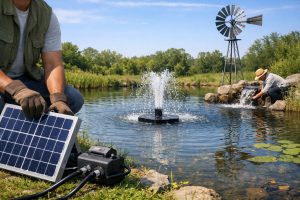
A solar aerating fountain combines the beauty of a decorative water display with the functional benefits of surface aeration.
Powered entirely by the sun, it's ideal for off-grid ponds up to a half-acre, providing circulation and oxygenation while creating stunning visual patterns.
While bottom-diffuser systems are the gold standard for deep water circulation, aerating fountains serve a vital role, especially in shallower ponds or where aesthetics are a primary concern.
They work by pulling water from just below the surface and propelling it into the air.
This action creates significant surface agitation and introduces oxygen as the water droplets fall back to the pond.
Unlike purely decorative fountains, these units are designed with aeration as a core function, making them a practical and beautiful two-in-one solution.
How Solar Fountains Work
A solar fountain operates on a straightforward principle.
One or more solar panels are positioned in a sunny location.
These panels power a submersible pump located within a float in the pond.
The pump draws in water and forces it through a nozzle, creating an elegant spray pattern.
The height and definition of this spray are directly proportional to the intensity of the sunlight.
On a bright, sunny day, the fountain will reach its maximum height, delivering a crisp, high-flow display.
Even on overcast days, advanced systems can produce noticeable patterns, ensuring continuous water movement.
This constant agitation disrupts the water's surface layer, breaking up surface films and facilitating gas exchange, which is crucial for a healthy pond.
Sizing and Application
Solar aerating fountains are most effective in specific scenarios.
They are typically recommended for ponds that are up to a half-acre in size and no more than six feet deep.
In shallower a pond, the surface aeration provided by a fountain can be sufficient to circulate a significant portion of the water column.
For ponds larger than half an acre or deeper than six feet, a single fountain may not provide adequate aeration.
In these cases, multiple fountains can be used strategically to ensure full coverage.
Alternatively, a fountain can be used to supplement a bottom-diffuser aeration system, providing targeted surface aeration and aesthetic appeal while the diffuser handles deep water circulation.
Because they run entirely on renewable energy, they have zero operational costs after the initial investment, making them a financially and environmentally sound choice.
The Role of an A/C Hybrid Controller
For applications requiring guaranteed 24/7 performance, a hybrid power system is a revolutionary solution.
An AC/DC hybrid controller allows the pump or fountain to be connected to both solar panels and a grid power source (or a generator) simultaneously.
The intelligent controller prioritizes solar power automatically.
When sunlight is abundant, the system runs 100% on free solar energy.
If cloud cover reduces solar input, the controller seamlessly blends in just enough AC power to maintain full performance, maximizing the use of solar energy.
When there is no solar input at night, it switches entirely to the AC source.
This ensures your fountain runs beautifully and your pond stays aerated 24 hours a day, providing worry-free performance regardless of weather conditions.
Mechanical Aeration Methods
You're looking for a classic, visually appealing landmark for your farm pond.
You also need a supplemental way to aerate the water without electricity.
A windmill aerator offers an attractive, functional solution.
A windmill aerator uses wind power to drive a diaphragm that pumps air to a diffuser in your pond.
It's a visually striking and effective supplemental aeration method for remote ponds, providing circulation and oxygenation with as little as a 3-5 mph breeze.
Windmill aeration represents one of the oldest and most reliable forms of off-grid technology.
This method is particularly popular for farm ponds and remote properties where wind is a more consistent resource than sunlight, or where a traditional aesthetic is desired.
Unlike solar systems that rely on compressors, a windmill uses direct mechanical action to pump air, making it a remarkably simple and durable piece of machinery.
The gentle bubbling it provides helps circulate water and prevent stagnation.
How Windmills Aerate
The principle behind a windmill aerator is elegantly simple.
The large blades of the windmill catch the wind, causing the rotor head to turn.
This rotation drives a crankshaft, which in turn moves a piston or diaphragm up and down inside a small compressor located at the base of the tower.
This action pumps air through a flexible airline that runs from the windmill to a diffuser stone at the bottom of the pond.
The system is self-starting and requires only a light breeze to begin pumping air.
To maximize wind capture, windmills are often built with tall towers, ranging from 12 to 24 feet, and can be placed several hundred feet away from the pond's edge on a hill or in an open field.
This flexibility allows for optimal placement without disturbing the pond's natural shoreline.
Effectiveness and Limitations
Windmill aerators are recommended for ponds up to one acre in size and less than 15 feet deep.
They are excellent at providing supplemental aeration, helping to circulate water and add oxygen.
However, wind is inherently inconsistent.
The hottest, stillest parts of a summer day and calm nights are often when a pond's oxygen demand is highest.
During these periods of low wind, a windmill may not provide sufficient aeration to prevent oxygen depletion.
Because of this, we recommend using windmills as a secondary or supplemental aeration source rather than a primary one, especially in ponds with a high fish load.
They pair exceptionally well with a solar aeration system, where the solar unit handles the primary load and the windmill contributes whenever the wind blows, providing an effective and resilient hybrid solution.
Alternative Mechanical Solutions
For smaller ponds or as an emergency backup, other mechanical methods exist.
- Hand-Operated Pumps: Simple hand-cranked pumps or paddlewheels can be used to agitate the water surface.
While labor-intensive, they are a viable option for very small garden ponds or as a temporary measure during a power outage. - Bicycle-Powered Pumps: A more creative DIY approach involves rigging a bicycle to a pump.
This can provide a surprising amount of water movement and aeration for small to medium-sized ponds and adds an element of exercise to pond maintenance.
These manual methods are not practical for continuous aeration but highlight the fundamental principle: any form of water agitation is better than none.
Natural Pond Aerators
You're building a wildlife pond and want to create a balanced, self-sustaining ecosystem.
You prefer a completely natural approach over mechanical devices.
Aquatic plants and water features are your best allies.
The most natural way to aerate a pond is by using a combination of oxygenating plants and creating water movement.
Submerged plants release oxygen directly into the water, while features like waterfalls and streams agitate the surface, promoting essential gas exchange.
A truly natural pond relies on a balanced ecosystem to maintain its health, and aeration is a key part of that balance.
While mechanical aerators are highly efficient, nature has its own time-tested methods for oxygenating water.
By thoughtfully designing your pond and selecting the right plants, you can create a beautiful, low-maintenance environment that largely takes care of itself.
This approach is ideal for wildlife ponds, ornamental water gardens, and anyone seeking to work in harmony with nature.
Utilizing Aquatic Plants for Oxygenation
Plants are the lungs of a pond.
Through the process of photosynthesis, they absorb carbon dioxide and release oxygen.
The most effective plants for this are submerged oxygenators.
- Submerged Plants: Species like Hornwort and Elodea live entirely underwater and release oxygen directly into the water column.
They are incredibly efficient oxygen producers during daylight hours. - Floating Plants: Water lilies and water hyacinths offer multiple benefits.
Their leaves provide shade, which helps keep the water cool and reduces algae growth.
Their roots, dangling in the water, absorb excess nutrients like nitrates and phosphates that would otherwise fuel algae blooms. - Marginal Plants: Plants along the pond's edge, like irises and cattails, help filter runoff and provide critical habitat for wildlife.
A good rule of thumb is to aim for 50-60% plant coverage in your pond.
This ensures sufficient oxygen production, nutrient absorption, and shade to maintain a healthy balance.
Enhancing Water Circulation Naturally
While plants produce oxygen, water movement is required to distribute it throughout the pond.
You can encourage natural circulation in several ways.
| Method | Description | Benefit |
|---|---|---|
| Waterfalls & Streams | Creating a simple waterfall or a meandering stream that feeds into the pond. | The splashing and tumbling action is highly effective at aerating water by increasing its contact with the air. |
| Strategic Placement | Siting your pond in a location that receives natural wind and rainfall. | Wind creates surface ripples, and rain agitates the water, both of which improve gas exchange. |
| Solar-Powered Features | A small solar-powered pump can be used to create a waterfall or stream with no grid electricity, blending mechanical aid with a natural look. |
The Limitations of a Purely Natural Approach
It's important to understand the limitations.
Natural aeration is highly dependent on sunlight for photosynthesis.
On cloudy days and at night, plants actually consume oxygen, which can lead to a dangerous drop in oxygen levels, especially in the early morning hours.
Furthermore, if you plan to stock fish, they produce waste that increases the pond's biological load.
In most cases, a pond with fish cannot be sustained by natural aeration alone and requires a reliable mechanical aeration system.
For a fish-free wildlife pond, however, a well-planned combination of plants and natural water movement can create a thriving, beautiful, and self-sufficient ecosystem.
Conclusion
Effectively circulating pond water without electricity is achievable through solar, wind, and natural methods.
Solar aeration stands out as the most reliable and efficient solution for ensuring consistent pond health.
FAQs
Why is pond aeration important?
Aeration is crucial for maintaining water quality.
It infuses water with oxygen, which supports aquatic life, helps beneficial bacteria break down muck, and prevents algae growth for a healthier ecosystem.
What are the benefits of using non-electric aeration methods?
Non-electric methods are eco-friendly, have zero or low running costs, and are perfect for remote ponds without power.
They offer energy independence and a sustainable approach to pond management.
Can you aerate a pond without electricity?
Yes, absolutely.
Solar-powered aerators are a highly effective and popular option.
Windmills, waterfalls, and even specific aquatic plants can also be used to circulate and oxygenate pond water effectively.
How do solar pond aerators work?
Solar aerators use panels to power a compressor.
The compressor pumps air through a tube to a diffuser at the pond's bottom, releasing bubbles that circulate and oxygenate the entire water column.
How can I increase the oxygen in my pond naturally?
Introduce submerged oxygenating plants like Hornwort or Elodea.
Also, creating water movement with a small waterfall or stream will agitate the surface, helping to incorporate atmospheric oxygen into the water.
Are windmill aerators effective?
Windmill aerators are effective for supplemental aeration in windy locations.
However, their performance is inconsistent, so they are best used in conjunction with a more reliable system like solar aeration.
What is the best way to aerate a pond without electricity?
For consistent and reliable results, a solar-powered aeration system is the best method.
It operates automatically, can provide 24/7 circulation with a battery backup, and is suitable for nearly any pond size.
Do I need aeration in winter?
Yes, aeration is critical in winter for ponds with fish.
It maintains a small hole in the ice, allowing toxic gases to escape and oxygen to enter, which prevents winter fish kills.