Worried your pond will turn into a frozen, life-less block this winter?
You’re concerned about keeping your pond ecosystem healthy and your pump functioning through the cold, dark months.
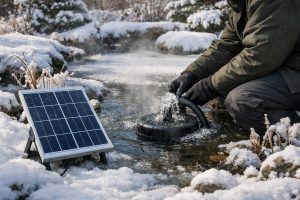
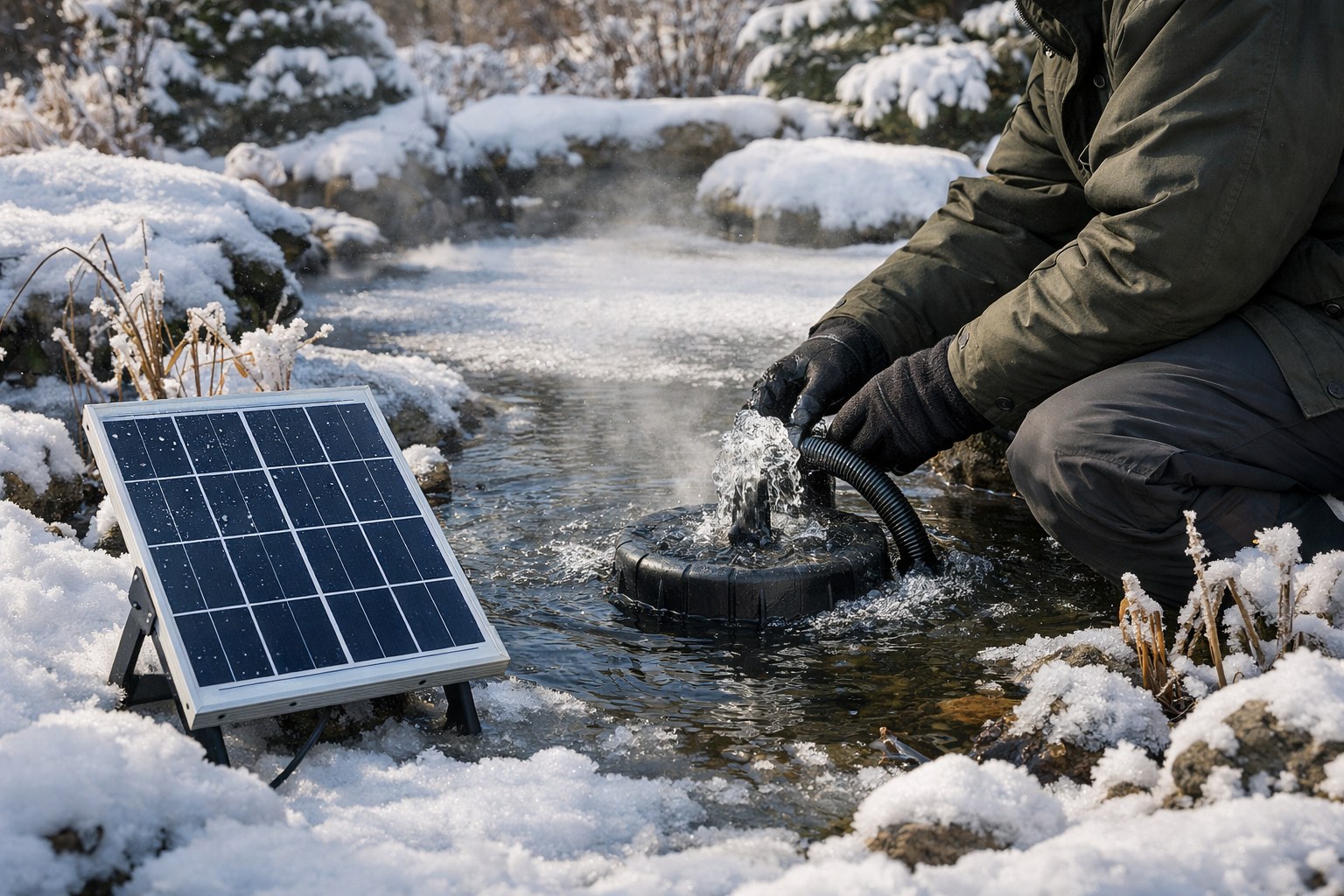
Yes, solar pond pumps can work effectively in winter.
Modern, high-efficiency solar pumps often generate enough power to operate even on cloudy days, preventing your pond from freezing completely and ensuring vital water circulation for fish and pond health.
As winter approaches, pond owners face a critical dilemma.
Should you keep your equipment running, or shut it all down until spring?
The question becomes even more complex when your system relies on the sun.
Many believe solar power is a fair-weather friend, disappearing when you need it most.
However, advancements in solar technology have changed the game.
Understanding how these pumps function in colder, darker months is key to making the right decision for your pond.
Let's explore the factors that determine your solar pump's winter performance and how to ensure your aquatic life thrives year-round.
How Do Solar Pumps Perform with Less Sunlight?
Your pond's health depends on consistent circulation, but winter brings shorter days and weaker sunlight.
How can a solar pump possibly keep up when its power source is so limited?
High-efficiency pumps, especially those with advanced motors and MPPT controllers, are designed to maximize every bit of available sunlight.
They can continue to circulate water even in overcast conditions, providing essential aeration and preventing total ice cover, which is crucial for fish survival.
The fear that a solar pump will fail during winter is a common one.
This concern is rooted in the performance of older, less efficient solar technologies.
Today's market is different.
The core of a modern solar pump system is designed for resilience and efficiency, challenging the assumption that they are only useful in summer.
Let's dive deeper into the specific technologies that make winter operation not just possible, but reliable.
We will look at how the pump's motor, controller, and even the type of pump itself contribute to its performance when the sun is low and the temperatures drop.
This will help you understand if your current setup is adequate or what to look for in a new system.
The Role of Advanced Motor Technology
The heart of any solar pump is its motor.
Winter performance hinges directly on the motor's ability to convert limited electrical energy into powerful water movement.
Not all motors are created equal.
Many modern solar pumps utilize Brushless DC (BLDC) permanent magnet motors.
These are a significant leap forward from older motor types.
Their efficiency ratings frequently exceed 90%.
This means over 90% of the solar energy captured is converted into mechanical work to pump water.
In contrast, traditional AC motors or older DC motors might have efficiencies closer to 60-70%.
This 20-30% difference is massive, especially in winter.
It's the difference between a pump that works and one that doesn't on a cloudy day.
Maximizing Power with MPPT Controllers
A solar pump doesn't just connect directly to a panel.
It uses a sophisticated controller, often one with Maximum Power Point Tracking (MPPT) technology.
An MPPT controller acts as a smart intermediary.
It constantly adjusts the electrical load to find the "maximum power point" of the solar panels.
This ensures the panels operate at their peak efficiency voltage, harvesting up to 30% more power compared to systems without MPPT.
During winter, when every watt counts, this intelligent power management is crucial for keeping the pump active.
Hybrid Systems for Ultimate Reliability
For absolute peace of mind, hybrid systems offer a fail-safe solution.
These systems are designed with dual power inputs.
They can run on solar DC power when the sun is available and automatically switch to an AC power source (grid power or a generator) when it's not.
This ensures your pond receives 24/7 circulation, regardless of weather or time of day.
The controller intelligently prioritizes solar power, only drawing from the AC source when absolutely necessary, keeping running costs to a minimum while guaranteeing the survival of your pond's inhabitants.
What Are the Running Costs and Maintenance Needs?
You've invested in a pond and want to keep it healthy without breaking the bank.
Traditional electric pumps mean constant energy bills, and winter maintenance can be a chore.
Solar pumps have zero daily running costs because they use free energy from the sun.
Maintenance is minimal, typically just involves wiping the solar panels clean occasionally. This saves you significant money on electricity and reduces labor compared to other pump types.
The appeal of "free energy" is strong, but savvy owners know to look at the total cost of ownership.
This includes not just the upfront purchase price but also ongoing expenses like fuel, electricity, and maintenance time.
While electric pumps seem straightforward, their costs accumulate day after day, year after year.
Windmills, another off-grid option, require significant and often difficult maintenance.
Solar pumps present a compelling alternative by drastically cutting both operational costs and labor.
Let's break down exactly how a solar pump saves you money and effort over its lifespan, especially when compared to traditional solutions.
Calculating the Financial Benefits
The primary advantage of a solar pump is the elimination of energy bills.
Once the system is installed, the fuel—sunlight—is free.
Consider a standard electric pond pump.
Running it 24/7 can add a noticeable amount to your monthly electricity bill, especially with rising energy prices.
Over the lifetime of the pump, this can add up to thousands of dollars.
With a solar pump, this cost is zero.
The return on investment begins immediately.
| Pump Type | Upfront Cost | Annual Running Cost (Electricity/Fuel) | 5-Year Total Cost |
|---|---|---|---|
| Electric Pump | Moderate | High | Moderate + (5 x High) |
| Generator Pump | Moderate | Very High | Moderate + (5 x Very High) |
| Solar Pump | Higher | Zero | Higher |
As the table shows, while the initial investment for a solar pump can be higher, the zero running costs mean you start saving money right away, often breaking even within just a couple of years.
A Closer Look at Maintenance
Maintenance is another area where solar pumps excel.
Think about the alternatives:
- Electric Pumps: Require electrical knowledge for repairs, and cords can be a hazard.
- Generator-Powered Pumps: Need constant refueling, oil changes, and engine servicing. This means trips to the gas station and messy, time-consuming work.
- Windmills: Involve climbing tall, often precarious structures for regular servicing of mechanical parts.
In comparison, a solar pump system is remarkably simple.
The key maintenance tasks are:
- Cleaning Solar Panels: Periodically wipe down the panels to remove dust, leaves, or snow. This ensures they absorb the maximum amount of sunlight.
- Checking the Pump Inlet: Ensure the pump's water intake is clear of debris like leaves or algae to prevent clogs.
That's it.
There's no fuel to haul, no engine to service, and no dangerous climbing involved.
This "set it and forget it" nature makes solar pumps a low-labor solution perfect for busy pond owners.
Is a Solar Pump Powerful Enough for My Pond?
You worry a solar pump won't be strong enough, especially for a larger pond with fish or for running a decorative water feature like a waterfall.
Can it really move enough water?
Solar pump systems are highly scalable and come in a wide range of sizes and types, from small fountain pumps to powerful systems designed for deep wells and large-scale irrigation.
By correctly sizing the pump and panels, you can achieve the ideal flow and pressure for any pond.
The term "solar pump" covers a vast range of products.
At one end, you have small, all-in-one solar fountains perfect for a tiny birdbath.
At the other, you have robust submersible systems capable of pumping thousands of gallons per hour from deep underground.
The key is matching the right technology to your specific application.
For a pond, you need to consider its size, depth, and whether it contains fish.
Fish require constant aeration, which demands a more powerful and reliable pump than one used for a simple decorative feature.
Let's explore the different pump technologies to understand which is best suited for various pond setups, ensuring you get the performance you need without compromise.
Understanding Different Solar Pump Types
Not all pumps move water in the same way.
The internal mechanism determines a pump's characteristics—whether it's better for high pressure (head) or high volume (flow).
-
Solar Screw Pumps: These use a helical rotor inside a rubber stator. They excel at creating very high pressure but deliver a lower flow rate.
- Best Pond Application: Powering a tall waterfall or a fountain that needs to shoot water high into the air. They are less ideal for general pond circulation due to lower volume.
-
Solar Centrifugal Pumps: These use an impeller to spin water outwards, creating high flow but at a lower pressure. The impellers can be made of different materials.
- Plastic Impeller Pumps: These are lightweight, cost-effective, and offer excellent flow rates. They are perfect for general pond circulation, aeration, and powering wide, cascading water features. They provide the best balance of performance and cost for most pond applications.
- Stainless Steel Impeller Pumps: These are the premium option. They offer high flow and are extremely durable and resistant to corrosion. If your water has unusual pH levels or you want the longest possible service life, this is the superior choice for pond circulation.
Sizing Your System Correctly
Choosing the right pump is only half the battle.
You must also pair it with the correct number of solar panels.
The goal for a healthy fish pond is to circulate the entire volume of water at least once every one to two hours.
Step 1: Calculate Your Pond's Volume
(Length x Width x Average Depth) x 7.5 = Volume in Gallons
Step 2: Determine Your Required Flow Rate
Divide the pond volume by 60 to get the Gallons Per Minute (GPM) needed to circulate the water once per hour.
Step 3: Match a Pump to Your Needs
Select a pump that can provide the required GPM at the height (head) you need to lift the water. For example, if you are pumping to the top of a 3-foot waterfall, you need a pump that delivers your target GPM at a 3-foot head.
Step 4: Power the Pump
The pump's specifications will tell you how many watts of solar panels it requires to operate at full capacity. It is always wise to slightly oversize your solar array (by about 20-25%) to ensure strong performance on less-than-perfectly-sunny days.
By following these steps, you can design a solar-powered system that is perfectly tailored to your pond's needs, ensuring robust circulation and healthy water year-round.
Are Solar Pumps a Good Choice for the Environment?
You want to maintain a beautiful pond, but you're also conscious of your environmental impact.
Running a pump 24/7 with grid electricity contributes to your carbon footprint.
Solar pumps are an exceptionally environmentally friendly choice.
They produce zero emissions, run on clean, renewable energy, and help you create a sustainable and self-sufficient water management system for your garden or farm, reducing reliance on fossil fuels.
Choosing sustainable options for our homes and gardens is more important than ever.
A pond can be a beautiful natural habitat, but its environmental credentials can be undermined by the energy used to maintain it.
Grid electricity is often generated from burning fossil fuels, and gas-powered generators are noisy, polluting, and inconvenient.
Solar water pumps offer a path to a truly "green" pond or water feature.
They operate in harmony with the environment, not against it.
Let's examine the specific environmental benefits that make solar pumps the superior choice for the eco-conscious individual.
Reducing Your Carbon Footprint
The most direct environmental benefit of a solar pump is its zero-emissions operation.
Every hour your pump runs on solar power is an hour it is not drawing energy from a grid that may be powered by coal, natural gas, or other carbon-emitting sources.
- Zero Greenhouse Gases: Solar panels convert sunlight directly into electricity with no combustion and no harmful byproducts.
- Energy Independence: By generating your own power on-site, you reduce the strain on the public electricity grid and the associated energy loss that occurs during long-distance transmission.
- Silent Operation: Unlike noisy gas generators that disturb both you and the local wildlife, solar pump systems operate almost silently, preserving the peace and tranquility of your garden.
Enhancing Local Ecosystems
A reliable water source can transform a landscape.
Solar pumps make it possible to sustain ponds and water features in remote locations without access to electricity.
This has several positive ecological effects:
- Supporting Wildlife: A year-round pond provides a crucial water source for birds, insects like dragonflies and bees, and other local wildlife, especially during dry periods.
- Promoting Plant Growth: The consistent moisture from a pond or irrigation system allows a greater variety of plants to flourish, creating a more diverse and resilient local habitat.
- Water Quality: Proper circulation prevents water from becoming stagnant and anoxic (lacking oxygen). Stagnant water is a breeding ground for mosquitos and harmful bacteria, while a well-aerated pond supports a healthy aquatic ecosystem, from beneficial bacteria to fish and frogs.
By choosing a solar pump, you are not just making an economically sound decision; you are investing in a healthier, more sustainable environment right in your own backyard.
Conclusion
Solar pond pumps work reliably in winter, offering an eco-friendly, cost-effective solution.
Modern technology ensures they provide vital circulation even with limited sun, protecting your pond and its inhabitants year-round.
FAQs
Should I leave my pond pump on all the time for fish?
Yes, you should run your pump 24/7 to ensure proper oxygenation and filtration, which is critical for fish health, especially in a well-stocked pond.
Do solar water features work in the shade?
They need direct sunlight to work effectively. While they may operate intermittently in bright, indirect light, consistent performance requires the solar panel to be in the sun.
Can a solar pump run at night?
Most standard solar pumps only run when the sun is shining. However, systems with battery backup or hybrid AC/DC controllers can operate 24 hours a day.
How do I stop my pond pump from freezing in the winter?
Keep the water moving! Running the pump prevents ice from forming around it. Also, move the pump off the very bottom of the pond to a higher position.
What is the lifespan of a solar pond pump?
A quality solar pump can last 2-4 years or even longer. The solar panels themselves often have a lifespan of 20+ years with minimal degradation in performance.
Do I need a battery for my solar pond pump?
A battery is not required for daytime operation. It is only needed if you want the pump to run at night or during extended periods of no sun.
Is it better to turn off a pond pump in winter?
Only if your pond has no fish. If you have fish, the pump is essential for providing oxygen and keeping an area of the surface ice-free.
How many solar panels do I need to run a submersible pump?
This depends entirely on the pump's wattage. The total wattage of your solar panels should meet or slightly exceed the pump's power requirement for optimal performance.