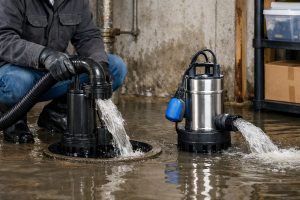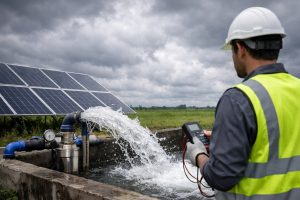
Struggling with unreliable water sources or high electricity bills for your pump?
Imagine gaining complete water independence with a sustainable, cost-effective solution.
This independence is closer than you think.
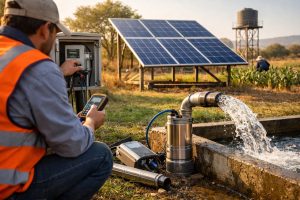
Yes, you can absolutely install a solar pump yourself.
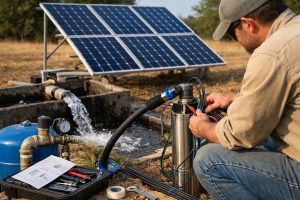
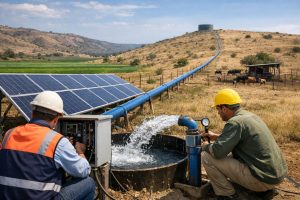
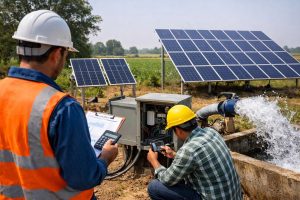
Modern solar pump kits are designed for DIY installation, often achievable in a single afternoon.
With basic plumbing and wiring skills, plus access to detailed guides and support, thousands of people successfully complete this satisfying project without professional help.
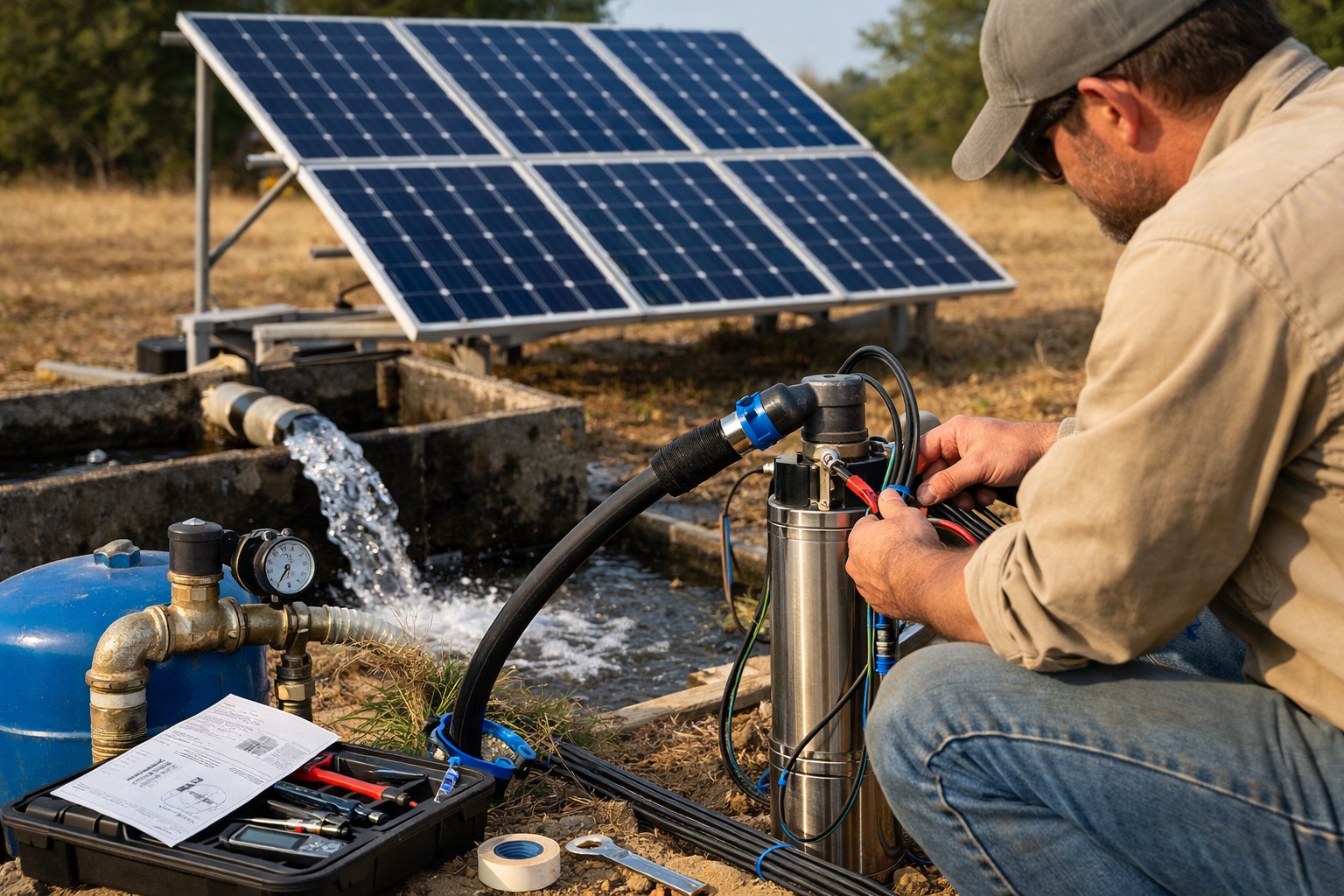
This guide will walk you through the essential knowledge needed to confidently tackle your own solar pump installation.
We will cover the skills required, how to choose the right pump for your needs, and the key components that make up a successful system.
Let's empower you to take control of your water supply.
What Skills and Tools Are Really Needed for a DIY Installation?
Feeling excited about a DIY project but worried it might end up half-finished and held together with duct tape?
Many share that fear, especially with projects involving water and electricity.
It’s a common roadblock that stops great ideas in their tracks.
The good news is that installing a solar pump is more accessible than ever.
You don't need to be an engineer or a master electrician.
The essential skills are basic plumbing—like using Teflon tape and hose clamps—and simple wiring, such as connecting wires with splice kits.
A successful DIY installation hinges on preparation and understanding the core tasks involved.
Manufacturers have invested heavily in creating user-friendly kits and comprehensive support materials to ensure customer success.
Over 90% of customers, many with no prior experience in solar or submersible pumps, install their systems without a hitch.
This high success rate is a testament to both the DIY spirit and the quality of modern solar pump systems.
Core Skill Requirements
The project can be broken down into a few key areas of competency.
- Basic Plumbing: This is arguably the most straightforward part. If you can connect a garden hose or fix a simple leak under your sink, you have the foundational skills. The tasks involve screwing fittings together, applying Teflon tape to create watertight seals, and securing pipes with clamps.
- Basic Wiring: This part often sounds more intimidating than it is. The wiring for a solar pump system is typically low-voltage DC and involves connecting color-coded wires. You will use simple tools to strip wires and secure connections, often with waterproof heat-shrink tubes to protect them from the elements. Most kits include detailed, full-color manuals with clear diagrams to guide you every step of the way.
- Physical Installation: This involves lowering the pump into the well, which requires some physical effort. It's often a two-person job. You will also need to mount the solar panels in a location with good sun exposure. Turnkey kits often include the necessary mounting hardware, safety ropes, and other components to streamline this process.
Essential Tools and Resources
You won't need a professional-grade workshop, but having the right tools makes the job much smoother.
| Tool Category | Specific Tools | Purpose |
|---|---|---|
| Plumbing Tools | Pipe wrenches, Teflon tape, hose clamps | Assembling and sealing pipes and fittings. |
| Wiring Tools | Wire strippers, crimpers, heat gun | Preparing and connecting electrical wires. |
| General Tools | Screwdrivers, wrenches, multimeter | General assembly and troubleshooting. |
| Safety Gear | Gloves, safety glasses | Personal protection during installation. |
Modern systems are also backed by a wealth of support resources.
Look for extensive video libraries on platforms like YouTube that demonstrate the entire process, from unboxing to the final test.
A high-quality, 32-page full-color user manual with diagrams, checklists, and flowcharts can be your best friend during the install.
And don't underestimate the value of direct phone or text support from engineers who can answer questions as they arise.
How Do I Choose the Right Solar Pump for My Project?
Choosing a pump can feel overwhelming with all the different types and specifications.
Selecting the wrong one leads to poor performance, inefficiency, and wasted investment.
You need the right tool for the right job to get reliable water.
The key is to match the pump type to your specific water needs, focusing on flow rate (how much water) and head (how high it needs to lift the water).
There are three main types of solar deep well pumps, each designed for different applications and environments.
Understanding your well's characteristics and daily water requirements is the first and most critical step in the entire process.
Before you can even think about installation, you must size your system correctly.
This involves knowing your well's depth, the static water level (the distance from the surface to the water), and how many gallons or liters you need per day.
This information allows you to select a pump that operates efficiently within its designed parameters, ensuring a long service life and consistent water delivery.
Let's break down the three primary solar pump technologies to help you make an informed choice.
1. Solar Screw Pump: The Deep Well Specialist
This pump design excels in situations requiring high lift but lower volumes of water.
It uses a stainless steel screw (rotor) inside a rubber stator.
As the screw turns, it creates sealed cavities that move water upward through compression.
- Best For: Low Flow, High Head.
- Primary Applications: Domestic water supply for homes, providing drinking water for livestock troughs, and small-scale drip irrigation. They are ideal for regions with deep water tables, like those found in parts of Africa and Latin America.
- Key Advantage: These pumps are highly resistant to sand and sediment, making them durable in wells with less-than-perfect water quality. Their ability to push water from great depths is their standout feature.
- Limitation: The flow rate is limited, making them unsuitable for applications requiring large volumes of water quickly, such as flood irrigation for large farms.
2. Solar Plastic Impeller Pump: The High-Flow Workhorse
This is a multi-stage centrifugal pump designed for moving large volumes of water at medium head.
It uses a series of durable, wear-resistant plastic impellers to accelerate water and build pressure.
- Best For: High Flow, Medium Head.
- Primary Applications: Farm and ranch irrigation, pasture water management, and supplying water for large gardens or ponds. They are extremely popular in agricultural regions across the Americas and Africa.
- Key Advantage: Their primary benefit is high water output at an economical price point. They are lightweight, easier to handle during installation, and have excellent resistance to fine sand particles.
- Limitation: In highly corrosive water or very deep wells, the durability of plastic components may be less than stainless steel.
3. Solar Stainless Steel Impeller Pump: The Premium Durability Option
This pump is the top-tier choice for longevity and performance in challenging water conditions.
It features an SS304 stainless steel impeller, pump body, and other components, providing maximum protection against corrosion.
- Best For: High Flow, High Corrosion Resistance.
- Primary Applications: Pumping water with acidic or alkaline properties. It's the go-to solution for areas with corrosive groundwater or alkaline soil, common in parts of Australia and the Americas. It is also used for high-end homes and ranches where reliability is paramount.
- Key Advantage: Unmatched corrosion resistance ensures a very long service life and high reliability, even in harsh environments.
- Limitation: The high-quality materials result in a higher initial cost and greater weight compared to plastic impeller models, targeting a more niche, quality-focused market.
What Are the Core Components in a Solar Pump Kit?
You've found the perfect pump, but what else comes in the box?
A DIY project can quickly get derailed by missing parts and extra trips to the hardware store.
Knowing what to expect ensures you have everything you need on-site.
A complete solar pump kit is more than just a pump; it's an integrated system.
It includes the solar panels to generate power, a controller to manage that power, and the motor that drives the pump.
Each component is critical for the system's overall efficiency and reliability.
The heart of any modern solar pump system is the high-efficiency motor.
Outdated systems were often inefficient, requiring more solar panels and a larger investment to do the same amount of work.
Today's systems leverage advanced motor technology to squeeze every last drop of water from every watt of solar power.
This technological leap not only improves performance but also makes the entire system more affordable and easier to install.
Let's explore the key components that work together to deliver water powered by the sun.
1. The Motor: BLDC Permanent Magnet Technology
The motor is the engine of your pump system, and its efficiency dictates the performance of everything else.
All three pump types—screw, plastic impeller, and stainless steel impeller—are powered by a Brushless DC (BLDC) permanent magnet motor.
- Unmatched Efficiency: These motors achieve efficiencies exceeding 90%. This means more of the sun's energy is converted into water-pumping power.
- Advanced Materials: The rotor is made from high-grade 40SH neodymium iron boron magnets, providing strong and consistent torque.
- Compact and Powerful: This technology results in a motor that is up to 47% smaller and 39% lighter than traditional motors of the same power output. This makes installation significantly easier.
- Market Value: The high efficiency directly reduces the number of solar panels needed, lowering the total system cost by 15-20%. These motors are also maintenance-free and have a very long service life.
2. The Controller: The Brains of the Operation
The pump controller is a sophisticated electronic device that manages the power from the solar panels to the motor.
- MPPT (Maximum Power Point Tracking): This intelligent feature constantly adjusts the electrical load to maximize the power harvest from the solar panels, boosting water output by up to 30%, especially in low-light conditions like early mornings, late afternoons, and overcast days.
- System Protection: The controller protects the pump from damage by monitoring for conditions like low water levels in the well (dry-run protection), power surges, and overheating.
- Variable Speed Control: It automatically adjusts the pump's speed based on the available sunlight, ensuring a "soft start" in the morning that reduces wear and tear on the pump and motor.
3. The Solar Panels: The Fuel Source
The solar panels convert sunlight into DC electricity.
| Component | Key Feature | Benefit for DIY Installer |
|---|---|---|
| Pump & Motor | High-efficiency BLDC technology | Lighter weight for easier handling, fewer panels needed. |
| Controller | Intelligent MPPT, protective sensors | Maximizes water output, prevents pump damage automatically. |
| Solar Panels | UL Certified, hail/wind resistant | Durable and reliable power source, designed for harsh rural conditions. |
| Turnkey Kit | Includes pipe, wire, mounting, sensors | Saves multiple trips to the hardware store, ensures compatibility. |
High-quality kits include UL1703 certified panels that meet national standards for hail and wind resistance, ensuring they can withstand the rigors of a rural environment.
The number and size of the panels are precisely matched to the pump's power requirements.
What If I Need Water When the Sun Isn't Shining?
Solar power is fantastic, but what happens on cloudy days or at night?
The limitation of a DC-only system is that it only pumps when the sun is out.
This can be a major problem for households or critical livestock operations that need water 24/7.
The solution is a hybrid AC/DC solar pump system.
These innovative systems are designed with dual power inputs, allowing you to connect solar panels and a grid power (AC) source simultaneously.
The system automatically prioritizes solar power, saving you money.
A hybrid system offers the best of both worlds: the cost-free, clean energy of solar and the round-the-clock reliability of the grid or a generator.
This technology removes the primary drawback of solar power, making it a viable and worry-free solution for any application.
The intelligent controller manages the power sources seamlessly, so you don't have to do a thing.
It ensures you have water whenever you need it, regardless of the weather or time of day, while still maximizing your use of free solar energy.
How a Hybrid AC/DC Controller Works
The magic lies in the controller's ability to automatically detect and switch between power sources.
- Solar Priority Mode: When there is sufficient sunlight, the controller uses 100% of the power from the photovoltaic (PV) panels to run the pump. This is the default and most cost-effective mode of operation.
- Hybrid Assist Function: During periods of low sunlight (e.g., a cloudy day), the controller can blend power sources. It takes as much power as it can from the solar panels and supplements the rest with AC power to keep the pump running at the desired speed. This maximizes the use of free solar energy before drawing from the grid.
- AC Power Mode: When there is no solar input at all, such as at night, the controller automatically switches over completely to the AC power source (grid or generator). The pump continues to run without interruption.
- Seamless Transition: The entire process is automatic. The controller constantly monitors the solar input and makes decisions in real-time. This guarantees a reliable water supply 24 hours a day without any manual intervention.
Benefits for Water Distributors and End-Users
For distributors, offering a hybrid AC/DC pump system is a significant competitive advantage.
It addresses a key customer concern about the reliability of solar power, opening up the market to a wider range of clients, including those with critical household or commercial water needs.
It positions your product line as a complete and versatile water solution.
For the end-user, the benefit is absolute peace of mind.
They can enjoy the massive cost savings of solar pumping during the day and have the security of knowing their water supply will never be interrupted by a cloudy spell or the setting of the sun.
It eliminates the need for large, expensive battery banks for nighttime pumping, providing a more elegant and cost-effective solution for 24/7 water access.
Conclusion
DIY solar pump installation is a highly achievable project for anyone with basic skills.
By choosing the right pump type and understanding the core components, you can build a reliable, off-grid water system and gain true water independence.
FAQs
What tools do I need to install a solar well pump?
You'll need basic plumbing tools like pipe wrenches, electrical tools like wire strippers, and general hand tools like screwdrivers. A multimeter is also highly recommended for troubleshooting.
How deep can a solar water pump go?
This depends on the pump model. Solar screw pumps are designed for high head and can work in wells several hundred feet deep, while centrifugal pumps handle shallower depths.
How many solar panels do I need for a well pump?
The number of panels is determined by the pump motor's power rating (wattage). A proper system design will match the panel array to the pump to ensure optimal performance.
Do solar pumps work on cloudy days?
Yes, but at a reduced flow rate. High-efficiency systems with MPPT controllers can still pump significant water on overcast days. Hybrid AC/DC systems can use grid power as a backup.
Can a solar pump fill a large tank?
Absolutely. A common strategy is to use the pump to fill a large storage tank during sunny hours. The water can then be gravity-fed to where it's needed, day or night.
How long do solar water pumps last?
A quality solar pump system can last for many years. The BLDC motors are brushless and maintenance-free, and solar panels have a lifespan of 25 years or more.
Can I run a solar pump on batteries at night?
While possible, it is often not cost-effective. It requires a large, expensive battery bank and an inverter. A hybrid AC/DC system is typically a more practical solution for 24/7 water.
What maintenance does a solar pump require?
Solar pump systems are very low maintenance. You should occasionally clean the solar panels and check for any debris around the pump intake, but the motor itself is maintenance-free.