Struggling with high water pumping costs and unreliable grids?
Finding an off-grid solution that delivers consistent power for high-demand water needs can be a major challenge for large-scale operations.
A 12.5 HP solar water pump system investment can range from $15,000 to over $25,000. This price includes the pump, a high-efficiency motor, a specialized solar inverter, and the required number of solar panels. The final cost depends heavily on the well depth, required flow rate, and system components.
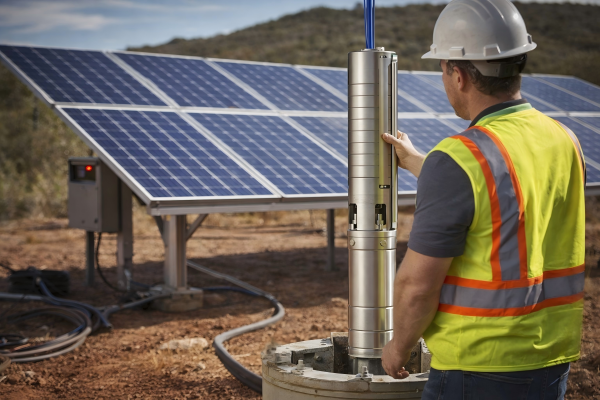
Investing in a high-power solar water pump system is a significant decision.
It moves beyond basic residential or livestock watering into serious agricultural or community water supply territory.
The price isn't just about the pump itself; it's about building a complete, reliable power and water delivery system.
This article will break down the costs and technologies involved.
We will explore the different types of pump ends available, the critical role of the motor and inverter, and how these components influence the total investment, helping you make an informed choice for your specific needs.
Let's dive into the details.
Understanding the Core Pump Technologies
Choosing the right pump is difficult.
You need a solution that matches your water source's depth and quality, but technical specifications can be confusing, leading to an inefficient purchase.
Solar deep well pumps come in three main types: screw, plastic impeller, and stainless steel impeller. Each is designed for specific conditions, from high-head, low-flow residential wells to high-flow, corrosion-resistant agricultural applications. The right choice depends entirely on your well depth, water quality, and volume needs.
The pump's "wet end" is where the mechanical work of moving water happens.
Its design directly impacts performance, longevity, and overall system cost.
A 12.5 HP motor can power any of these pump types, but pairing it with the wrong one is like putting a race car engine in a farm tractor—you won't get the performance you paid for.
Understanding the fundamental differences is the first step toward building a cost-effective and reliable system.
Solar Screw Pump: The Deep Well Specialist
A key feature of the solar screw pump is its design.
It uses a single helical stainless steel screw (rotor) that rotates inside a rubber stator.
This creates sealed cavities that progress along the pump's axis, pushing a consistent volume of water upward.
This mechanism is known as a progressive cavity pump.
It excels at creating high pressure, making it ideal for lifting water from extreme depths.
-
Low Flow, High Head: These pumps are not designed for high volumes.
Instead, their strength lies in their ability to generate immense head (pressure), capable of pushing water up from wells that are hundreds of meters deep.
This makes them a go-to solution for domestic water supply and livestock watering in arid regions where the water table is very low. -
Superior Sand Resistance: The rubber stator and steel screw design can handle water with a higher concentration of sand and silt compared to centrifugal pumps.
The abrasive particles are moved along with the water, causing less wear on the core components.
This durability is crucial in areas with challenging water conditions, common in parts of Africa and Latin America.
Here is a summary of its operational sweet spot:
| Feature | Description | Ideal Application |
|---|---|---|
| Pumping Mechanism | Progressive Cavity (Screw) | Deep wells (>150 meters) |
| Flow Rate | Low (e.g., 1-5 GPM) | Domestic use, livestock troughs |
| Head (Pressure) | Very High | Lifting water from great depths |
| Sand Handling | Excellent | Wells with moderate sand content |
| Limitation | Limited water volume | Not suitable for large-scale irrigation |
For a 12.5 HP system, a screw pump would be used in a very niche, extremely deep well scenario where other pumps fail to lift water effectively.
Although the horsepower is high, the flow rate would remain relatively low due to the pump's inherent design.
The cost is justified by its unique ability to reach deep water sources reliably.
Solar Plastic Impeller Pump: The High-Flow Workhorse
This pump is a multi-stage centrifugal pump.
It uses a series of impellers and diffusers stacked on top of each other.
As water enters, each impeller spins, adding velocity.
The diffuser then converts this velocity into pressure, pushing the water up to the next stage.
Using durable, engineered plastic for the impellers offers a great balance of performance and cost.
-
High Flow, Medium Head: The primary advantage is its ability to deliver a high volume of water.
This makes it perfect for applications like farm irrigation, maintaining pasture, and filling large reservoirs where the sheer amount of water is more important than extreme pressure.
It efficiently serves wells of shallow to medium depth. -
Excellent Wear Resistance against Fine Sand: While not as robust as a screw pump in heavy grit, modern thermoplastic impellers are highly resistant to abrasion from fine sand.
They offer a lightweight and economical alternative to stainless steel in many conditions, which is why they are widely adopted for agricultural use in the Americas and Africa.
The main trade-offs for its high-flow performance are:
| Feature | Description | Ideal Application |
|---|---|---|
| Pumping Mechanism | Multi-stage Centrifugal | Farm irrigation, filling tanks |
| Flow Rate | High (e.g., 50-150 GPM) | Agriculture, community water supply |
| Head (Pressure) | Medium | Wells up to 150 meters deep |
| Sand Handling | Good (for fine sand) | General purpose wells |
| Limitation | Lower durability in corrosive water | Not for very deep or acidic wells |
When paired with a 12.5 HP motor, a plastic impeller pump becomes a powerhouse for irrigation.
It can easily supply water to multiple pivot systems or flood large fields, providing the high gallons per minute (GPM) that modern agriculture demands.
Its cost-effectiveness makes it a popular choice for maximizing water output on a budget.
Solar Stainless Steel Impeller Pump: The Premium Durability Choice
Like the plastic impeller model, this is also a multi-stage centrifugal pump.
However, its key components—the impellers, diffusers, and pump housing—are all constructed from SS304 or higher-grade stainless steel.
This material choice is deliberate and targets the most demanding water environments.
-
Maximum Corrosion Resistance: Stainless steel is exceptionally resistant to rust and corrosion from acidic or alkaline water.
This is critical in regions with specific geological conditions, such as the alkaline soils in Australia or coastal areas where saltwater intrusion can be a problem.
The pump's longevity in these harsh environments is unparalleled. -
High Flow and High Reliability: These pumps deliver high flow rates similar to their plastic counterparts but with added structural integrity.
The rigidity of steel allows for tighter tolerances and sustained performance over a longer service life, even under continuous, heavy-duty operation.
This makes them the preferred choice for high-end residential systems, commercial applications, and ranches where reliability is non-negotiable.
Choosing stainless steel is an investment in long-term performance:
| Feature | Description | Ideal Application |
|---|---|---|
| Pumping Mechanism | Multi-stage Centrifugal | Corrosive water, industrial use |
| Flow Rate | High (e.g., 50-150 GPM) | High-value agriculture, premium homes |
| Head (Pressure) | Medium to High | Wells with acidic or alkaline water |
| Durability | Excellent | Long-term, maintenance-free operation |
| Limitation | Higher initial cost and weight | Over-engineered for standard wells |
A 12.5 HP system with a stainless steel impeller pump is the top-tier solution.
It is designed for users who face challenging water quality and require maximum uptime and durability.
While the initial investment is higher, it pays off through a significantly longer lifespan and reduced maintenance costs, especially in environments that would quickly destroy lesser pumps.
The Engine of the System: BLDC Motor and Inverter
Your pump is failing to deliver.
Even with a powerful 12.5 HP rating, you're not getting the expected water flow, and your energy costs are high, defeating the purpose of solar.
The heart of any modern solar pump is the Brushless DC (BLDC) permanent magnet motor and its intelligent inverter. A high-efficiency motor (>90%) paired with an MPPT inverter maximizes water output from every watt of solar power, directly reducing panel costs and improving daily performance.
The pump's wet end can only move as much water as the motor can power it to.
An inefficient motor wastes precious solar energy as heat, forcing you to buy more solar panels to compensate.
A 12.5 HP (approximately 9.2 kW) system is a significant power plant.
The efficiency of its motor and the intelligence of its inverter are the two factors that determine whether that power is converted into water or wasted.
They are the most critical components influencing both performance and the total system cost.
The Powerhouse: BLDC Permanent Magnet Motor
The motor is what converts electrical energy from the solar panels into the rotational force that drives the pump.
A Brushless DC (BLDC) motor is vastly superior to older brushed or AC induction motors for this task.
-
Unmatched Efficiency: BLDC motors regularly achieve efficiencies of over 90%.
This is a remarkable improvement over traditional motors, which might operate at 60-75% efficiency.
This means for every 100 watts of solar power, over 90 watts are turned into useful mechanical work.
This single factor reduces the number of solar panels needed by up to 25%, a massive cost saving on a 12.5 HP system. -
Advanced Materials and Design: These motors use powerful permanent magnets, often made of Neodymium iron boron (NdFeB), on the rotor.
Since there are no brushes to wear out, they are virtually maintenance-free and have a much longer service life.
Their design also allows for higher torque and a more compact size; a BLDC motor can be up to 47% smaller and 39% lighter than a traditional motor of the same power rating, simplifying installation.
The impact of motor choice is stark:
| Motor Type | Typical Efficiency | Maintenance | Lifespan |
|---|---|---|---|
| BLDC Permanent Magnet | >90% | None | Long |
| AC Induction | 75% | Low | Long |
| Brushed DC | 60% | High (Brush Replacement) | Short |
For a 12.5 HP system, using anything other than a high-efficiency BLDC motor is economically unsound.
The initial savings on a cheaper motor would be quickly erased by the extra cost of the 2-3 kW of additional solar panels needed to make up for the inefficiency.
The Brains: The Solar Pump Inverter (Controller)
The solar pump inverter, or controller, is the intelligent link between the solar panels and the motor.
Its primary job is to manage the variable power produced by the solar array to run the pump optimally.
-
Maximum Power Point Tracking (MPPT): This is the inverter's most critical function.
Solar panels produce different voltage and current levels depending on sunlight intensity.
MPPT technology constantly adjusts the electrical load to find the "maximum power point," ensuring that every available watt is harvested from the panels.
This can boost water output by up to 30% over a day compared to systems without MPPT. -
System Protection and Hybrid Functionality: A good inverter does more than just optimize power.
It protects the pump from dry running, overheating, and electrical faults.
Advanced inverters also offer AC/DC hybrid capability.
They can be connected to solar panels and an AC power source (grid or generator) simultaneously.
The system will prioritize solar power and automatically switch to or blend in AC power during cloudy weather or at night, guaranteeing a 24/7 water supply.
The inverter turns a simple pump into a smart water delivery system.
For a 12.5 HP application, an advanced inverter is not a luxury; it's a necessity for protecting the investment and ensuring reliable operation under all conditions.
Breaking Down the Total System Cost
You see a price for a pump, but you're shocked by the final quote.
The advertised cost is often just one piece of a much larger puzzle, leaving you unprepared for the total investment required for a fully functional system.
The total cost for a 12.5 HP solar water pump system ($15,000-$25,000+) is a sum of its parts: the pump wet end, the high-efficiency motor, the inverter, the solar array (panels and racking), and system wiring. The solar array alone can constitute 40-50% of the total price.
Thinking of the "price of the pump" is misleading.
You are not buying a single product; you are investing in an integrated system.
A 12.5 HP pump requires a significant solar array to power it—roughly 10-12 kW of panels.
The cost of these panels, along with the necessary mounting hardware (racking), often equals or exceeds the cost of the pump and motor.
Let's dissect the budget to see where the money goes.
The Core Components: Pump, Motor, and Inverter
This is the "pumping" part of the system.
As discussed, the price within this category varies based on the type and materials of the pump end.
-
Pump Wet End: A plastic impeller pump end will be the most economical option.
A stainless steel version will cost more due to material and manufacturing differences.
A screw pump for extreme depth might have a unique price point based on its specialized design. -
BLDC Motor: The 12.5 HP high-efficiency BLDC motor is a high-value component.
Its cost reflects the advanced materials (like neodymium magnets) and engineering required to achieve over 90% efficiency. -
Solar Pump Inverter: The inverter for a 9.2 kW system is a sophisticated piece of power electronics.
Its cost is driven by its power handling capacity, the effectiveness of its MPPT algorithm, and protective features.
Hybrid AC/DC inverters will command a premium over DC-only models.
Together, these three components can account for roughly 50-60% of the total system cost, depending on the pump type selected.
The Power Plant: Solar Panels and Racking
This is the "solar" part of the system and is often the most expensive single category.
A 12.5 HP motor has a power consumption of about 9,200 watts (9.2 kW).
To run this effectively throughout the day, you need an oversized solar array to account for less-than-ideal sun conditions.
-
Solar Panels: A standard rule of thumb is to size the solar array at 1.2 to 1.5 times the motor's power rating.
For a 9.2 kW motor, this means you will need an array of approximately 11 kW to 13.8 kW.
The cost of solar panels fluctuates, but this amount of hardware represents a significant investment. -
Solar Panel Racking: The panels need to be securely mounted.
Ground-mount racking is typical for large arrays like this.
The cost of the steel or aluminum racking, concrete footings, and labor to install it is substantial.
Fixed mounts are standard, but tracking mounts that follow the sun can increase output by 25-40%, though at a much higher initial cost.
The cost for a robust ground mount for a 12kW array can run from $2,000 to over $5,000.
This power plant portion can easily make up 40-50% of the project's total hardware cost.
A Sample Cost Estimation
To provide a clearer picture, let's look at a hypothetical 12.5 HP system.
| Component | Cost Range (USD) | Percentage of Total (Approx.) | Notes |
|---|---|---|---|
| Pump, Motor & Inverter | $7,000 - $12,000 | 50% | Price varies with pump type (Plastic vs. SS) and inverter features (AC/DC Hybrid). |
| Solar Array (~12 kW) | $6,000 - $9,000 | 35% | Based on current market prices for solar panels. |
| Racking & Mounting | $2,000 - $4,000 | 10% | For a standard ground-mount system. Tracking systems are more expensive. |
| Wiring, Splices, etc. | $500 - $1,000 | 5% | Includes specialized solar wiring, connectors, and other balance-of-system parts. |
| Total Estimated Cost | $15,500 - $26,000 | 100% | This is for hardware only. Installation labor is an additional cost. |
This table illustrates why focusing only on the "pump price" is shortsighted.
The investment is comprehensive, but the return comes from eliminating ongoing fuel or electricity costs, reducing maintenance, and achieving water independence.
For distributors, understanding this full cost structure is key to quoting projects accurately and managing customer expectations.
Conclusion
A 12.5 HP solar pump system is a major infrastructure investment, providing energy-independent water solutions.
Its price is a sum of its high-tech components, not just the pump itself.
Frequently Asked Questions
How many solar panels does it take to run a 12.5 HP pump?
You'll typically need between 11,000 to 14,000 watts of solar panels. The exact number depends on the wattage of the individual panels you choose for the installation.
Can a 12.5 HP solar pump run at night?
Not on solar power alone. To run at night, the system must be a hybrid model connected to the electrical grid or a generator, or use a large battery bank.
What is the lifespan of a solar water pump?
A high-quality solar pump system can last for 20-25 years. The solar panels have a long lifespan, while the pump and motor may require maintenance or replacement after 10+ years.
How deep can a 12.5 HP solar pump pull water from?
This depends on the pump type. A high-power screw pump can pull from over 300 meters, while a centrifugal pump is better suited for higher volumes from shallower depths.
Is a 12.5 HP solar pump difficult to install?
Yes, systems of this size require professional installation. They involve high-voltage DC electricity and heavy equipment, especially for mounting the large solar array and lowering the pump.
Do I need batteries for my solar pump system?
No, batteries are not required. Most solar pumps are designed to pump water into a storage tank when the sun is out, providing water on demand without battery costs.
What maintenance does a solar water pump require?
Maintenance is minimal. It involves occasionally cleaning the solar panels and checking electrical connections. The brushless motor and pump are sealed and generally maintenance-free for years.
How much water can a 12.5 HP solar pump move?
This varies widely. A high-flow centrifugal model might move over 200 gallons per minute (GPM) from a shallow well, while a high-head screw pump might only move 10 GPM from a very deep well.