Worried about your summer electricity bill?
Your pool pump is a major energy user, often adding $150-$200 monthly by running constantly.
It's one of your home's most power-hungry appliances.
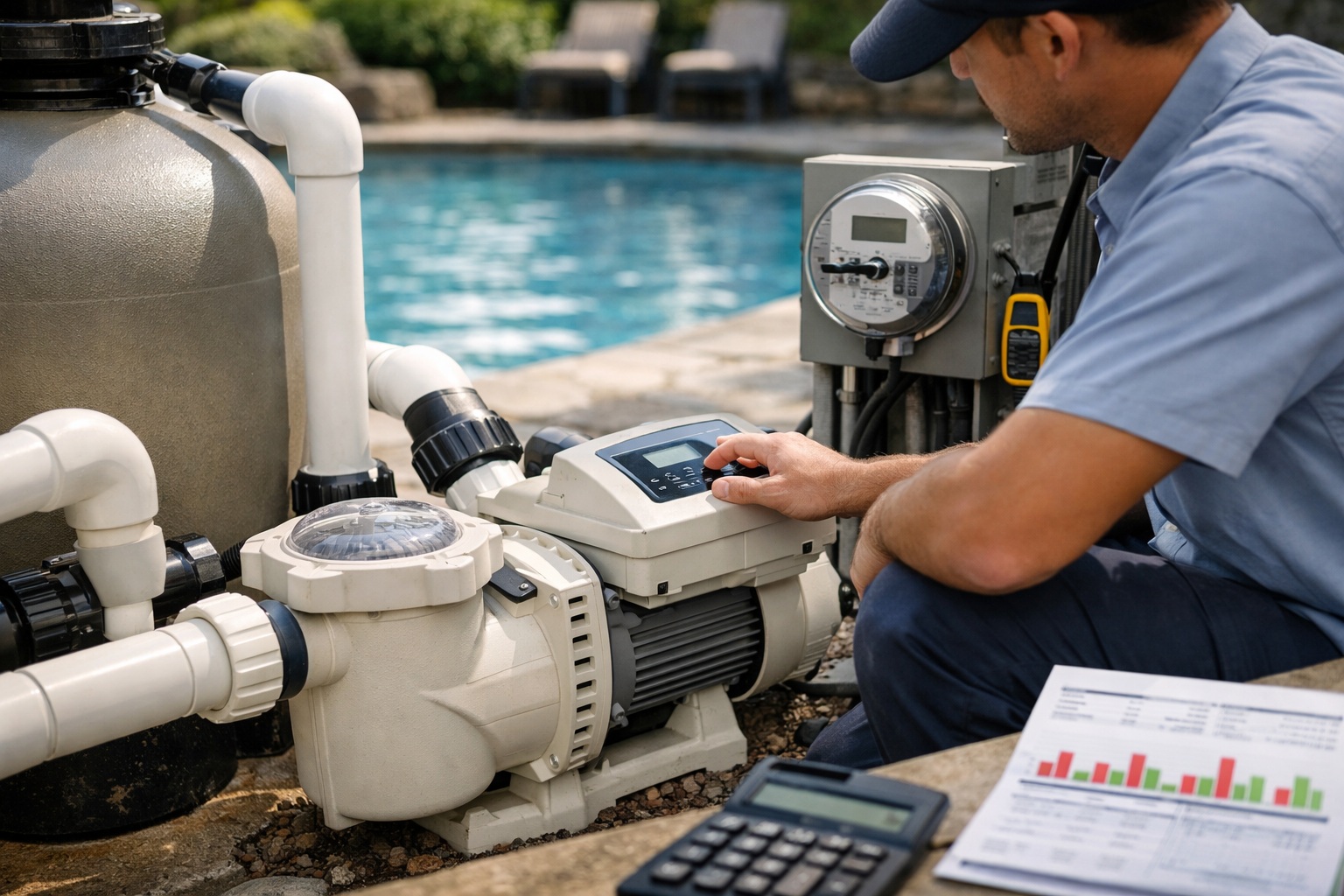
A swimming pool pump can significantly increase your household's energy consumption, often by 40-50%.
However, understanding the factors behind this usage is the first step toward managing and reducing these costs.
This article will break down how much electricity your pump uses.
We will also explore effective strategies and technologies to lower your bills without sacrificing a clean pool.
Let's explore how to make your pool an affordable escape.
How Much Electricity Does a Pool Pump Use?
Stunned by your latest power bill?
Your pool pump is likely the culprit, often using more energy than you realize.
A standard pump can consume around 480 kWh per month.
**A standard 2000-watt pool pump running 8 hours daily uses 16 kWh per day.
This totals about 480 kWh monthly, showing just how much electricity a single-speed pump can consume and its impact on your utility bills.**
The exact electricity consumption of your pool pump depends on several key variables.
Understanding these factors allows you to calculate and ultimately control your energy costs.
The main elements are the pump's power rating in watts, how many hours it runs each day, and the type of pump you have.
Calculating Your Pump's Consumption
You can calculate your pump's energy use with a simple formula.
First, find the wattage, which is often listed on the motor.
If not, multiply the pump’s voltage by its amperage.
A 230-volt pump with a 6.5-amp rating uses 1,495 watts.
Next, convert this to kilowatt-hours (kWh) by dividing the wattage by 1,000.
So, 1,495 watts is about 1.5 kWh.
To find the daily usage, multiply the kWh by the number of hours the pump runs.
| Variable | Calculation Step | Example |
|---|---|---|
| Voltage (V) | Find on pump label | 230V |
| Amperage (A) | Find on pump label | 6.5A |
| Wattage (W) | Volts x Amps | 230V x 6.5A = 1,495W |
| Kilowatts (kW) | Watts / 1,000 | 1,495W / 1,000 = 1.495 kW |
| Daily kWh | kW x Hours Run | 1.495 kW x 8 hours = 11.96 kWh |
| Monthly kWh | Daily kWh x 30 | 11.96 kWh x 30 days = 358.8 kWh |
This calculation shows how a seemingly small appliance can contribute significantly to your monthly electricity bill.
It highlights the importance of choosing an efficient model and optimizing its run time.
How Variable Speed Pumps Lower Your Electricity Bill
Tired of inefficient pumps wasting energy and money?
Variable speed pumps provide a smarter, more cost-effective solution for your pool.
These modern pumps can cut your pool's energy use by over 80%.
**A variable speed pump operates at lower speeds for routine filtration, using only about 300 watts compared to a standard pump's 2000 watts.
This efficiency drastically reduces energy consumption and lowers electricity bills.
They also last longer and run quieter.**
The benefits of upgrading to a variable speed pump extend beyond just lower bills.
Their design offers superior performance, greater control, and a longer operational lifespan.
These pumps use modern motor technology to match their speed to the specific task at hand, from gentle filtration to powerful backwashing.
The Efficiency of Smart Technology
Variable speed pumps achieve energy savings in three main ways.
First, they operate at a much lower speed for most of the day.
Routine filtration doesn't require the full power of a single-speed motor, so a variable speed pump conserves energy by running slower.
This simple change reduces energy use significantly.
Second, they use a more efficient motor design.
These pumps use permanent magnet motors, which are inherently more efficient than the induction motors found in older pumps.
This means they convert more electricity into pumping power, wasting less as heat.
Third, they offer advanced control features.
Built-in timers and programmable speeds allow you to customize your pump's schedule.
You can set it to run at the lowest possible speed for the required filtration time, often for just 6 hours a day instead of 8 or more.
This level of control ensures you use only the energy you need.
Long-Term Financial Savings
The initial cost to install a variable speed pump can range from $700 to $1500, plus the cost of the unit itself.
However, the return on investment is substantial.
- Energy Savings: Reducing monthly usage from 480 kWh to just 72 kWh can save hundreds of dollars per year.
- Durability: These pumps often last 12-15 years, longer than standard pumps, reducing replacement costs over time.
- Quieter Operation: The lower operating speeds make for a much more peaceful poolside environment.
By investing in a variable speed pump, you are not just buying a piece of equipment.
You are upgrading your pool's entire filtration system to be more intelligent, efficient, and cost-effective for years to come.
Can Solar Pumps Eliminate Your Pool's Electricity Costs?
Are you looking for the ultimate way to cut your pool's running costs?
A solar-powered pool pump offers complete energy independence from the grid.
They run entirely on free energy from the sun.
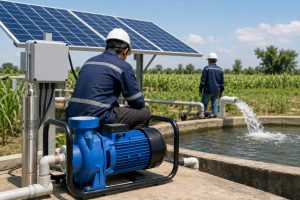
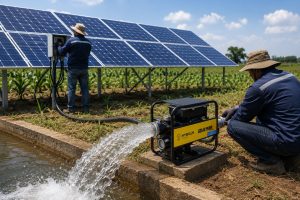
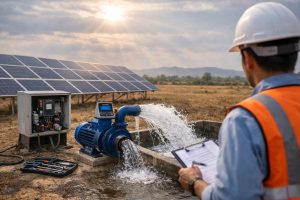
**A solar pool pump connects directly to photovoltaic (PV) panels, eliminating the need for grid electricity.
This means your pump runs for free whenever the sun is shining, effectively dropping your pool's electricity consumption and cost to zero during the day.**
While variable speed pumps dramatically reduce energy consumption, solar pumps take savings to the next level by removing the reliance on utility power altogether.
This technology represents a major leap forward in sustainable and cost-effective pool maintenance.
It also offers reliable operation in areas with unstable power grids or in completely off-grid locations.
The system is simple yet powerful, consisting of solar panels, a specialized pump, and a controller.
How Solar Pump Systems Work
The core of a solar pump system is a highly efficient DC motor.
This is a key differentiator from traditional AC pumps.
- Brushless DC (BLDC) Motors: Modern solar pumps use advanced BLDC motors. These motors are over 90% efficient, compared to the 60-70% efficiency of standard AC motors. This means almost all the solar power generated is converted directly into water-pumping power.
- MPPT Controller: The system includes a Maximum Power Point Tracking (MPPT) controller. This smart device constantly adjusts the electrical load to ensure the solar panels operate at their peak efficiency, maximizing water flow throughout the day, even in changing light conditions.
- Direct Power: The panels power the pump directly, eliminating the need for expensive batteries or complex inverters. This simplifies installation and reduces maintenance.
This setup ensures your pool is filtered most effectively during the sunniest parts of the day, which is precisely when algae growth is most active.
Hybrid Systems for 24/7 Operation
What if you need to run your pump on a cloudy day or at night?
Advanced systems now offer AC/DC hybrid functionality.
An AC/DC controller can accept power from both solar panels and the grid simultaneously.
The controller's smart logic automatically prioritizes solar power.
If sunlight is insufficient, it will seamlessly blend in AC power or switch over completely.
This ensures your pool stays clean 24/7 without compromising on energy savings.
The pump will always use free solar energy first, only drawing from the grid when absolutely necessary.
This hybrid approach provides the best of both worlds: maximum savings from solar and the reliable performance of a grid-tied system.
It guarantees worry-free pool maintenance, day or night, rain or shine.
| Pump Type | Energy Source | Daily Operating Cost | Key Benefit |
|---|---|---|---|
| Standard Single-Speed | Grid (AC) | High | Low initial cost |
| Variable Speed | Grid (AC) | Low | High efficiency, reduced noise |
| Solar DC | Solar Panels (DC) | Zero | No electricity bill, eco-friendly |
| Solar AC/DC Hybrid | Solar & Grid | Very Low | 24/7 reliability, maximum savings |
Investing in solar technology for your pool pump is not just an energy-saving measure.
It is a step towards a more sustainable, self-sufficient, and cost-effective home.
Choosing the Right High-Efficiency Water Pumping Solution
Looking beyond your pool for other water pumping needs?
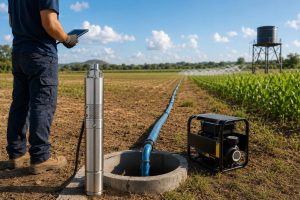
The same advanced technology can be applied to farms, homes, and livestock.
Solar water pumps are essential for sustainable water solutions worldwide.
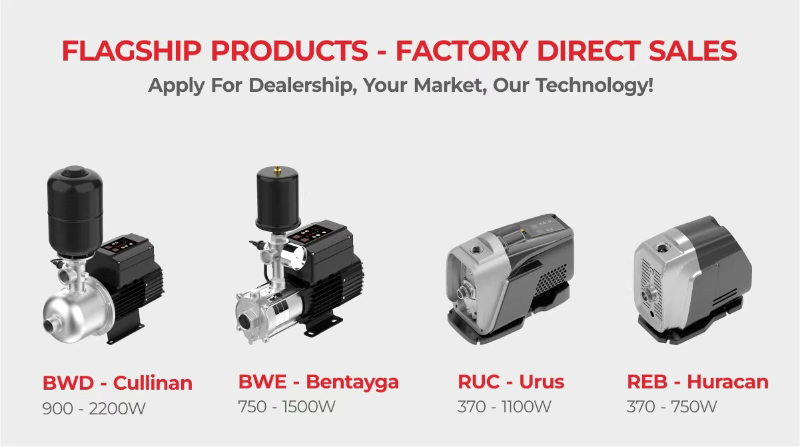
**Modern solar pumps use high-efficiency BLDC motors and come in specialized designs for different needs.
From high-head screw pumps for deep wells to high-flow centrifugal pumps for irrigation, a portfolio of options ensures a perfect match for any application.**
The core of any modern solar pump's effectiveness lies in its motor and pump-end design.
A high-efficiency Brushless DC (BLDC) permanent magnet motor is the engine driving these systems, achieving efficiencies over 90%.
This core technology dramatically reduces the number of solar panels needed, lowering upfront costs and improving performance.
Combined with specialized pump designs, it is possible to create a solution for nearly any water challenge, whether for a deep well, a large farm, or a home with corrosive water.
Specialized Pumps for Diverse Applications
Different water sources and uses demand different types of pumps.
Choosing the right one is critical for performance and longevity.
- Solar Screw Pump (Low Flow, High Head): This design uses a stainless steel screw to push water. It is perfect for deep wells where high pressure (head) is needed to lift water to the surface. It excels in providing domestic water or water for livestock in areas with deep water tables. Its high resistance to sand makes it durable in harsh conditions.
- Solar Plastic Impeller Pump (High Flow, Wear-Resistant): This centrifugal pump uses durable plastic impellers to move large volumes of water. It's an economical and lightweight choice for applications like farm irrigation or garden water supply where high flow is more important than high pressure.
- Solar Stainless Steel Impeller Pump (Premium, Corrosion-Resistant): For environments with acidic or alkaline water, this pump is the premium solution. Its SS304 stainless steel construction provides superior corrosion resistance and a long service life, making it ideal for unique geological regions or high-end properties.
The Power of the BLDC Motor
The BLDC permanent magnet motor is the universal driver behind all these pumps.
Its design is a significant leap forward from older motor technologies.
It is up to 47% more compact and 39% lighter than traditional motors of similar power.
This high torque and powerful design mean the motor works less to move the same amount of water, extending its life and reducing wear.
Because it is so efficient, fewer solar panels are required, which simplifies installation and lowers the total system cost.
The motor is the heart of the system, determining the overall efficiency and competitiveness of the entire water pumping solution.
By combining the right pump end with this powerful motor, you create a system perfectly tailored to the user's needs, whether they are a homeowner, a farmer, or a rancher in an off-grid location.
Conclusion
Pool pumps use a lot of electricity, but modern variable-speed and solar pumps offer powerful solutions.
By upgrading, you can drastically cut costs and enjoy a more efficient, sustainable pool.
FAQs
How much does it cost to run a pool pump 24 hours a day?
Running a standard 2000-watt pump 24/7 can cost over $300 per month.
However, this is unnecessary and a variable speed pump would cost significantly less.
Is it cheaper to run a pool pump at night?
This depends on your electricity plan.
If you have a "time-of-use" or "free nights" plan, running the pump during off-peak hours can save you money.
How many hours a day should I run my pool pump?
Run it for one full turnover, typically 6-8 hours a day.
Start with 6 hours and increase only if the water clarity declines.
Do pool pump covers save energy?
Yes, pool covers reduce evaporation and debris.
This lessens filter and pump run time, saving energy and preserving heat and chemicals for your pool.
What is the most energy-efficient pool pump?
A solar-powered DC pool pump is the most efficient, as it uses free energy from the sun.
A variable-speed pump is the most efficient grid-tied option.
Does a bigger pool pump use more electricity?
Yes, a pump with a higher horsepower (HP) rating will generally consume more electricity.
It's important to size the pump correctly for your pool.
How can I make my pool pump more efficient?
Keep filters clean, run the pump for the minimum required time, and upgrade to wider pipes to reduce resistance.
Upgrading to a variable-speed model is the most effective step.
At what speed should I run my variable speed pool pump?
Run it at the lowest speed that still achieves adequate filtration for most of the day.
Only use high speeds for tasks like backwashing or vacuuming.