Struggling with high energy costs and unreliable grids? Solar pumps offer a solution, but their long-term durability and return on investment are often a major concern for distributors and end-users.
A high-quality solar pump system is built for many years of reliable service. The solar panels can last 25 to 30 years, while the pump itself often functions for 10 to 20 years, depending on usage, water conditions, and proper maintenance.
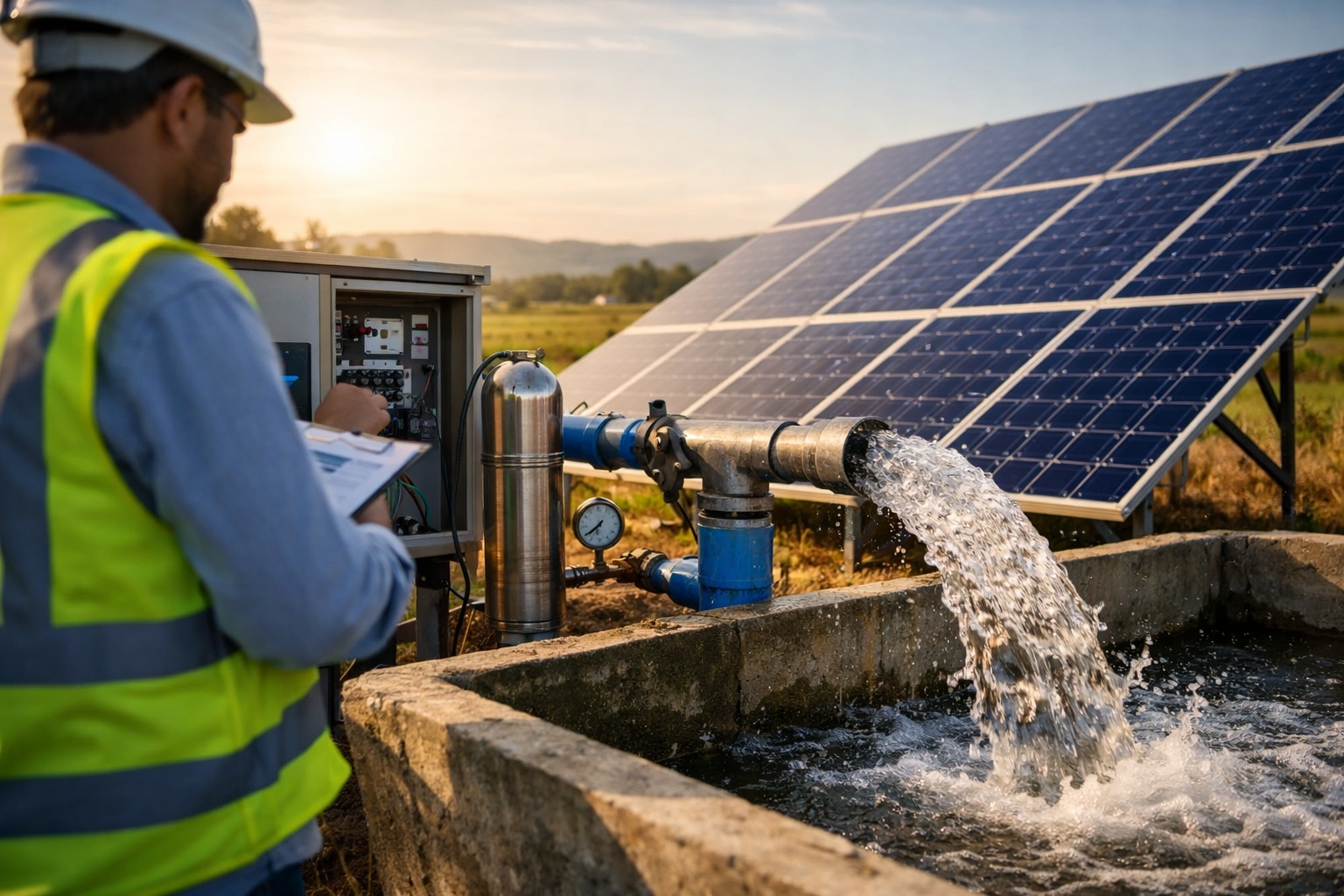
Understanding a solar pump's lifespan goes beyond a single number.
It involves a detailed look at each component, from the solar panels capturing the sun's energy to the motor driving the pump and the materials used in its construction.
The type of pump, the quality of the water, and the availability of advanced features like hybrid AC/DC power also play a crucial role in determining how long your investment will last and how well it will perform.
This guide breaks down these factors to give you a clear and comprehensive understanding.
How Quickly Do System Components Degrade?
Worried about components wearing out?
The longevity of a solar pump system depends on how its individual parts withstand constant use and environmental stressors over time.
Different parts degrade at different rates.
Solar panels experience a slow, predictable performance decline of less than 1% annually.
Mechanical pump parts, such as rotors or impellers, may wear more quickly in sandy conditions but are often designed for simple, cost-effective replacement.
The durability of a solar pump system is a story of its individual parts.
Each component has a unique lifespan and degradation pattern, which collectively determine the system's overall operational life and maintenance requirements.
Understanding these details is key for distributors to manage customer expectations and for users to maximize their investment.
High-quality manufacturing, robust material selection, and smart design can significantly extend the life of each part.
Let's examine the key components more closely.
Solar Panel Longevity and Degradation
Solar panels form the power plant of your system.
They are incredibly durable, with most manufacturers guaranteeing their performance for 25 to 30 years.
Their lifespan isn't defined by a complete failure but by a gradual decline in energy production, a process known as degradation.
A 2024 study by the National Renewable Energy Laboratory (NREL) found that solar panels have a median degradation rate of 0.75% per year.
This means that after 25 years, a panel could still operate at over 81% of its original capacity.
Premium panels can offer even lower degradation rates, sometimes as low as 0.25%, ensuring more consistent power output for decades.
This predictable performance makes solar panels a highly reliable long-term energy source for any pumping application.
The Heart of the System: The Pump and Motor
The pump and its motor are the system's workhorses.
Their lifespan typically ranges from 10 to 20 years.
This variation depends heavily on the use case, water quality, and the core technology of the motor.
Pumps operating 24/7 will naturally have a shorter lifespan than those used intermittently for 6-8 hours a day.
Clean water sources cause less wear than wells with high levels of sand or sediment.
The most critical component is the motor.
Advanced systems utilize Brushless DC (BLDC) permanent magnet motors.
These motors are far more efficient (often exceeding 90%) and durable than their traditional counterparts.
They lack brushes that wear out, leading to a maintenance-free design and a significantly longer operational life.
This high efficiency also reduces the load on the motor, further contributing to its longevity.
Wearable Parts: Gaskets and Pumping Mechanisms
Even the best systems have components designed to wear over time, acting as sacrificial parts to protect more expensive components.
In solar pumps, these are often parts that come into direct contact with the water and any abrasives it contains.
For solar screw pumps, the rubber stator and helical rotor are key wear parts.
In sandy or dirty wells, these components will experience abrasion, which can gradually reduce pumping volume.
However, they are engineered for easy field replacement.
Typically, removing just a few bolts allows for a quick swap, restoring the pump to full production capacity.
Many high-quality pump kits even include a spare helical rotor, acknowledging that this is a standard maintenance item in challenging environments.
This design philosophy ensures that the system's life is not limited by the natural wear of a single, inexpensive part.
What Are The Different Types of Solar Pumps?
Thinking about which pump is right for your market?
Choosing incorrectly can lead to poor performance, frequent maintenance, and dissatisfied customers, damaging your reputation and bottom line.
A diverse product portfolio with pumps tailored for specific applications is essential.
This includes screw pumps for high-head, low-flow needs; plastic impeller pumps for high-flow, cost-sensitive applications; and stainless steel impeller pumps for corrosive water and premium durability.
Understanding the distinct advantages of each solar pump type is crucial for distributors aiming to meet diverse market demands.
From deep well domestic water supply in Africa to large-scale irrigation in the Americas, there isn't a one-size-fits-all solution.
The choice between a screw pump, a plastic impeller pump, or a stainless steel impeller pump directly impacts efficiency, longevity, and cost-effectiveness for the end-user.
Each design is engineered to solve a specific water challenge, and offering a complete portfolio allows you to serve a broader customer base, from small households to large agricultural operations.
Let's analyze the strengths and applications of each.
Solar Screw Pumps: The Deep Well Specialist
Solar screw pumps, also known as progressing cavity pumps, are engineered for a specific challenge: low flow and very high head.
They use a stainless steel screw-shaped rotor that turns inside a rubber stator.
This action creates sealed cavities that move water upward through compression, allowing the pump to push water from extreme depths.
This design makes them ideal for domestic water supply, lifting water from deep boreholes for household use and livestock watering.
Their primary advantage is their exceptional ability to handle not just deep wells but also water with higher sand content compared to centrifugal pumps.
The screw mechanism is less prone to damage from abrasives.
While their flow rate is limited, making them unsuitable for large-scale farm irrigation, their reliability in deep and sandy wells makes them a go-to choice in regions like Africa and Latin America where well conditions can be challenging.
| Feature | Solar Screw Pump |
|---|---|
| Pumping Principle | Progressing Cavity |
| Best For | Low Flow, High Head |
| Primary Applications | Deep well domestic supply, livestock water |
| Key Advantage | High sand resistance, excellent for deep wells |
| Limitation | Limited water volume output |
Solar Plastic Impeller Pumps: The High-Flow Workhorse
For applications demanding high water volume, the solar plastic impeller pump is the economical and efficient choice.
This multi-stage centrifugal pump uses a series of durable, wear-resistant plastic impellers to move large quantities of water at a medium head.
This makes it perfect for farm irrigation, filling stock tanks on pastures, and residential garden water systems where flow rate is more critical than extreme depth.
Its key advantages are high water output, excellent resistance to fine sand, and a lightweight, cost-effective design.
The use of high-quality engineered plastics for the impellers provides a balance of durability and affordability.
These pumps are widely used across Africa and the Americas for agricultural purposes.
However, they may not be the best choice for highly corrosive water or in wells requiring a very high lift, where the mechanical stress could limit their long-term durability.
Solar Stainless Steel Impeller Pumps: The Premium Durability Option
When water quality is aggressive or maximum longevity is required, the solar stainless steel impeller pump is the premium solution.
This model features impellers and a pump body constructed from SS304 or higher-grade stainless steel.
It is specifically designed to operate in corrosive water environments, such as those with acidic or alkaline properties.
This pump delivers high flow rates at medium-to-high heads, making it suitable for demanding applications.
It is the top choice for regions with alkaline soil, like parts of Australia, or for high-end residential and commercial properties where water quality is a concern and reliability is paramount.
The primary advantage is its superior corrosion resistance, which translates into a longer service life and higher reliability.
The trade-offs are a higher initial cost and increased weight compared to plastic impeller models, positioning it as a specialized solution for niche and high-end markets.
What Is The Core Technology Driving Performance?
Is pump efficiency just a buzzword?
Without understanding the motor technology, you might invest in systems that require more solar panels, have higher operating costs, and fail prematurely.
The core technology is a high-efficiency Brushless DC (BLDC) permanent magnet motor.
With efficiency exceeding 90%, it uses powerful magnets to deliver more power in a smaller, lighter, and more durable package, directly boosting system performance and longevity.
The engine behind every modern, high-performance solar pump is the Brushless DC (BLDC) permanent magnet motor.
This isn't just an incremental improvement; it's a technological leap that defines the system's overall efficiency, reliability, and competitiveness.
Unlike older brushed motors that suffer from friction, wear, and energy loss, BLDC motors operate with unparalleled efficiency.
This core power unit is what allows a solar pump system to start earlier in the day, run longer on cloudy days, and deliver more water with fewer solar panels.
For distributors, understanding the value of a BLDC motor is key to explaining the true long-term benefits of a premium solar pump solution to your customers.
Let's dive into its advantages.
The Power of BLDC Permanent Magnet Motors
A BLDC motor's efficiency, often over 90%, is its defining feature.
This is achieved by replacing mechanical brushes with an electronic controller and using powerful permanent magnets, such as Neodymium Iron Boron (40SH grade), on the rotor.
This design eliminates energy losses from friction, heat, and sparking that are common in brushed motors.
The technical advantages are significant.
BLDC motors deliver higher torque across a wide range of speeds, allowing the pump to start easily even in low sunlight and maintain consistent pressure.
They are also more compact and lighter—sometimes up to 47% smaller and 39% lighter than traditional motors of the same power output.
This simplifies transportation, handling, and installation, which are important logistical considerations for importers and installers.
Market Value and Strategic Importance
The high efficiency of a BLDC motor translates directly into tangible market value.
First, it reduces the size and cost of the overall system.
Because the motor converts more solar energy into pumping power, fewer solar panels are needed to achieve the desired water output.
This lowers the initial investment for the end-user and makes the entire package more competitive.
Second, the motor's brushless design means there are no parts to wear out and replace, making it virtually maintenance-free and dramatically increasing its service life.
Strategically, the BLDC motor is the heart of a competitive product portfolio.
It elevates the performance of every pump type it's paired with—whether it's a screw pump, plastic impeller, or stainless steel impeller model.
By standardizing on a high-efficiency motor, a brand establishes a reputation for quality, energy savings, and durability, which are powerful selling points in the global market.
How Can Performance Be Optimized?
Are your customers getting the most from their solar pump systems?
Even with the best pump, performance can be limited by low sunlight or a need for nighttime operation, restricting its usefulness.
Modern systems use intelligent MPPT controllers and AC/DC hybrid technology.
MPPT maximizes solar energy use by 25-30%, while AC/DC hybrid functionality ensures 24/7 water access by automatically switching to grid or generator power when sunlight is insufficient.
A high-quality pump and an efficient motor are the foundation of a great solar pumping system, but its real-world performance is unlocked through intelligent control technology.
In the past, solar pumps were limited to peak sunlight hours.
Today, advanced controllers have transformed them into versatile, all-day water solutions.
These technologies not only maximize the energy harvested from the sun but also provide the flexibility to ensure water is available whenever it's needed, day or night, rain or shine.
For distributors, offering systems with these features provides a significant competitive advantage, addressing key customer concerns about reliability and convenience.
Maximizing Solar Energy with MPPT
The Maximum Power Point Tracking (MPPT) controller is the brain of the solar pump system.
Its job is to continuously adjust the electrical operating point of the solar panels to ensure they are producing the maximum possible power at any given moment.
Environmental conditions like cloud cover, sun angle, and temperature constantly change the panels' optimal operating voltage.
An MPPT controller tracks this "maximum power point" in real-time and adjusts the load accordingly.
Compared to simpler PWM controllers, an MPPT controller can boost the energy harvest from a solar array by up to 30%.
This means the pump can start earlier in the morning, run more consistently on overcast days, and shut down later in the evening, significantly increasing the total volume of water pumped per day without adding more panels.
Ensuring 24/7 Water with AC/DC Hybrid Controllers
The biggest limitation of a purely DC solar pump is its dependence on sunlight.
The AC/DC hybrid controller solves this problem elegantly.
These advanced controllers are designed with dual power inputs, allowing them to be connected to both the solar panels (DC) and a secondary power source like the grid or a generator (AC) simultaneously.
The controller's internal logic prioritizes solar power.
When sunlight is sufficient, the system runs entirely on free solar energy.
If clouds reduce the solar input, the hybrid function can blend AC power with the available DC power to maintain pump operation, maximizing the use of solar energy.
When there is no sunlight at all, such as at night, the controller automatically switches over to the AC source.
This ensures a worry-free, 24-hour water supply for critical applications, providing the reliability of a traditional pump with the cost savings of solar.
Conclusion
The lifespan of a solar pump is determined by its component quality, motor technology, and intelligent controls.
A well-chosen system with a BLDC motor and MPPT controller offers a durable, cost-effective water solution.
FAQs
What is the life of a solar water pump?
A solar water pump itself typically lasts 10-20 years. The accompanying solar panels have a much longer lifespan, often 25-30 years or more.
Do solar pumps work in winter?
Yes, solar pumps work in winter, but their performance is reduced due to shorter days and lower sun intensity. They will still operate on clear, sunny winter days.
How many solar panels do I need to run a water pump?
This depends on the pump's power rating (horsepower or watts) and your daily water needs. An engineer can calculate the exact number for optimal performance.
Can a solar pump run at night?
A standard DC solar pump cannot run at night. However, systems with an AC/DC hybrid controller or a battery bank can provide water 24/7.
Do solar pumps require maintenance?
Solar pumps with brushless motors require very little maintenance. Periodic checks of wiring and cleaning solar panels are recommended, and some pump types may need wear-part replacement.
Are solar pumps worth it?
For off-grid locations or areas with high electricity costs, solar pumps are a very worthwhile investment, offering long-term energy savings and water independence.
What size solar pump do I need?
Sizing depends on your required flow rate (gallons per minute) and total dynamic head (the vertical distance the water is lifted). A professional sizing calculation is essential.
Can a solar pump fill a tank?
Yes, filling a storage tank is a primary application for solar pumps. Using a float switch in the tank can automate the system, turning the pump off when full.