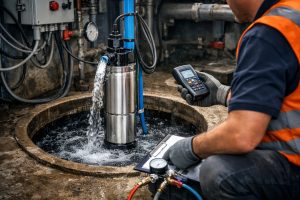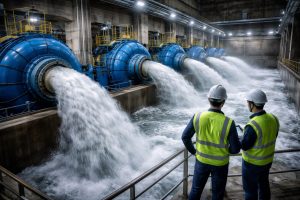
Running a pool pump on grid electricity is expensive.
Your power bills are skyrocketing, especially during sunny seasons when the pump runs most, making pool ownership a financial burden.
Yes, you can absolutely run a pool pump on solar power.
You can use a dedicated DC solar pump with its own panels or power your existing AC pump using a grid-tied home solar system.
Modern hybrid systems even offer the best of both worlds.
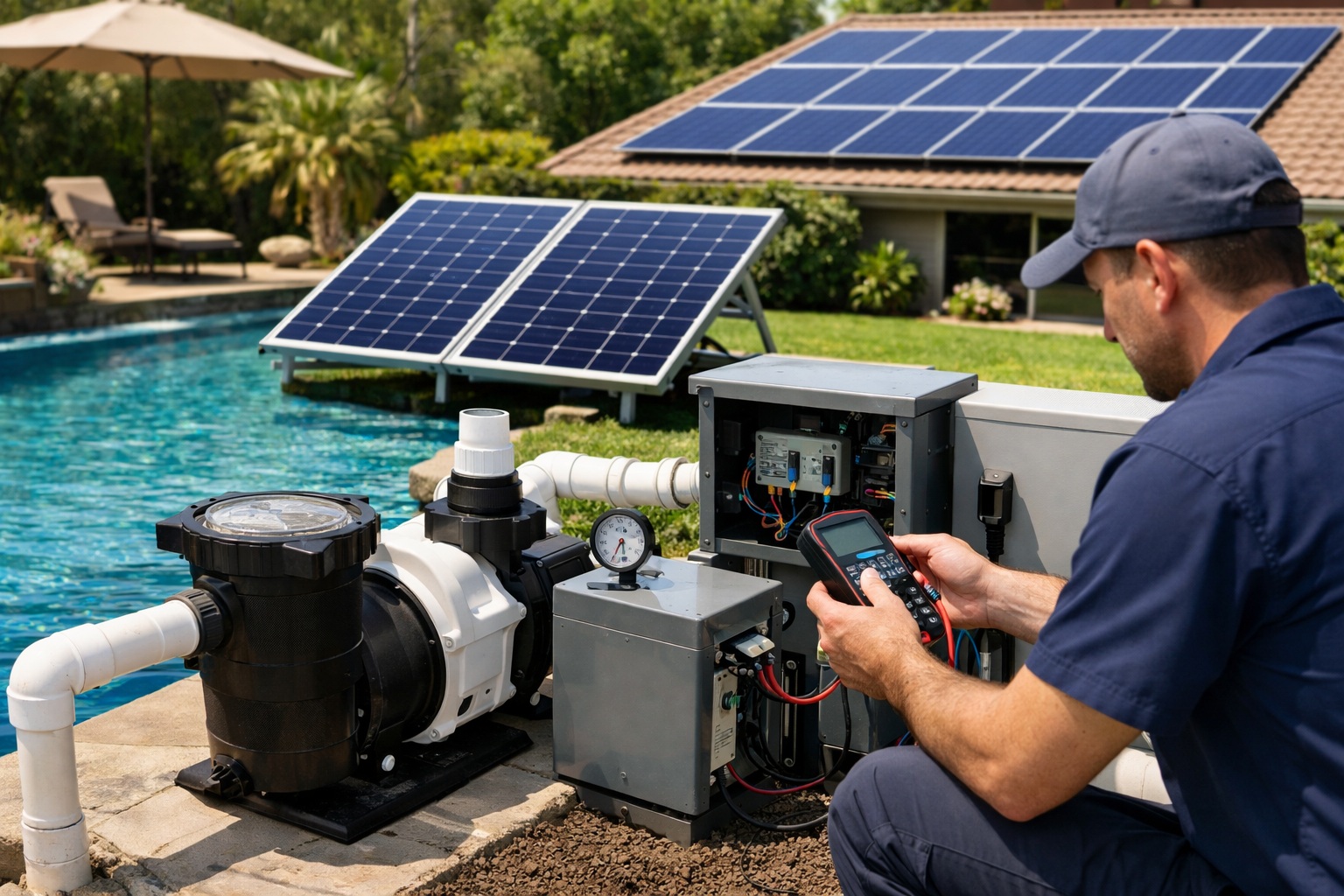
This article will explore the options for solar-powering a pool pump.
We will analyze the technology, benefits, and crucial considerations for each method.
This will help you make an informed decision and find the most efficient and cost-effective solution for your needs.
We will also examine the advanced motor and controller technologies that are revolutionizing the industry.
How Do Solar Pool Pumps Work?
Tired of high energy bills from your pool pump?
A solar-powered system seems like a great idea, but the technology can be confusing, leaving you unsure where to start.
A solar pool pump system uses photovoltaic (PV) panels to generate DC electricity.
This power runs a DC pump motor, often via a controller that optimizes performance.
This setup circulates pool water using only the sun's energy, completely independent of the utility grid.
To truly understand the mechanics, we need to break down the two primary configurations for running a pool pump on solar power.
Each approach has a distinct operational principle and set of components.
Your choice between them will depend on your existing equipment, budget, and performance expectations.
Let's explore these two methods in detail.
1. The Dedicated DC Solar Pump (Off-Grid)
This system is a self-contained, off-grid solution.
It is designed exclusively for your pool pump.
Solar panels are wired directly to a specialized DC pool pump, typically through a controller.
The controller is a critical component that manages the power from the panels.
It often includes Maximum Power Point Tracking (MPPT) technology.
This technology maximizes the energy harvest by adjusting the electrical load to find the "sweet spot" where the panels produce the most power.
The pump's speed and runtime are directly proportional to the amount of sunlight available.
On a bright, sunny day, the pump runs at full capacity, providing maximum water turnover.
On overcast days or during early morning and late afternoon, the pump operates at a slower speed.
This inherent variability aligns naturally with a pool's needs, as more circulation is required during the sunny, warm periods when people are most likely to swim.
2. The Grid-Tied Solar System
This method involves using a standard, grid-connected solar PV system that powers your entire home.
In this setup, you keep your existing AC pool pump.
The solar panels on your roof generate electricity that is first used by any active appliances in your home, including the pool pump.
If the panels produce more power than your home is consuming, the excess energy is exported to the utility grid, often earning you a feed-in tariff or credit.
Conversely, if your home's energy demand (including the pump) exceeds what the solar panels are producing, the system automatically draws the necessary power from the grid.
To maximize solar energy use, you simply set your pool pump's timer to run during peak sunlight hours, typically from mid-morning to late afternoon.
This approach leverages a larger, more versatile solar investment to power the pump along with everything else in your home.
| Feature | Dedicated DC Pump (Off-Grid) | Grid-Tied System with AC Pump |
|---|---|---|
| Pump Type | Specialized DC Motor Pump | Standard AC Motor Pump |
| Grid Connection | None. Completely independent. | Fully integrated with the home and grid. |
| Energy Use | Only powers the pool pump. | Powers the entire home, including the pump. |
| Excess Power | Wasted if the pump's needs are met. | Exported to the grid for credit/payment. |
| Cloudy Day Operation | Pump slows or stops. No backup. | Pulls supplemental power from the grid. |
| Installation | Panels can be near the pool. | Panels usually on the main roof. |
What are The Benefits of a Solar Pool Pump?
The cost of running your pool is a constant headache.
You know solar is the answer but wonder if the benefits truly justify the initial investment for this specific application.
The primary benefit is eliminating or drastically reducing the electricity cost for pool circulation, which can save over $500 annually.
It also provides energy independence, hedges against rising utility rates, and comes with significant financial incentives, making the investment highly attractive.
The financial case for switching to a solar-powered pool pump is compelling, but the advantages extend beyond mere cost savings.
These systems offer a blend of economic, environmental, and practical benefits that enhance the value of your pool and property.
By taking a closer look at these advantages, you can gain a complete picture of the return on investment.
Let's dive into the specific benefits you can expect.
Financial Incentives and Tax Breaks
One of the most powerful motivators for adopting solar technology is governmental support.
In the United States, for example, installing a solar pool pump system qualifies for a 30% Federal Tax Credit.
This is not a simple deduction but a direct credit that reduces your tax liability dollar-for-dollar.
On a system costing $5,000, this translates to a $1,500 reduction in your taxes, bringing the net cost down to just $3,500.
Additionally, many states and local municipalities offer their own rebates, sales tax exemptions, and property tax exemptions for solar energy equipment.
These incentives significantly shorten the payback period and increase the overall return on investment, which can exceed 10% annually.
Energy Independence and Rate Hedging
Utility electricity rates are not static.
They have historically risen and are projected to continue increasing.
By powering your pool pump with solar, you are effectively pre-purchasing your energy for the next 25+ years at a fixed cost.
This insulates you from future rate hikes, making your household budgeting more predictable and secure.
Furthermore, a dedicated DC solar pump provides true energy independence for your pool circulation.
It will continue to operate even during a grid power outage.
This is particularly valuable after storms, ensuring your pool water remains filtered and clear when other systems are down.
This resilience adds a layer of security and convenience that grid-dependent systems cannot match.
Environmental Impact
Beyond the financial and practical advantages, choosing a solar pool pump is a responsible environmental decision.
A conventional 1 HP pool pump running 8 hours a day can consume over 3,000 kWh of electricity per year.
When this energy comes from fossil-fuel-based power plants, it contributes significantly to greenhouse gas emissions.
By switching to solar, you eliminate this carbon footprint entirely.
You are using clean, renewable energy generated right at your home, reducing air pollution and promoting a more sustainable energy future.
Why Should You Avoid a Dedicated Solar Pool Pump?
You're sold on the savings of a solar pump.
But you worry that "free" energy comes with hidden performance issues that could turn your pristine pool into a green, murky mess.
Dedicated solar pumps are entirely weather-dependent, leading to inadequate filtration on cloudy days.
They lack the power for features like heaters, spas, or waterfalls and cannot operate at night, making a standalone system impractical for many modern pools.
While the idea of a completely off-grid pool pump is appealing, its practical application has serious limitations that are often overlooked in sales brochures.
As industry experts, we believe in providing a clear, unbiased view to help our partners and their customers avoid costly mistakes.
The performance of a pool pump is not just about moving water; it's about maintaining water quality, powering features, and ensuring reliability.
Let's examine the critical drawbacks of a dedicated solar pump.
Inconsistent Performance and Water Quality Risks
The biggest flaw of a solar-direct pump is its reliance on perfect weather.
Pool sanitation depends on consistent water turnover to circulate chemicals and filter out debris.
During extended periods of overcast weather, a dedicated solar pump will run too slowly, if at all.
This lack of circulation can cause chlorine levels to drop in certain areas and prevent debris from reaching the filter.
The result can be an algae bloom, turning the pool green and requiring expensive chemical treatments and labor to fix.
To mitigate this, you would need to keep your old AC pump plumbed in as a backup, adding complexity and cost that undermines the "simple" off-grid concept.
Incompatibility with Pool Features and Heaters
Modern pools are more than just basins of water.
They often include features that require specific, robust flow rates.
A dedicated solar pump rarely has the power and consistency needed for these applications.
- Spa Jets: The flow will be too weak for a satisfying hydrotherapy experience.
- Waterfalls & Fountains: These features will have variable, often weak, flow that diminishes their aesthetic appeal.
- Heaters: Both gas and electric heat pumps have minimum flow rate sensors. The variable and often low output of a solar pump can cause the heater to trip off frequently or fail to engage at all, rendering it useless.
- Solar Pool Heaters: These also require a consistent, strong flow to efficiently transfer heat. A solar pump's variable flow is a poor match for a solar heater's operational needs.
Limited Usability and Poor Return on Investment
A dedicated system has two other major flaws.
First, it cannot run at night.
This means any use of spa jets or waterfalls for evening ambiance or entertainment is impossible without a secondary pump.
Second, any solar energy generated after the pump's turnover needs are met is simply wasted.
It cannot be used by your home or sold to the grid.
This inefficiency, combined with the fact that the pump's warranty period is often shorter than its calculated payback period, makes it a risky investment.
If the specialized DC pump or controller fails before breaking even, you could face significant replacement costs, completely negating any projected savings.
A Better Alternative: The Hybrid AC/DC System
You see the flaws in dedicated solar pumps.
But powering a standard AC pump with a huge solar array seems inefficient, forcing you to choose between two imperfect options.
The modern solution is a hybrid AC/DC solar pump system.
It prioritizes free solar energy whenever available but automatically switches to or blends with AC grid power during cloudy weather or at night, guaranteeing performance without compromise.
The choice no longer has to be a binary one between an unreliable off-grid pump and an oversized grid-tied system.
Technology has evolved to offer a smarter, more integrated solution that captures the benefits of both while eliminating their respective drawbacks.
Hybrid AC/DC solar pump controllers represent a significant leap forward in intelligent water management.
This technology ensures your pool remains perfectly filtered 24/7 in the most energy-efficient way possible.
How Hybrid AC/DC Controllers Work
A hybrid controller is the brain of the modern solar pump system.
It is designed with simultaneous inputs for both DC power from solar panels and AC power from the grid or a generator.
The controller's intelligent logic is programmed with one primary goal: use solar power first.
- Full Sun: During peak sunshine, the controller directs 100% of the DC power from the solar panels to the pump motor. The grid is not used at all.
- Partial Clouds: If cloud cover reduces solar input, the controller doesn't just shut down. It calculates the available solar power and supplements it with the precise amount of AC power needed to maintain the pump's target speed. This blending function maximizes the use of every available watt of solar energy.
- No Sun (Night/Heavy Overcast): When photovoltaic input drops below a usable threshold, the system automatically and seamlessly switches over to 100% AC power.
This ensures you can run your pump for scheduled filtration cycles, operate spa jets at night, or run a cleaning cycle regardless of the weather, all while defaulting to free solar energy at every opportunity.
You get the full savings of solar without any of the performance compromises of an off-grid system.
The Strategic Advantage for Distributors
For a distributor, offering hybrid AC/DC systems is a powerful market differentiator.
You are no longer selling a compromised product.
Instead, you provide a comprehensive, worry-free solution that meets every customer need.
It solves the reliability problem of off-grid pumps and the inefficiency of using a home solar system for a single appliance.
This premium solution offers tangible benefits that justify a higher price point while delivering superior, long-term value to the end user.
It positions your business as a provider of cutting-edge, intelligent water solutions rather than just pumps.
| System Type | Cost Savings | Performance/Reliability | Feature Compatibility | Overall Value |
|---|---|---|---|---|
| Dedicated DC Pump | High | Low | Low | Poor |
| Grid-Tied AC Pump | Medium | High | High | Good |
| Hybrid AC/DC Pump | Very High | Very High | Very High | Excellent |
Choosing the Right Solar Pump for Your Market
You understand hybrid systems are superior.
But your customers have diverse needs, from small homes to large farms, and different water conditions.
How do you build a product portfolio that wins in every segment?
A winning portfolio requires a mix of pump types designed for specific applications.
Combine low-flow/high-head screw pumps for deep wells, high-flow plastic impeller pumps for general use, and corrosion-resistant stainless steel models for harsh water environments.
While pool pumps are a significant market, solar water pump technology has vast applications in residential water supply, agriculture, and livestock farming, especially in regions with unreliable or non-existent power grids.
A successful distributor builds a comprehensive portfolio that addresses this diversity.
Each pump type is engineered to solve a specific problem, and understanding their strengths and limitations is key to meeting market demand effectively.
Let's analyze the three core types of solar deep well pumps.
1. Solar Screw Pumps: The Deep Well Specialist
This pump type is a progressive cavity pump.
It uses a rotating stainless steel screw (rotor) inside a fixed rubber stator.
This design pushes water upwards through compression, much like a screw.
- Performance: It excels at producing a very high head (lifting water from extreme depths) but at a relatively low flow rate.
- Applications: It is the ideal choice for deep wells supplying domestic water, livestock drinking troughs, or small-scale, high-pressure irrigation systems. It's particularly valuable in arid regions across Africa and Latin America.
- Advantages: Its design is highly resistant to sand and sediment, allowing it to operate reliably in harsh water conditions that would quickly destroy other pumps.
- Limitations: The flow rate is limited, making it unsuitable for applications requiring large volumes of water, such as flood irrigation for large farms.
2. Solar Plastic Impeller Pumps: The High-Flow Workhorse
This is a multi-stage centrifugal pump.
It uses a series of stacked, durable plastic impellers that spin to push water outwards and upwards.
- Performance: This design delivers a high flow rate at a medium head, making it a versatile all-rounder.
- Applications: It is perfect for farm irrigation, maintaining pasture water levels, and large residential or garden water systems. It's a top-seller in agricultural markets in the Americas and Africa.
- Advantages: The primary benefits are high water output, excellent wear resistance against fine sand, and a lightweight, economical design that makes it accessible to a broader market.
- Limitations: The plastic components may not have a long service life in highly corrosive (acidic or alkaline) water or under the extreme pressures of very deep wells.
3. Solar Stainless Steel Impeller Pumps: The Premium Durability Option
This model is functionally similar to the plastic impeller pump but is constructed from premium materials.
It utilizes an SS304 stainless steel impeller, diffuser, and pump body.
- Performance: It also provides high flow rates and can achieve medium-to-high head, with the added benefit of extreme durability.
- Applications: It is specifically designed for corrosive water environments, such as areas with acidic water or the alkaline soil regions found in Australia and parts of the Americas. It's also the pump of choice for high-end homes and ranches where reliability and longevity are paramount.
- Advantages: Its superior corrosion resistance ensures a long, reliable service life even in the most challenging water conditions.
- Limitations: The use of stainless steel makes it heavier and more expensive, targeting a more niche, high-end segment of the market that prioritizes long-term durability over initial cost.
The Core of Performance: The BLDC Motor
Your customers are focused on the pump itself.
They overlook the motor, but you know it's the heart of the system, and a cheap motor will lead to failure and unhappy customers.
The true competitive advantage lies in the motor.
A high-efficiency Brushless DC (BLDC) permanent magnet motor is the core technology that delivers superior performance, reduces system costs, and ensures long-term reliability for any solar pump.
The pump head (screw, impeller) is what moves the water, but the motor is what drives the entire operation.
The efficiency of the motor directly dictates the overall efficiency of the water pump system.
Outdated or low-quality motors are inefficient, requiring more solar panels to produce the same amount of water, which drives up the total system cost for the end user.
Focusing on advanced motor technology is the key to providing a truly competitive and valuable product.
The Technical Superiority of BLDC Motors
All three of the pump types we discussed achieve their peak performance when powered by a BLDC permanent magnet brushless motor.
These are not standard motors.
They are engineered for maximum efficiency.
- High Efficiency: BLDC motor efficiency consistently exceeds 90%. Traditional AC motors or brushed DC motors often operate at 60-70% efficiency. This 20-30% efficiency gain is massive.
- Advanced Materials: The rotor, a key component, is crafted from high-grade 40SH neodymium iron boron (NdFeB) permanent magnets. This material creates a powerful magnetic field, enabling high torque and power in a compact design.
- Compact and Lightweight Design: A BLDC motor can be up to 47% smaller and 39% lighter than a conventional motor with the same power output. This simplifies logistics, handling, and installation.
- Durability: The "brushless" design means there are no brushes to wear out and replace. This results in a maintenance-free motor with a significantly longer service life.
The Market Value and Strategic Role
For a distributor, the motor's quality is a powerful selling point.
The market value it creates is multifaceted:
- Reduced System Cost: A motor with over 90% efficiency requires fewer solar panels to achieve the desired water flow. If a standard motor needs 1000W of panels, a BLDC motor might only need 700W. This directly reduces the upfront cost for the end user, making the entire system more affordable and competitive.
- Lower Operating Costs: Higher efficiency means more water pumped per watt of solar energy. Over the system's lifespan, this translates to significant operational savings.
- Enhanced Reliability: The maintenance-free, long-life design reduces the total cost of ownership and minimizes the risk of costly service calls and warranty claims for distributors.
Ultimately, the motor is the engine of the entire product's value proposition.
By sourcing pumps with high-efficiency BLDC motors, you are providing a system that is technologically superior, more cost-effective, and more reliable, establishing your brand as a leader in efficiency and quality.
Conclusion
Running a pool pump on solar is not only possible but also highly practical with modern hybrid AC/DC systems.
These solutions offer significant savings without compromising performance, reliability, or usability.
FAQs
How many solar panels do I need for a pool pump?
Typically, you'll need 4-6 standard solar panels (around 1.5 - 2.5 kW) for a dedicated DC pump. The exact number depends on pump size, climate, and desired run time.
Can a solar pool pump run at night?
A standard, dedicated solar pump cannot run at night. However, a hybrid AC/DC system can automatically switch to grid power to operate anytime, day or night.
How much does a solar pool pump save?
A solar pump can save $500-$800 per year on electricity bills, depending on your pump size and local utility rates. The savings can pay for the system in 3-7 years.
Do solar pool pumps work on cloudy days?
Dedicated solar pumps will run slower or stop on very cloudy days. Hybrid systems solve this by automatically drawing power from the grid to maintain performance.
Is a solar pool pump worth the investment?
Yes, especially hybrid AC/DC models. They offer substantial energy savings, protection from rising electricity costs, and run reliably, making them a very sound long-term investment.
Can a solar pump heat my pool?
A dedicated solar pump typically lacks the consistent flow rate required by gas or electric heat pumps. A hybrid system or grid-tied solar array reliably powers all pool equipment.
What is the lifespan of a solar pool pump?
The solar panels last 25+ years. A high-quality BLDC motor and pump can last 10-15 years, significantly longer than the warranty period, ensuring a strong return on investment.
Can I install a solar pool pump myself?
While possible for those with electrical and plumbing skills, professional installation is recommended. This ensures safety, proper wiring, and optimal performance of the system.