Struggling with a stagnant, lifeless pond feature?
An unreliable pump can quickly ruin your garden's centerpiece.
A solar-powered pump offers a silent, cost-effective, and green solution.
A good quality solar pond pump typically lasts between 2 to 4 years.
However, its actual lifespan depends heavily on the quality of its components, how well it is maintained, and the conditions it operates in.
With proper care, you can often extend its operational life well beyond this average estimate.
To truly understand how to get the most value from your investment, it's important to look at the whole system.
The life of the pump is tied to the life of the solar panel, the motor, and how you use it.
Let's explore the key factors that determine how long your solar pond pump will last and what you can do to maximize its longevity.
What Impacts the Life of a Solar Pond Pump?
Wondering why some pumps fail in a single season while others keep going for years?
The secret isn't just the brand.
It's a combination of usage, environment, and maintenance.
Key factors include the type of pump, the clarity of your water, how often it runs, and the quality of its internal components.
A well-maintained system in a clean pond will always outlast a neglected one in a debris-filled environment.
The lifespan of a solar pump system is not determined by a single part but by the durability of its various components and the environment they operate in.
A holistic view reveals several critical elements that collectively dictate how long you can expect your pump to perform efficiently.
The Quality of System Components
A solar pump system is more than just the pump itself.
It includes solar panels, a motor, and sometimes a controller.
- Solar Panels: High-quality solar panels are built for longevity. They are typically rated to maintain over 80% of their power output efficiency for 25 years. While the pump might be replaced several times, the panels are a long-term investment.
- Pump Motor: The motor is the heart of the pump. Modern systems often use Brushless DC (BLDC) permanent magnet motors. These motors can achieve efficiencies exceeding 90%, which means less stress and heat, contributing to a longer lifespan compared to older motor technologies. A well-built motor can last between 10 to 20 years with normal use.
- Pump Materials: The materials used for the pump housing and impeller are crucial.
- Plastic Impellers: These are lightweight, cost-effective, and offer good resistance to wear from fine sand. They are ideal for general farm and garden use.
- Stainless Steel Impellers: For ponds with corrosive water conditions (acidic or alkaline), stainless steel impellers offer superior durability and a much longer service life, justifying their higher initial cost.
Operational and Environmental Factors
How and where you use the pump plays a massive role in its durability.
- Usage Frequency: A pump running 24/7 will naturally experience more wear than one operating for 6-8 hours daily. Intermittent use, which is common for solar-powered systems that follow the sun's cycle, is considered normal and aligns with expected lifespan estimates.
- Water Quality: The single biggest environmental factor is the water itself. Debris like leaves, twigs, string algae, and gravel can clog the intake and jam the impeller. Sandy or silty water acts like sandpaper on the internal components, wearing down gaskets and impellers over time.
- Water Levels: Submersible pumps rely on the surrounding water to stay cool. If the pond's water level drops too low, the pump can overheat, which can cause significant damage to the motor and internal parts.
- Seasonal Use: In climates with harsh winters, allowing water to freeze inside the pump can cause the housing to crack and damage the seals. Proper winterization is essential for extending the pump's life.
Here is a table summarizing the impact of different factors:
| Factor | High Impact on Lifespan | Low Impact on Lifespan |
|---|---|---|
| Water Quality | High levels of sand, debris, string algae | Clear, filtered water |
| Usage Pattern | 24/7 continuous operation | 6-8 hours daily, intermittent use |
| Motor Type | Standard AC/DC brushed motor | High-efficiency BLDC brushless motor |
| Maintenance | Infrequent or no cleaning | Regular cleaning of intake and solar panel |
| Installation | Improper pump sizing (too small/large) | Correctly sized for pond volume and head |
| Winter Care | Left running in freezing conditions | Properly stored or protected in winter |
Common Reasons Solar Pond Pumps Fail
Is your pond pump suddenly noisy, weak, or completely dead?
Understanding the cause is the first step to prevention.
Most failures can be traced back to a few common culprits.
The most frequent reasons a pump fails are motor burnout from running without water, internal damage from debris, overheating due to clogs, and simple old age.
An incorrectly sized pump that is constantly overworked is also a primary candidate for premature failure.
Recognizing why pumps fail can help you avoid these issues and protect your investment.
While some wear and tear is inevitable, many catastrophic failures are preventable.
Let's break down the most common problems in detail.
Motor Burnout or Electrical Failure
This is often the final, non-repairable end for a pump.
Running a submersible pump dry is the fastest way to cause motor burnout.
Without water to dissipate heat, the motor quickly overheats, melting its internal windings and seals.
Power surges can also cause irreparable damage.
While solar power is generally stable, faulty wiring or an inadequate controller can lead to electrical issues.
A key advantage of modern systems is the integration of intelligent controllers that provide dry-run protection, automatically shutting the pump off when water levels are too low.
Impeller and Internal Damage
The impeller is the spinning component that moves water.
It is also the part most vulnerable to physical damage.
Debris is the primary enemy.
- Hard Debris: Small stones, gravel, or twigs can get sucked into the pump and jam the impeller, causing it to stop spinning. This can lead to the motor overheating and burning out if not addressed quickly.
- Soft Debris: String algae is particularly problematic. It can wrap around the impeller shaft, severely restricting its movement and reducing water flow to a trickle.
- Abrasive Particles: Sand and silt in the water continuously wear away at the impeller and the pump housing. Over time, this erosion reduces the pump's efficiency until it can no longer produce adequate pressure. This is why pumps with sand-resistant plastic or durable stainless steel impellers are recommended for less-than-perfect water conditions.
Overheating from Clogged Intakes
Even if the pond has enough water, a clogged intake screen can starve the pump of water flow.
The screen is designed to stop large debris, but it can become completely blocked by leaves, algae, and other sediment.
When this happens, the pump works harder to pull in water, generating excess heat.
This leads to the same overheating damage as running the pump in low water.
Regularly checking and cleaning the pump's intake screen is one of the most effective preventative maintenance tasks you can perform.
Inaccurate Pump Sizing
Choosing the right pump for your pond is not just about having enough flow for your waterfall.
An undersized pump will be forced to run at its maximum capacity constantly, leading to excessive wear on its motor and bearings.
It will struggle to achieve the desired flow rate and height (head), which shortens its lifespan significantly.
Conversely, a pump that is far too powerful for the plumbing and filter system can create excessive backpressure, which also puts a strain on the motor and seals.
Consulting a sizing chart or professional is crucial to ensure the pump is correctly matched to your pond's volume, filtration system, and feature height.
How to Extend the Life of Your Solar Pond Pump
Want to add years of reliable service to your pump?
A few simple maintenance habits can make all the difference.
It doesn’t require a lot of time or technical skill.
The key is consistency.
Regularly cleaning the pump intake and solar panel is the most critical step.
Also, be sure to maintain proper water levels to prevent overheating, and protect the unit from freezing damage during the winter months.
While no pump lasts forever, proactive care can help you achieve, and often exceed, its expected lifespan.
Investing a few minutes each month can save you the cost and hassle of a premature replacement.
Here are detailed steps you can take to keep your system in top condition.
Establish a Routine Cleaning Schedule
Consistency is your best tool for extending pump life.
The goal is to prevent the buildup of debris that leads to clogs and overheating.
- Weekly Check: Take a quick look at the pump's intake. If you see leaves or algae starting to accumulate, pull them off.
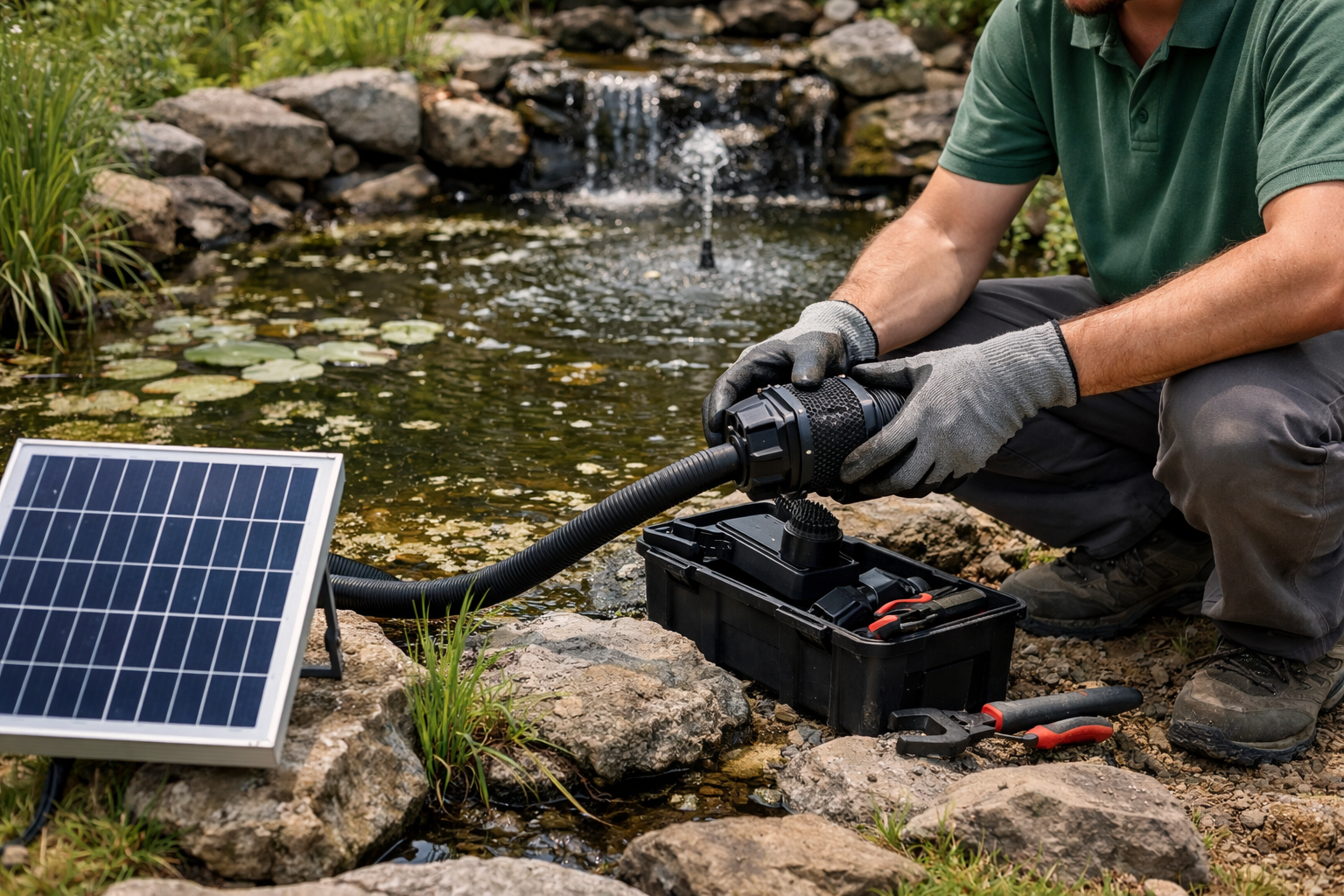
- Monthly Deep Clean: Once a month, unplug the pump and remove it from the pond. Take off the intake screen or filter housing and clean it thoroughly with a brush. Check the impeller to ensure it spins freely and is clear of any wrapped-around string algae.
- Solar Panel Cleaning: A dirty solar panel produces less power, which can make the pump motor work inefficiently. Wipe the panel down with a soft cloth and water every month to remove dust, pollen, and bird droppings.
Maintain Consistent Water Levels
This is especially critical during hot, dry summer months when evaporation can quickly lower your pond's water level.
A submersible pump must remain fully submerged to stay cool.
Make it a habit to top off the pond with water regularly.
If you plan to be away for an extended period, consider installing an automatic water fill valve to maintain the level for you.
Protect Your Pump in Winter
Freezing water expands, and that expansion can easily crack the plastic housing of a pump and damage its delicate internal seals.
If you live in a region where temperatures drop below freezing, you must winterize your pump.
- For Ponds That Shut Down: The best practice is to remove the pump from the pond entirely. Clean it thoroughly and store it in a bucket of water in a frost-free location, like a garage or basement. Storing it in water keeps the seals from drying out and cracking.
- For Ponds That Run Year-Round: If you use a de-icer and keep your pump running to maintain a hole in the ice for fish, ensure the pump is placed in the deepest part of the pond, where the water is less likely to freeze solid.
Ensure Correct Power Supply
Stable power ensures the motor runs smoothly and efficiently.
For solar systems, this means the solar panels must be properly sized for the pump.
If your pump seems to struggle on partly cloudy days, it might be a sign that the panel array is too small.
For ultimate reliability, consider a hybrid AC/DC system.
These systems use solar power when it's available but can automatically switch to household AC power (or a generator) at night or on overcast days.
This ensures the pump gets consistent power 24/7 without over-relying on the grid, maximizing both performance and longevity.
Conclusion
The lifespan of a solar pond pump depends on quality and care.
With regular maintenance and proper usage, your system can provide years of beautiful, eco-friendly water circulation for your garden.
FAQs
What is the average lifespan of a solar pump?
The pump motor itself typically lasts 2-4 years, while the solar panels can last for over 25 years. Proper maintenance is key to reaching this lifespan.
Can a solar pump run 24 hours a day?
Only if it is part of a hybrid system with battery storage or an AC/DC controller that can switch to grid power. Standard solar pumps only run when the sun is out.
Do solar water features work in the winter?
They can run on sunny winter days but with reduced performance. Most owners store them during freezing weather to prevent damage from ice expansion.
How do you maintain a solar water pump?
Regularly clean the solar panel, clear the pump's intake of debris, check for clogs, and ensure the pump remains fully submerged to prevent overheating.
Can you replace just the pump in a solar fountain?
Yes, in most solar water feature kits, the pump is a separate component that can be easily unplugged and replaced if it fails, without needing to replace the solar panel.
How long do solar panels last for a pond pump?
Solar panels are very durable. They are typically warrantied to maintain at least 80% of their power output for 25 years, far outlasting the pump itself.
Does a solar pump need a battery?
A battery is not required for daytime operation. However, adding a battery allows the pump to run at night or on cloudy days, providing more consistent circulation.
Why did my solar pump stop working?
The most common reasons are a dirty solar panel, a clogged pump intake/impeller, low water levels causing the pump to run dry, or a loose connection.