Struggling with unwanted water in your basement or on your property?
Ignoring accumulating water can lead to costly structural damage, ruined possessions, and serious health risks from mold and mildew.
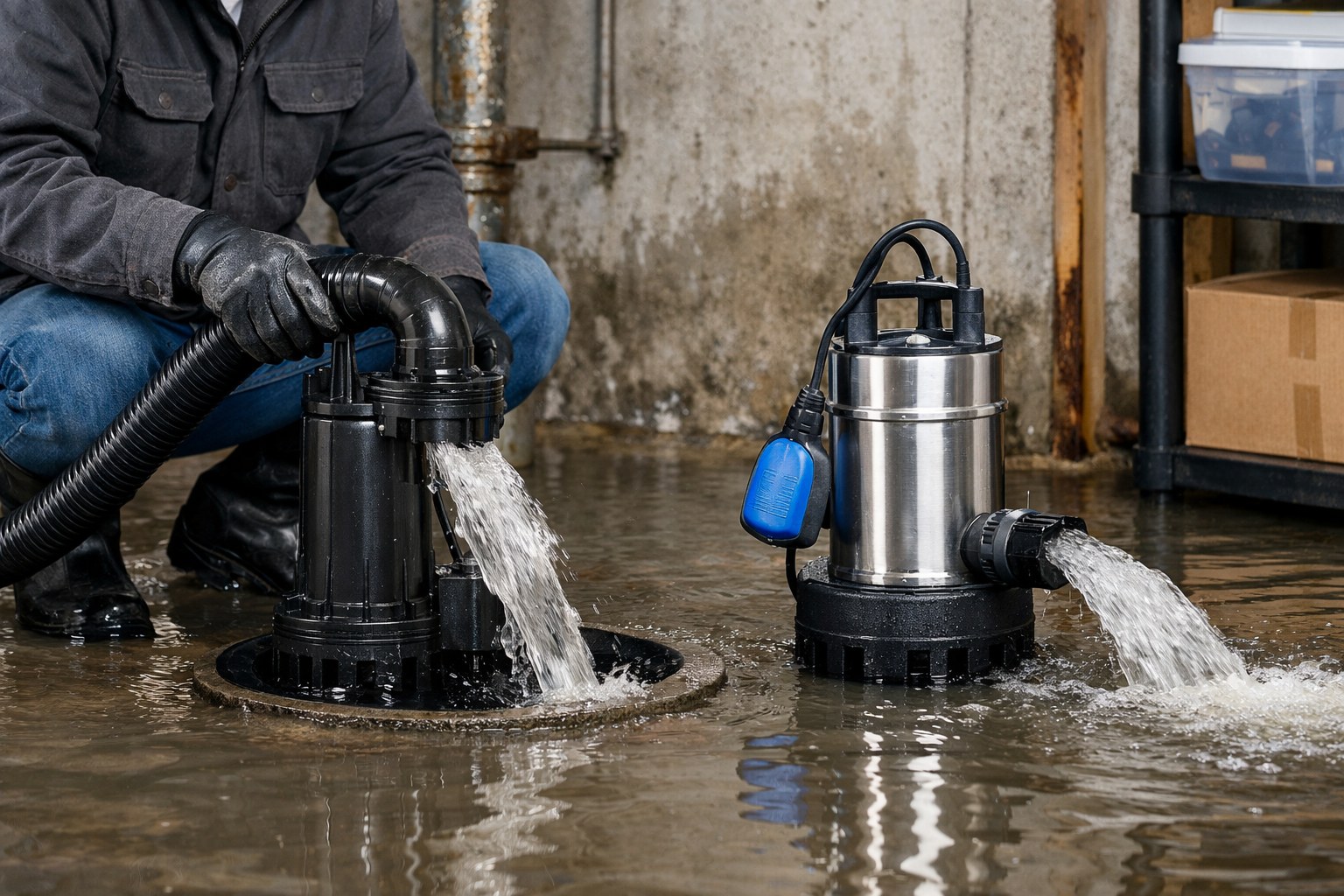
A pump that removes water is broadly called a dewatering pump. This category includes several specialized types, most commonly a sump pump for basements and crawl spaces, or a submersible pump designed for various underwater tasks, from wells to wastewater management.
Understanding which specific pump you need is critical for effective water removal.
Each type is engineered for a different job, from handling clear groundwater to moving liquids with solids.
Let's explore these pumps in detail to help you identify the right solution for any water-related challenge.
What is a Sump Pump and How Does It Work?
Is your basement damp, musty, or prone to flooding?
This persistent moisture can ruin your property and promote unhealthy mold growth, causing constant worry every time it rains heavily.
A sump pump is a specialized pump installed in a sump pit, typically in a basement or crawlspace. Its primary function is to automatically remove accumulated groundwater, preventing floods and protecting the building's foundation from water damage.
A sump pump is an essential safeguard for homes in areas with high water tables or frequent heavy rainfall.
Its operation is simple yet highly effective.
The pump sits inside a constructed basin, or "sump pit," at the lowest point of the basement or crawlspace.
As groundwater levels rise, water flows into this pit.
The Activation Process
A float switch is the pump’s trigger mechanism.
When the water in the pit rises to a predetermined level, it lifts the float switch.
This activates the pump's motor.
The motor powers an impeller, which is a fan-like device that spins rapidly.
This spinning action creates pressure that forces water out of the pit and into a discharge pipe.
The discharge pipe carries the water away from the building's foundation, releasing it a safe distance away.
Key Types of Sump Pumps
There are several types of sump pumps, each with distinct advantages.
Choosing the right one often depends on your specific needs and preferences.
| Pump Type | Placement | Key Advantages | Key Considerations |
|---|---|---|---|
| Submersible | Inside the sump pit, underwater | Quieter operation, hidden from view | Higher upfront cost, can be harder to access for service |
| Pedestal | Motor above the pit, base inside | Lower cost, easier maintenance access | Noisier than submersible models, takes up more space |
| Battery Backup | Works alongside a primary pump | Provides protection during power outages | Requires regular battery checks and eventual replacement |
A crucial component in this system is the check valve.
This one-way valve on the discharge pipe prevents water from flowing back into the sump pit after the pump turns off.
Proper sizing is also critical for effective performance.
Sump pump power is measured in horsepower (HP).
A 1/3 HP pump is suitable for most average-sized homes with moderate water issues.
Homes in serious flood-prone areas or larger properties might require a 1/2 HP, 3/4 HP, or even a 1 HP model to handle higher water volumes efficiently.
Regular maintenance ensures the pump remains reliable when you need it most.
This includes periodically testing the pump, cleaning debris from the pit, and ensuring the float switch moves freely.
What are Submersible Pumps and How Do They Differ?
Need to move water from a location that's completely underwater?
Traditional pumps can struggle with priming and efficiency when they aren't positioned correctly, leading to burnout and failure.
A submersible pump is a device with a hermetically sealed motor that is designed to be fully submerged in the liquid it needs to move. This design uses the surrounding fluid pressure to help push the liquid, making it highly efficient for deep wells, boreholes, and dredging.
The fundamental difference between a submersible pump and other types is its operational environment.
It works from within the fluid, pushing it to the surface rather than pulling it from above.
This method offers several significant advantages.
Because it's submerged, the pump is self-priming; it doesn't need to be manually filled with water to start working.
The surrounding liquid also naturally cools the motor, which prevents overheating during continuous operation and can significantly extend the pump's lifespan.
This design also makes submersible pumps less prone to cavitation, a damaging phenomenon where air bubbles form and collapse in the pump, which can occur in surface-mounted pumps.
Diverse Submersible Pump Applications
Submersible pumps are incredibly versatile and are used across numerous industries.
Their applications range from simple to highly complex.
- Wastewater and Sewage: They are vital in municipal lift stations and treatment plants. Grinder pumps, a type of submersible pump, can shred solids to prevent clogs.
- Well Pumping: Deep well pumps are used to lift potable water from underground aquifers for residential, agricultural, and municipal supply. This is a primary function in many rural areas.
- Dredging: Industrial submersible pumps with abrasive-resistant components are used to clear sediment, sand, and slurry from harbors, rivers, and tailings ponds.
- Sump Pumping: Many modern sump pumps are submersible models, valued for their quiet and concealed operation in residential basements.
- Oil and Gas: In a specialized form known as Electric Submersible Pumping (ESP), these devices lift large volumes of oil from deep wells under extreme pressure and temperature conditions.
Types and Construction
The type of submersible pump you need depends entirely on the application.
A pump for a clean water well will have very different specifications from one designed for abrasive slurry.
- Clean Water Pumps: Often used for wells or pools, these are designed to move water without significant solids or contaminants.
- Grinder Pumps: These are used for raw sewage and have cutting blades to break down solid waste into a fine slurry that can be easily pumped.
- Dewatering Pumps: These are used on construction sites and in mines to remove standing water. They are built to be durable and portable.
Materials are also critical.
While many standard pumps use cast iron, applications involving corrosive fluids may require pumps made from stainless steel or with special epoxy coatings to prevent premature failure.
Reliability is a hallmark of submersible pumps, but accessibility can be a challenge.
Since they are underwater, inspection and maintenance can be more difficult, especially in deep well applications.
Therefore, investing in a high-quality, durable model is essential for long-term, trouble-free operation.
What do you call a Pump That Removes Wastewater?
Your home's plumbing relies on gravity to drain wastewater.
But what if your bathroom is in the basement, below the main sewer line?
A pump designed specifically to remove wastewater and solid waste is called a sewage pump. Sometimes referred to as a sewage ejector pump, it is essential for plumbing fixtures located below the main sewer or septic line.
A sewage pump serves a different, more demanding purpose than a sump pump.
While a sump pump handles groundwater, a sewage pump is engineered to transport both liquid and solid waste.
Typically, it can pass solids up to two inches in diameter.
This capability is essential for fixtures like toilets, showers, and washing machines located in basements or other areas where gravity drainage isn't possible.
How Sewage Pumps Function
A sewage pump is installed in a sealed basin, often called a sewage ejector pit.
All the wastewater from the below-grade fixtures drains into this basin.
Similar to a sump pump, a sewage pump uses a float switch.
When the waste level in the basin rises, the float switch activates the pump.
The powerful pump then grinds any solids and propels the resulting slurry up a discharge pipe and into the home's main sewer or septic line.
A check valve is installed on the discharge line to prevent any waste from flowing back into the basin.
The basin is sealed and vented to prevent sewer gas from escaping into the home, which is a critical safety and sanitation feature.
Sewage Pump vs. Sump Pump
It is vital to understand that a sewage pump and a sump pump are not interchangeable.
Using a sump pump for sewage would quickly lead to clogs and motor failure, as it is not designed to handle solids.
Conversely, while a sewage pump could technically pump clear water, it is an inefficient and overly expensive choice for groundwater removal.
Here is a simple comparison:
| Feature | Sewage Pump | Sump Pump |
|---|---|---|
| Purpose | Moves wastewater and solid waste | Moves groundwater and clear water |
| Solids Handling | Can pass solids up to 2 inches | Cannot handle solids |
| Installation | In a sealed, vented basin | In an open or loosely covered pit |
| Common Location | Basements with below-grade plumbing | Basements, crawlspaces for flood prevention |
When You Might Need Both
Some homes require both systems to be fully protected.
If you have a basement with a bathroom and also live in an area with a high water table, you would need both.
A sewage pump would handle the bathroom waste.
A separate sump pump system would manage any groundwater that seeps into the basement.
Installing both provides comprehensive protection against both internal sewage backups and external water intrusion, ensuring your home remains dry, safe, and sanitary.
What about Pumps Powered by the Sun?
Need to pump water in a remote location without access to the power grid?
Grid electricity can be unreliable or completely unavailable for farms, ranches, and off-grid homes, making water access a constant challenge.
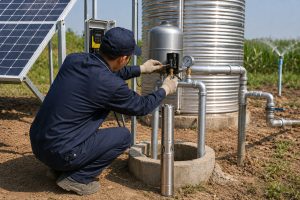
A pump powered by solar energy is called a solar water pump. These pumps use photovoltaic (PV) panels to convert sunlight into electricity, which powers a motor to move water, offering a clean, reliable, and cost-effective solution for off-grid water needs.
With the growing demand for sustainable water solutions, solar water pumps have become essential equipment worldwide.
They operate independently of the grid, are environmentally friendly, and significantly reduce long-term operational costs.
At their core, most modern solar pump systems are driven by highly efficient Brushless DC (BLDC) permanent magnet motors.
These motors achieve efficiencies exceeding 90%, which is a substantial improvement over traditional AC motors.
This high efficiency means fewer solar panels are needed to power the pump, reducing the initial system cost and physical footprint.
It also ensures the pump can operate effectively even in lower light conditions.
Popular Types of Solar Deep Well Pumps
The specific pump used in a solar system is chosen based on the required flow rate and head (the vertical distance the water needs to be lifted).
Three types are particularly common for deep well applications.
-
Solar Screw Pump: This pump uses a stainless steel screw rotating inside a rubber stator. It excels at lifting water from very deep wells, providing a lower flow rate but very high head. It's ideal for a single home's water supply or livestock watering in arid regions. Its design is also highly resistant to sand and sediment.
-
Solar Plastic Impeller Pump: This is a multi-stage centrifugal pump that uses durable plastic impellers. It is designed to deliver a high flow rate at a medium head, making it perfect for farm irrigation or supplying water to larger pastures. It is lightweight, economical, and offers good resistance to fine sand.
-
Solar Stainless Steel Impeller Pump: This premium model uses impellers and a pump body made of corrosion-resistant SS304 stainless steel. It is built for longevity in harsh water conditions, such as acidic or alkaline water. It offers high flow rates and is the most durable option, suited for high-end applications or areas with poor water quality.
The Brains of the System: MPPT Controller and Hybrid Options
The entire system is managed by an intelligent Maximum Power Point Tracking (MPPT) controller.
This device constantly optimizes the power output from the solar panels and delivers it to the pump motor, maximizing the amount of water pumped throughout the day.
To ensure water is available 24/7, advanced systems now include hybrid AC/DC controllers.
These controllers can automatically switch between power sources.
On a sunny day, the pump runs on solar power.
If it's cloudy or nighttime and water is needed, the controller can automatically switch to an AC power source, like the grid or a generator.
This hybrid functionality ensures a completely reliable, worry-free water supply, combining the best of renewable energy and conventional power.
Conclusion
The right pump successfully removes unwanted water.
Whether you need a sump pump for a dry basement, a sewage pump for wastewater, or a solar pump for an off-grid well, a specific solution exists.
FAQs
What is the most common pump for removing water from a basement?
The most common device is a sump pump. It sits in a pit at the lowest point of the basement and automatically pumps out accumulating groundwater to prevent flooding.
Can a sump pump be used for sewage?
No, a sump pump cannot handle solids and will clog and fail if connected to a sewage line. You must use a dedicated sewage ejector pump for wastewater.
What is the difference between a dewatering pump and a sump pump?
A sump pump is a type of dewatering pump specifically for residential basements. "Dewatering pump" is a broader term for pumps used to remove water from construction sites or mines.
How long do submersible pumps last?
A quality, well-maintained submersible well pump can last from 10 to 15 years. Lifespan depends on water quality, usage frequency, and proper installation.
Do solar pumps work on cloudy days?
Yes, but at a reduced flow rate. The amount of water pumped is directly related to the intensity of sunlight. Hybrid systems can switch to AC power on cloudy days.
What is the main advantage of a submersible pump?
The main advantages are that they are self-priming and less prone to cavitation because they are submerged. They are also quieter and often more efficient.
How much horsepower do I need for a sump pump?
Most homes need a 1/3 HP sump pump. If your area experiences heavy flooding or you have a very large basement, a 1/2 HP or 3/4 HP model may be necessary.
What is a transfer pump used for?
A transfer pump is a general-purpose, non-submersible pump used to move water from one location to another, such as draining a water heater or emptying a hot tub.