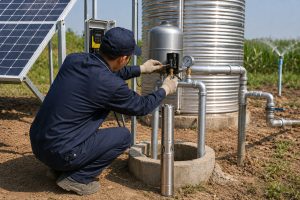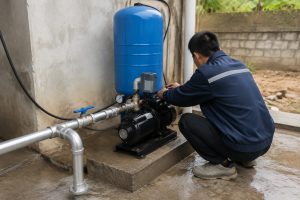
Struggling with water access in remote areas without reliable electricity?
Running generators is expensive and noisy.
Solar power provides a clean, quiet, and cost-effective solution for your water needs.
Yes, solar panels can effectively power a borehole pump.
A properly configured solar array captures sunlight and converts it into electricity.
This power runs a specialized pump to draw water from deep underground, offering a sustainable water solution completely off-grid.
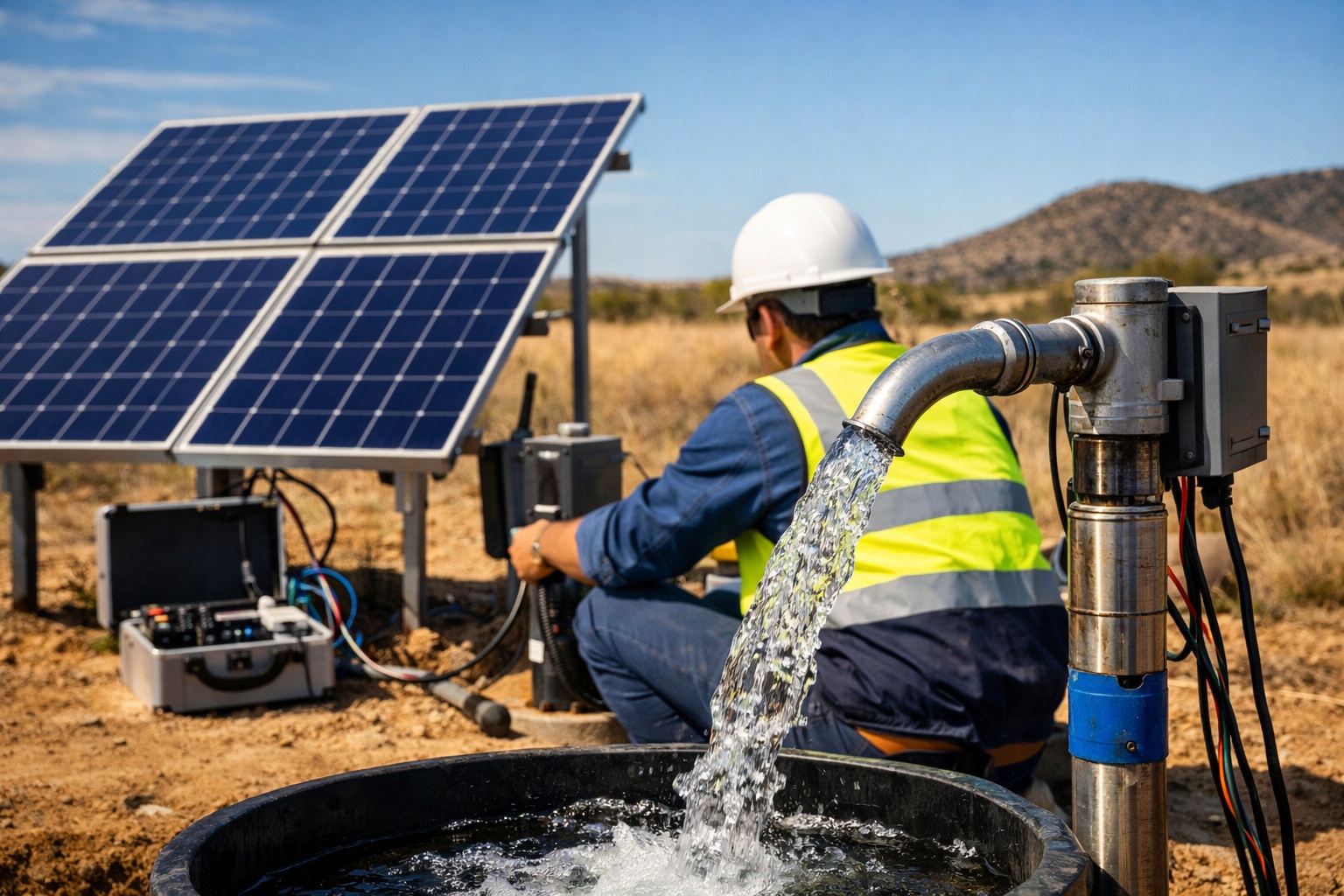
This setup offers a revolutionary way to secure water for homes, farms, and livestock, especially in areas where traditional power sources are unavailable or unreliable.
The technology is not just feasible; it's increasingly becoming the standard for efficient water management worldwide.
As you continue reading, you will discover the different types of solar pumps available, how to determine the right size for your system, and the key components that make it all work seamlessly.
Let's explore how you can harness the sun's power to solve your water challenges.
How many solar panels are needed for a water pump?
Wondering if a solar pump system is too complex or large for your property?
You might worry about the space and cost required.
The number of panels is surprisingly scalable to your specific needs.
The number of solar panels needed depends directly on the pump's horsepower (HP) and daily water requirements.
A small 0.5 HP pump might only need two 100W panels, while a large 5 HP system could require twenty or more.
The principle behind sizing a solar array for a water pump is simple: you must generate enough power to meet the motor's demands during peak sunlight hours.
This calculation involves more than just the pump's HP rating.
It's a balance between power, efficiency, and environmental factors.
A system designed for a sunny desert will differ significantly from one in a region with frequent cloud cover.
Understanding these variables is key to building a reliable and cost-effective solar pumping system.
Sizing Based on Pump Horsepower (HP)
The horsepower of your pump motor is the primary factor determining the size of your solar array.
It represents the raw power needed to lift water.
A higher HP pump can move more water or lift it from greater depths, but it demands significantly more electrical energy.
For example, a small pump used for livestock watering in a shallow well might be rated at 0.5 HP and function perfectly with a modest 200-watt array.
In contrast, a
5 HP pump for large-scale agricultural irrigation in a deep well might require a 5,000-watt (5kW) array or more.
DC pumps are generally more efficient for smaller applications as they use power directly from the panels without conversion losses.
| Pump HP | Typical Pump Type | Typical Solar Array Size | Common Application |
|---|---|---|---|
| 0.5 HP | DC Submersible | 200W - 400W | Livestock Troughs, Shallow Well |
| 1.0 HP | DC Submersible | 600W - 1,200W | Home Water Supply, Small Garden |
| 2.0 HP | AC/DC Submersible | 1,500W - 2,500W | Deeper Wells, Small-scale Farm |
| 3.0 HP | AC Submersible | 3,000W - 4,500W | Agricultural Irrigation |
| 5.0 HP | AC Submersible | 5,000W - 7,500W | High Volume Irrigation |
Adjusting for Climate and Sunlight
Your geographic location and local climate play a critical role in system sizing.
The amount of available "peak sun hours" varies dramatically around the world.
A system in Arizona may receive 6-7 hours of strong sunlight, while a system in the Pacific Northwest might only get 3-4 hours, especially in winter.
To compensate for less sun, you must increase the size of your solar array.
This larger "footprint" allows the system to capture enough scattered or weak sunlight to charge batteries or run the pump effectively.
For critical applications like providing drinking water 24/7, it is common to increase the array size by 25-50% more than the baseline calculation.
This ensures the pump can operate and batteries can charge even on overcast days, providing a reliable water supply year-round.
Adding a few extra panels in parallel can also extend the pumping day, allowing the system to start earlier in the morning and run later in the evening.
Choosing the Right Solar Pump for Your Needs
Unsure which solar pump is right for your well?
The options can seem confusing, with different mechanisms and materials.
Choosing the wrong one means poor performance and a shorter lifespan.
The ideal solar pump depends on your water needs: flow rate, water depth (head), and water quality.
Three main types dominate the market: screw pumps for high head, plastic impeller pumps for high flow, and stainless steel pumps for durability.
Each solar pump design has been engineered to excel in specific conditions.
There is no single "best" pump; instead, there is a "best-fit" pump for every unique application.
A homeowner needing drinking water from a very deep well has vastly different requirements than a rancher needing to irrigate a large, flat pasture.
The composition of the water itself, whether it's sandy or corrosive, is another crucial factor.
By understanding the strengths and weaknesses of each pump type, you can make an informed decision that guarantees reliable water delivery for years to come.
This choice directly impacts the system's efficiency, longevity, and overall return on investment.
Solar Screw Pumps: For Low Flow and High Head
Solar screw pumps, also known as progressive cavity pumps, are specialists in deep well applications.
They operate using a simple, effective mechanism: a stainless steel helical rotor spins inside a rubber stator.
This action creates sealed cavities of water that are progressively pushed upwards, generating powerful lift (high head).
This design makes them exceptionally good at drawing water from depths exceeding 100 meters (over 300 feet).
Their ability to handle some sand and sediment without significant wear makes them robust for wells with less-than-perfect water quality.
However, their flow rate is inherently lower compared to other types.
They are the perfect solution for domestic water supply, filling livestock tanks, or small-scale drip irrigation where consistent pressure from a deep source is more important than high volume.
Solar Plastic Impeller Pumps: For High Flow and Wear Resistance
When the goal is to move a large volume of water from shallow or medium-depth sources, the multi-stage centrifugal pump with plastic impellers is the top choice.
Inside the pump, a series of impellers spin at high speed, using centrifugal force to push water upwards through each stage.
Each stage adds more pressure, increasing the total head.
Modern engineering-grade plastics are highly durable and resistant to abrasion from fine sand, making them lightweight and more economical than their stainless steel counterparts.
These pumps are ideal for farm irrigation, maintaining pond levels, and general water transfer applications where maximizing gallons per minute (GPM) is the priority.
While their head capabilities are moderate, their high-flow output offers incredible value for agricultural use in regions like Africa and the Americas.
Solar Stainless Steel Impeller Pumps: For Premium Quality and Corrosion Resistance
For the most demanding environments, the stainless steel impeller pump is the ultimate solution.
Constructed with high-grade SS304 or even SS316 stainless steel, these pumps are built to withstand corrosive water conditions, such as high acidity (low pH) or alkalinity (high pH).
They offer the perfect balance of high flow rates and medium-to-high head capabilities.
The durability of stainless steel ensures a very long service life and exceptional reliability, even in harsh well environments.
While the initial investment is higher, their longevity makes them cost-effective over time.
They are the preferred choice for providing potable water in areas with aggressive water, high-end homes, and critical agricultural operations where system failure is not an option.
Understanding the Core of the System: Motors and Controllers
Think solar pumps are just a pump and a panel?
You might overlook the most critical components that determine performance.
Without the right motor and controller, your system will be inefficient and unreliable.
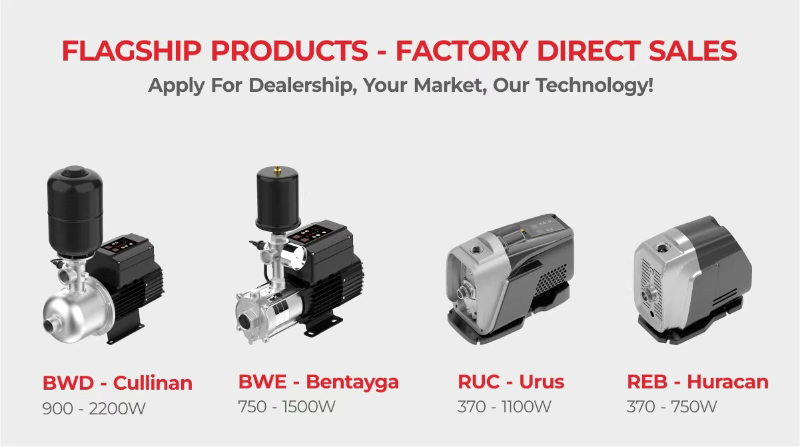
The heart of any solar pump is its high-efficiency motor, and the brain is the MPPT controller.
A Brushless DC (BLDC) motor provides the power, while the controller optimizes the solar energy input to ensure the pump runs effectively all day.
The synergy between the motor and the controller is what truly unlocks the potential of a solar water system.
While the pump itself does the physical work of moving water, the motor and controller team up to ensure that work is done as efficiently as possible.
A high-efficiency motor requires less energy, meaning you can achieve your water goals with fewer solar panels, reducing the overall system cost.
Simultaneously, an intelligent controller constantly adapts to changing sunlight conditions, maximizing water output from sunrise to sunset.
Investing in quality core components is the smartest way to guarantee a powerful, resilient, and long-lasting solar pumping solution.
The BLDC Permanent Magnet Motor: Efficient and Powerful
The core driving force in modern solar pumps is the Brushless DC (BLDC) permanent magnet motor.
This technology represents a major leap in efficiency, with modern designs converting over 90% of electrical energy into mechanical power.
Traditional AC motors or brushed DC motors suffer from higher energy losses.
BLDC motors achieve this remarkable efficiency by using powerful permanent magnets (often neodymium iron boron) on the rotor and a sophisticated electronic controller to manage the electrical phases.
This design eliminates the friction and energy waste associated with the brushes found in older motors.
The result is a motor that is not only more efficient but also more compact, lighter, and virtually maintenance-free due to the absence of wearable parts.
This high efficiency means the pump can start earlier, run longer, and pump more water using the same number of solar panels.
The MPPT Controller: Maximizing Every Ray of Sunshine
The solar pump controller is the intelligent hub of the system.
Its most critical function is Maximum Power Point Tracking (MPPT).
Solar panels have a complex relationship between voltage and current that changes with sunlight intensity and temperature.
MPPT technology constantly analyzes the output of the solar panels and adjusts the electrical load to pinpoint the "maximum power point" where the panels are producing the most watts.
An advanced MPPT controller can boost water output by up to 30% compared to a system without one.
The controller also provides vital protective functions, such as:
- Soft Start: Gradually ramps up motor speed to prevent electrical and mechanical stress.
- Dry-Run Protection: Uses sensors or software algorithms to shut off the pump if the well runs out of water, preventing motor damage.
- Over-Voltage and Over-Current Protection: Safeguards the motor from electrical spikes.
Some advanced controllers also offer hybrid functionality, allowing you to connect an AC power source (like the grid or a generator) as a backup for 24/7 operation.
How do you convert an existing electric water pump to solar?
Do you have a reliable AC well pump but want to cut your electric bill?
You might think you need to pull the pump and replace everything.
That process is expensive, difficult, and often unnecessary.
You can convert most existing AC well pumps to run on solar power without pulling the pump from the well.
This is done above ground by installing a specialized solar inverter and a solar array matched to your pump's specifications.
Converting an existing pump is an elegant solution that leverages your current investment while transitioning you to renewable energy.
The process is simpler and more cost-effective than a full system replacement.
All the new components—solar panels, charge controller, and inverter—are installed at the surface.
The conversion essentially intercepts the power line to your pump, allowing you to switch between solar power during the day and grid power (or a generator) at night or on cloudy days if needed.
This approach provides energy independence and operational savings with minimal disruption to your existing water infrastructure.
It's the perfect bridge between your current setup and a sustainable future.
Assessing Your Current AC Pump
Before starting a conversion, the first step is to gather key information about your existing AC pump.
This data is crucial for sizing the new solar components correctly.
An undersized inverter or solar array will fail to start the pump, while an oversized one is a waste of money.
You need to identify the following:
- Pump Horsepower (HP) and Voltage: Is it a 1 HP, 2 HP, etc.? Is it 110V or 220V? This is the most critical factor for determining power needs.
- Pump Phase: Is it single-phase or three-phase? Three-phase motors are generally more efficient and easier to run with a solar Variable Frequency Drive (VFD), which is a type of inverter.
- Pump Wiring: How many wires run from your control box to the pump? A 3-wire pump (plus ground) has its starting components in a control box at the surface, which is ideal for conversion. A 2-wire pump (plus ground) has these components inside the motor, which can sometimes require more power to start.
- Pump Age: An older pump motor (10+ years) is less efficient than a new one. It will draw more power, especially on startup. You may need to add 15-25% more solar panel capacity to compensate for this age-related inefficiency.
Choosing the Right Conversion Kit
Once you have assessed your pump, you can select the appropriate conversion method.
There are two primary approaches for powering an AC pump with DC solar energy.
1. Solar VFD Inverter:
This is the most direct and efficient method for most standard 220V pumps (especially three-phase).
A solar VFD (Variable Frequency Drive) inverter is specifically designed for this task.
It takes DC power from the solar panels and converts it into three-phase AC power with a variable frequency.
This allows the inverter to soft-start the pump motor, eliminating the huge inrush current that AC motors typically require.
The inverter dynamically adjusts the speed of the pump based on the available sunlight, running it faster in full sun and slower in hazy conditions.
2. Battery-Based Inverter System:
For applications requiring 24/7 water pressure or for running standard 110V household pumps, a battery-based system is ideal.
In this setup, solar panels charge a battery bank through a charge controller.
An inverter then draws power from the batteries to create stable AC electricity to run the pump anytime, day or night.
This setup is more complex and costly due to the batteries, but it provides true energy independence and can power other small appliances, turning your well house into a micro-grid.
Conclusion
Solar panels provide a powerful, reliable, and sustainable way to power borehole pumps.
This technology frees you from grid dependence and high energy costs, delivering water wherever sunlight is available.
FAQs
How long do solar water pumps last?
A quality solar pump system can last for 15-20 years.
The solar panels are often warrantied for 25 years, while the pump and motor may need servicing after about 10 years.
Can a solar pump work without a battery?
Yes, most solar pumps are designed to work directly from solar panels during the day.
They pump water when the sun is shining, typically into a storage tank for later use.
Do solar pumps work on cloudy days?
Solar pumps can still operate on cloudy days but at a reduced flow rate.
The amount of water pumped will be proportional to the intensity of the sunlight reaching the panels.
How deep can a solar pump go?
Solar pumps are available for various depths.
Screw pumps can lift water from over 200 meters (650 feet), while centrifugal pumps are better for shallower wells up to 150 meters.
How much does a solar borehole pump cost?
The cost varies widely based on pump size, depth, and the number of panels.
A small DIY kit can start under $1,000, while large irrigation systems can cost over $10,000.
What maintenance does a solar water pump require?
Solar pumping systems require very little maintenance.
You should periodically clean the solar panels and check wiring connections.
The pump itself is sealed and generally maintenance-free for many years.
Can I run my house on a solar well pump system?
A standard pump system is just for water.
However, a battery-based conversion kit can be sized to run the pump and also power essential household appliances like lights, refrigerators, and internet routers.
How do I calculate the right size pump for my well?
Sizing requires knowing your Total Dynamic Head (vertical lift + friction loss) and your required daily water volume.
Many suppliers offer online calculators or free consultations to help you size it correctly.